Thoughts on Leadership: Leadership Lessons from the NFL

By Gino Blefari

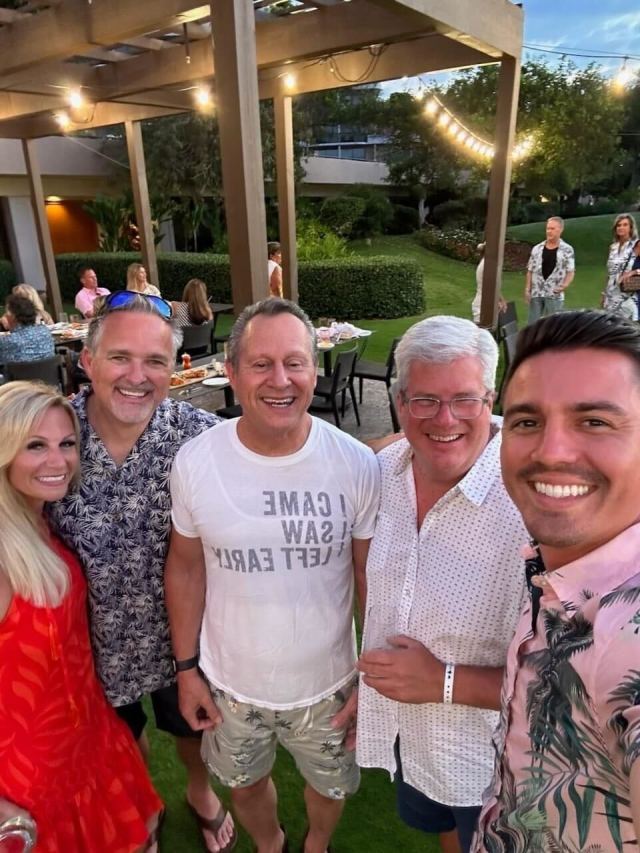
This week my travels find me on the Big Island of Hawai’i, attending the 2023 Berkshire Hathaway HomeServices Summit Conference. It’s been an incredible few days of learning and growth, and the perfect place to kick off the official start of the football season.

Over the years, I’ve spent a lot of time studying the connection between sports and leadership, and specifically football and leadership, drawing inspiration from sports icons like my buddies Dwight “The Catch” Clark, Ronnie Lott, Steve Mariucci, Brent Jones, and Johnnie Johnson, Allan Dalton and Jimmy Burgess, along with Eddie DeBartolo, Bill Walsh, Joe Montana and Tom Brady.

Read more: Thoughts on Leadership: Leadership Lessons from the NFL

During Summit, I met Jimmy Burgess, CEO of Berkshire Hathaway HomeServices Beach Properties of Florida, (who I mistakenly referred to as Jimmy Buffett during my Tuesday morning Summit talk) every morning at 5 a.m. at the hotel pool, where we’d spend an hour treading water and talking about leadership. During one of these workouts, Jimmy told me: “Gino, leaders are just like coaches, because the best leaders bring out the best in their teams.”

That got me thinking about leadership lessons we could learn from football. The NFL is more than just a powerhouse athletic competition. It’s a complex institution that showcases teamwork, strategy, and leadership both on and off the field. Whether you’re a die-hard football fan or interested in the dynamics of effective leadership, the NFL offers a multitude of lessons for us all. Let’s dive into these insights.

  • The Importance of Teamwork: Football is a team sport where individual brilliance can shine, but victories are achieved collectively. Leadership isn’t a solo endeavor; it requires collaboration and relies on the strengths of each team member to win a game and a championship.
  • Adaptability and Change: In the NFL, game plans can change on the fly, and coaches must adapt to the opposing team’s strategies as they adjust. Similarly, leaders must be prepared to adjust their strategies when circumstances change. Think of the halftime adjustments the best coaches make to change the outcome of the game.
  • Preparation and Planning: From hours of film review to grueling practice sessions and NFL training camp, success on game day is a result of the exhaustive preparations that happen behind the scenes. Miami Dolphins Head Coach Mike McDaniel famously leaves his house at 2:24 a.m. for work every day, getting to the office a little before 3 a.m. It’s a habit acquired after working under former Houston Texans Head Coach Gary Kubiak, who called McDaniel twice at 6 a.m. without an answer. (McDaniel was later fired from the job specifically for being late twice). The experience taught McDaniel a harsh lesson about priorities, preparation, and planning. “You’re chasing the best version of yourself,” he told ESPN when describing his early-morning commute. “This part of the day is so unique because everything is in front of you.” Being prepared can make the difference between success and failure.
  • Resilience in the Face of Adversity: Setbacks, like injuries or game losses, are part of the NFL. Just look at the awful, season-ending injury of New York Jets Quarterback Aaron Rodgers after just four snaps into his first game with the team. However, teams regroup and adjust and return with renewed vigor. Leaders, too, will face setbacks but must demonstrate resilience and perseverance.
  • Continuous Learning: The best NFL coaches and players are always studying, learning, and refining their techniques. Tom Brady’s former teammate, Tight End Rob Gronkowski, estimated that Brady watched 40 hours of film each week. Bill Walsh talked about his return to coaching college football when he’d get five hours of sleep on a couch in his office. Leadership requires a commitment to perpetual improvement. It’s about lifelong learning and a willingness to adapt based on new knowledge you acquire every day.
  • Effective Communication: Clear communication between coaches, players, and staff is vital for successful plays and overall team dynamics. Similarly, effective leadership requires transparent and open communication.
  • Accountability: Players and coaches must take responsibility for their actions on and off the field. Great leaders hold themselves and their teams accountable, recognizing that fosters trust and integrity.
  • Diversity and Inclusion: The NFL comprises players from diverse backgrounds, and the synergy of this diversity can be a driving force behind a team’s success. In leadership, promoting diversity and inclusion can lead to innovative solutions and a broader perspective.
  • An Example for Others to Follow: Captains and veteran players often set the tone for the team’s work ethic and values. As a leader, embodying the values and work ethic you wish to see in your team is crucial.
  • Work-Life Balance: While the NFL demands rigorous training, players also understand the importance of recovery and personal time. Leaders should recognize the importance of balance for sustained performance and mental well-being.
  • Long-Term Vision: The best teams in the NFL don’t just plan for the current season but also have a vision for the future. Similarly, effective leaders set short-term goals with a long-term vision in mind.

So, what’s the message? The thrills of the NFL aren’t limited to spectacular touchdowns or nail-biting finishes. They extend into the realm of leadership, strategy, and team dynamics. The league, with its diverse set of challenges and successes, offers a playbook of leadership lessons that can be applied far beyond the football field. Whether you’re leading a corporate team, a community initiative, or any other endeavor, tapping into these insights can pave the way for both individual and collective success.

Thoughts on Leadership: Lessons from Col. Nicole Malachowski

By Gino Blefari

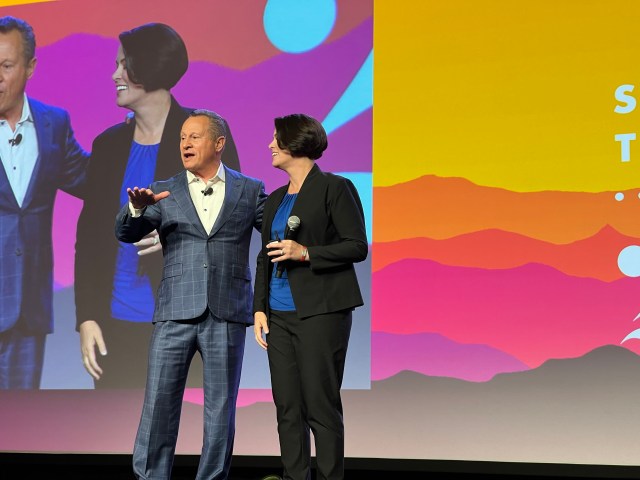
This week my travels find me traveling to Palm Springs, California on Monday. On Tuesday, I participated in the early morning Berkshire Hathaway Energy call then joined an all-day CEO leadership meeting before kicking off Stronger Together 2023. Stronger Together is HomeServices’ annual conference for top-producing real estate professionals from across our family of brokerages. It’s been an awesome few days at the iconic J.W. Marriott and for today’s post, I’d like to share some wisdom imparted by one of our keynote speakers, Col. Nicole Malachowski, who wowed the crowd with her thoughts on a “push the envelope” mindset.

First, let’s talk about Col. Malachowski. She’s not only a 21-year U.S. Air Force veteran – with combat experience in Iraq and Kosovo – but also a pioneering aviator who was commander of an F-15E fighter squadron and the first woman Thunderbird pilot. In addition, she was a White House Fellow and advisor, among other Pentagon roles.

Read more: Thoughts on Leadership: Lessons from Col. Nicole Malachowski

Needless to say, when Col. Malachowski spoke about being the best, we listened. Because for an aviation innovator, being the best means never feeling like the turbulence of life can throw you off course, no matter what kind of headwinds you encounter along the way.

An unexpected headwind for Col. Malachowski was surviving a late-stage neurological tick-borne illness (Lyme disease). Even something so crippling and uncontrollable couldn’t hold this fighter pilot back. She says don’t waste energy on things you can’t control. It’s not how you become your very best.

“Nicole,” people would ask the award-winning fighter pilot. “What’s it like to be the best?”

And do you know how she’d respond? She’d laugh. Because to Col. Malachowski, being “the best” isn’t about individual achievements, so she says she really wouldn’t know. Being the best to Col. Malachowski is about being part of some of the very best teams.

Col. Malachowski says elite teams like the ones she’s been a part of have what she calls the “push the envelope” mindset. The phrase “push the envelope” comes from aviation lingo, meaning to take an aircraft to its designated altitude and speed limits.

But how does this play out in real life? As an example, one of the single-greatest honors of Col. Malachowski’s career was when she taught young lieutenants how to fly F-15E Strike Eagles. She calls the aircraft “a beast,” capable of flying 50,000+ feet, pulling nine times the force of gravity and flying twice the speed of sound.

When Col. Malachowski would teach the new lieutenants and pilots how to fly the aircraft, she found the same thing happened every time: They’d get into the aircraft – eyes wide and voices shaking. Then, they’d fly up safely into the training airspace when she’d say, “You have the aircraft.”

The new lieutenant would grab the stick and take the F-15E to about 20,00 feet, 250 miles an hour, pulling 2 Gs.

“What a waste,” Col. Malachowski says with a laugh. She knew this incredible piece of technology could do far more than what the students were asking of it, and it was her job to show them how to take it to the very edge of its capabilities. As part of their team and as their instructor, it was her responsibility to show them how to make the aircraft do its best, and how they can become their best, too.

So, what’s the message? Here are some takeaways Col. Malachowski listed at the very end of her speech, which are all practical ways to be your best:

  • Nothing of significance is ever accomplished alone.
  • Acknowledge and show gratitude for others’ expertise.
  • Honor the wingman contract, which is defined by Col. Malachowski as “an unspoken promise to each other that our actions will always represent the mission, the professional standards, and the values of the whole team.”
  • Ask for and offer help.

Those are just some of the key lessons from Col. Malachowski’s incredible keynote speech, which focused on how being the best can only happen when we are stronger together.  

Thoughts on Leadership: Acknowledge Your Team

By Gino Blefari

This week my travels found me at home, starting my week with my typical Monday W.I.G. calls. On Tuesday, I attended the Berkshire Hathaway Energy Executive Team Meeting and filmed in our Los Altos, California studio for various company awards events and for the Berkshire Hathaway HomeServices Sales Convention. On Thursday, I attended the launch event (via Zoom) for Berkshire Hathaway HomeServices Fox Cities Realty and I was thrilled to help welcome them to the Berkshire Hathaway HomeServices network.

All in all, it was a week of celebration and acknowledgement, and it’s the latter topic I want to talk about for our blog post this week. (And yes, our blog post. Thoughts on Leadership is as much yours as it is mine.)

For leaders, it’s important to acknowledge team accomplishments. Proper acknowledgement is the method of support that will show your team members their work is seen and heard as a significant contribution toward the achievement of collective company goals. Gallup polls show employee recognition is the key factor influencing not only employee engagement but also overall organizational performance.

Translation: To create—and retain—extraordinary performers, you have to acknowledge just how extraordinary they are!

Consider Zappos, for example, which was acquired by Amazon in 2009 for a deal worth about $1.2 billion. Zappos has a peer-to-peer acknowledgement program where employees earn rewards via recommendations from other members of the team. The rewards differ by location because each office has its own unique perks. At the Las Vegas office, covered parking is an issue, and an employee can nominate a colleague for a special, covered parking spot as a “reward.” The takeaway? Acknowledgement comes in all forms, but it shouldn’t just be a plaque or a ribbon. Think about ways you can acknowledge employees that will be meaningful to them.

GE, famously once run by one of my favorite business mentors, Jack Welch, is also well-known for an amazing recognition program. (Side note: Welch joined GE in 1960 where he actually worked as a junior chemical engineer at my place of birth, Pittsfield, Massachusetts in the heart of the Berkshires, so I feel a particular kinship to him and his leadership philosophies.) When the company restructured between 2010 and 2014, employee acknowledgement took center stage as a way to bridge the gap between organizational change and sustainable growth. During weekly meetings between employees and managers, a wall-mounted dashboard displayed an employee’s performance and achievements. As I like to say, “When performance is measured, performance improves. When performance is measured and reported back, the rate of improvement accelerates.” The takeaway? A simple, visual, personal example of success and approval can go a long way. Like the videos I filmed for award presentations, I make it a point to speak each of the award winners’ names and discuss directly what they did to achieve an award.

In 2020 at Apple, CEO Tim Cook gave every employee the entire week of Thanksgiving off. (The memo also instructed managers in other countries to find an appropriate holiday and give employees a week off then.) In addition, he added three paid vacation days to every employee’s calendar and told retail teams that had to work over Thanksgiving—one of the busiest shopping times of the year—they’d get a week off at an alternate date. The takeaway? Acknowledgment should surprise and delight all team members in some way. Every member of your team should feel proud, honored and above all, recognized. Because if they’re on your team, it means they’re dedicated to personal and professional growth, continual learning, focus, commitment, dedication and all the important facets you’ve instilled in them as any great leader should.

So, what’s the message? In real estate, late winter and early spring tends to be “awards season.” And this awards season, make your recognition personal. Make it visible. Make it universal. Make it creative and make sure it motivates your employees to keep doing what they’re doing, so they feel supported to achieve even more.

THOUGHTS ON LEADERSHIP: HAPPY HOLIDAYS

By Gino Blefari

This week my travels find me at home, starting Monday with my typical WIG calls. On Tuesday, I had my weekly Berkshire Hathaway Energy Presidents Meeting and five CEO reviews, followed by two CEO reviews the next day. It’s been a busy week of conference calls and Microsoft Teams meetings as we tie a bow on this challenging year while looking forward to the next. The holidays are such a special time, even though this is the year many of us can’t be with our family and loved ones or hold the traditional holiday parties, but the spirit of the season remains. Surprisingly, the holidays are also filled with leadership lessons and they come from the boss of yuletide cheer, St. Nick. Here are twelve tips he can teach us:

Continue Reading

Woodmont Realty Boots Competition in Local Kickball Tournament

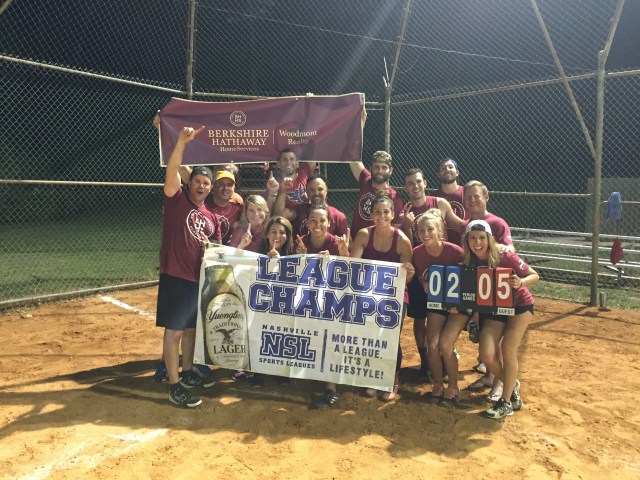
This summer, agents, brokers and friends of Berkshire Hathaway HomeServices Woodmont Realty competed in the Nashville Sports League Boys and Girls Club 2016 Kickball tournament … and won! The triumph, however, wasn’t just a win for the kickball team—called The Comps after it was decided “Comparative Analy-kicks” was too long—but also for the spirit of togetherness central to Woodmont Realty.

Continue Reading

No more posts.