Thoughts of Leadership: Crafting a Dynasty – Leadership Lessons from Robert Kraft’s Playbook

By Gino Blefari

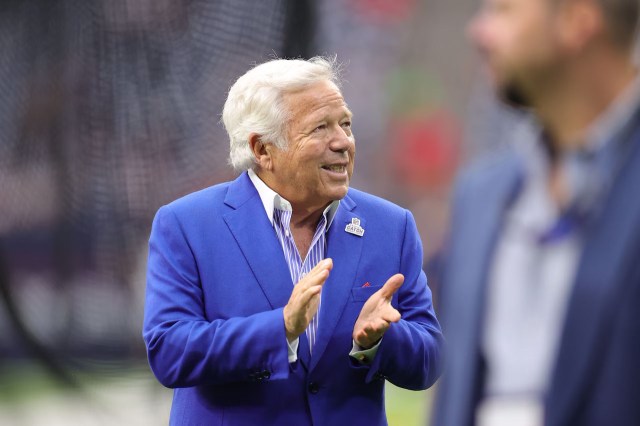
This past weekend while at home in northern California, I immersed myself in the audiobook version of “The Dynasty” by Jeff Benedict, a compelling chronicle of the New England Patriots’ rise to greatness. Listening to Todd Menesses’ narration of this book, complete with personal touches like changing his voice to match the characters he was discussing, was a unique experience that brought the story to life. What resonated with me most were the segments about Robert Kraft, the mastermind behind the team’s success. His strategic and personal journey with the Patriots not only shaped a sports dynasty but also provided timeless leadership and life lessons. From the intricacies of team dynamics to the subtle art of managing egos, this book is a treasure trove of insights. Inspired by Kraft’s story, I want to share five key insights that stand out as beacons for anyone aspiring to lead with impact.

Read more: Thoughts of Leadership: Crafting a Dynasty – Leadership Lessons from Robert Kraft’s Playbook

Visionary Leadership
Kraft’s journey began with a clear vision: to build the Patriots into a football dynasty. This vision was not just a dream but a strategic blueprint that guided every decision he made, much like Belichick’s approach to coaching, where every player, including Tom Brady, was treated equally to foster a team-first mentality. Kraft’s commitment to this vision, even when faced with skepticism and challenges, teaches us the power of setting a clear goal and relentlessly pursuing it.

Empowering People
One of Kraft’s notable decisions was hiring Bill Belichick as head coach, recognizing his potential to turn the team’s fortunes around. Belichick, arguably the best coach of all time, demonstrated this through his unprejudiced treatment of players, emphasizing the team over individual glory. Kraft’s leadership style of empowering people, trusting their expertise, and giving them the autonomy to make decisions underscores the importance of building a team that shares your vision and values.

Resilience in Adversity
The Patriots’ path under Kraft was not always smooth; they faced numerous challenges, both on and off the field. The friction between Belichick and Brady towards the end of Brady’s career with the Patriots is a testament to this. Yet, Kraft’s magical touch in keeping these two titans together showcases his resilience in navigating obstacles, from controversies to personal losses, showing the importance of staying focused on long-term objectives and maintaining a steady hand in the face of adversity.

Innovative Thinking
Kraft was not just a traditional team owner; he was an innovator. From revolutionizing fan engagement to expanding the Patriots’ brand, his forward-thinking approach transformed the team into a global icon. This mirrors Tom Brady’s commitment to the game of football, constantly innovating and adapting to maintain his status as arguably the best football player of all time. Kraft’s innovative mindset highlights the significance of adapting to change and seizing new opportunities.

Building a Legacy
Kraft’s impact on the Patriots and the NFL extends beyond championships; it’s about creating a lasting legacy. His dedication to excellence, community engagement, and the sport’s growth reflects the essence of building a legacy that transcends individual success, much like Brady’s unparalleled commitment to football has left an indelible mark on the sport.

So, what’s the message? As I reflect on Robert Kraft’s leadership with the Patriots, it’s clear that his approach—characterized by vision, empowerment, resilience, innovation, and legacy-building—offers valuable lessons for leaders in any field. His story, intertwined with the sagas of Belichick and Brady, is a testament to the impact of strategic, heartfelt leadership on achieving enduring success.

Thoughts on Leadership: Running with Mismatched Shoes

By Gino Blefari

As I kick off this new year, I participated in my regular Berkshire Hathaway Energy call. On Wednesday morning, I participated in the HomeServices of America Diversity MEETS monthly meeting superbly orchestrated by Teresa Palacios Smith, Chief Diversity, Equity & Inclusion Officer, where I had the honor to announce the recipient of the 2023 HomeServices Diversity Champion Award. This award was presented to Berkshire Hathaway HomeServices Georgia Properties – we celebrated and applauded their remarkable achievements and contributions toward advancing diversity and inclusion.  Heartfelt congratulations to them for being exemplary Diversity Champions! On Thursday morning, I also had the opportunity to speak to Intero’s Academy. During my talk, I shared the “6 Philosophies on Life and Business” to help make 2024 the best year yet.

Read more: Thoughts on Leadership: Running with Mismatched Shoes
  1. There will always be somebody who’s better.
  2. Fueling Growth: Discontent Drives Inspiration.
  3. Find mentors.
  4. Commit to do the work.
  5. Struggle is Necessary for Human Growth.
  6. Our season of change.

I’d like to offer this to all of our great companies – I’ll be in touch with our leadership teams to schedule in this new year.

As I gear up for a busy January, I couldn’t help but reminisce about an inspiring story that I’ve shared before and wanted to share again as a reminder.

A while back, a friend sent me a text asking, “Have you ever studied Jim Thorpe?” Intrigued, I revisited Thorpe’s remarkable journey, a story that has fascinated me since my childhood when I first read Bob Wheeler’s iconic book, “Jim Thorpe: The World’s Greatest Athlete.”

Jim Thorpe, a track and field star hailing from Oklahoma, is widely regarded as one of the greatest American athletes of the twentieth century. Born as Jacobus Franciscus Thorpe with the name Wa-Tho-Huk (“Bright Path”), he carried the heritage of Sac, Fox, and Potawatomi Indian bloodlines along with French and Irish ancestry.

There’s an iconic photo of Thorpe during the 1912 Olympics, standing on the track field with two different sneakers. This caught the attention of Wheeler, who embarked on a quest to uncover the truth behind the image.

As the 1912 Olympics commenced in Stockholm, Thorpe dominated the pentathlon, leading the 1,500-meter run by almost five seconds. The weather was relentless during the three-day decathlon. On the opening day, Thorpe raced down the track, completing the 100-meter dash in a record-breaking 11.2 seconds, a feat unmatched until 1948.

However, the story took an unexpected turn. On the second day of the decathlon, just minutes before the 1,500-meter race, Thorpe’s sneakers went missing (rumored to be stolen). Facing the challenge of being shoeless, Thorpe frantically sought help from his teammates. With one teammate offering an extra shoe that was too small and another shoe found in the garbage bin that was too large, Thorpe improvised.

Wearing one too-small shoe and another too-large, the odds were stacked against Thorpe. Yet, with unmatched resilience, he stood on the Olympic starting line, facing the world’s best decathletes. And what did he do? He won, completing the 1,500-meter run in 4 minutes, 40.1 seconds.

So what’s the message? Never give up. Despite the odds, despite the challenges, never give up. Take the shoes you’re given and run as fast as you can, just like Thorpe did at the Olympics.

As we step into 2024, let’s embrace the spirit of Jim Thorpe—facing challenges head-on, adapting to what comes our way, and running towards success with unwavering determination.

Here’s to a remarkable and resilient 2024!

Thoughts on Leadership: Lessons from Colonel Gregory Gadson

By Gino Blefari

This week my travels find me in Las Vegas, NV attending and participating in the annual Berkshire Hathaway Energy Executive Leadership Conference. The focus of the conference included cross-business panel discussions and presentations related to current and future business challenges and opportunities, along with small group discussions on leadership and employee engagement.

I wanted to talk this week about resilience—coming back from a difficulty, perhaps a place where you weren’t sure what was coming next—where you’re questioning your own economic or emotional survival.

Read more: Thoughts on Leadership: Lessons from Colonel Gregory Gadson

 What comes to mind is a story I recently heard, about a man, a grievous injury, and grit.

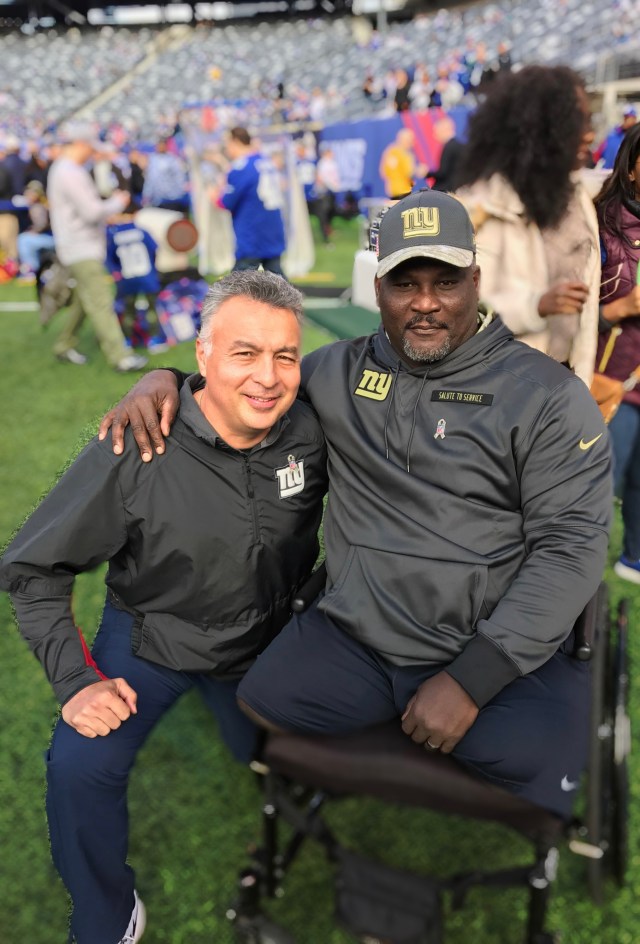
Colonel Gregory Gadson was a West Point football player, a small one, who often gazed across the line of scrimmage into the sweaty, smudged faces of bulkier men. Still, he would call out competitive taunts. “It’s gonna be a long day for you,” former West Point Coach Tim Kish recalls hearing Gadson mutter to the opposition, “I hope you packed a lunch.” Gadson was a standout. He’d hit a player hard, then help him get up. That was his magic.

Playing for West Point eliminates a lot of career drama; you’re not going pro—you’re going into the Army. And so, Gadson went, bringing along that same “can do” attitude. He served in every major war in which the US engaged. He became a beloved leader, taking the lessons of teamwork and resilience he learned on the gridiron onto the battlefield. In 2007 Gadson led a 3,500-member infantry unit that he’d built from scratch at Fort Riley, Kansas into Iraq. They were a well-oiled machine, having spent weeks training with a tough, charismatic commander.

Only a few weeks into their deployment, on the evening of May 7, the military vehicle that Colonel Gregory Gadson was traveling in was hit by an Improvised Explosive Device (IED). Colonel Gadson was injured, requiring a substantial amount of blood transfusions (129 units of blood) to sustain him; his heart would stop three times before he arrived three days later at Walter Reed Army Medical Center (WRAMC), but his team had saved his life.

When he arrived at WRAMC his legs had been surgically sewn together and set in metal cages. But in emergency surgery that could have, once again, cost him his life, he lost one leg. Later he and his family chose to give up the other, rather than risk ongoing infection.

This man, who’d been at the top of his game –  An up-and-coming lieutenant colonel, a respected leader who had a wife, and two pre-teen children—was now missing half of his body.

“There were no waypoints,” Gadson recalls. “I didn’t know how I was going to provide for my family. How could I take my son fishing? Who would walk my daughter up the aisle at her wedding?”

There were some very dark days. Gadson applied the lessons he had learned from life, drew strength from his family, and found support in his faith. He didn’t search for waypoints so much as he watched for glimmers.

One day a former Army football teammate, Mike Sullivan, came to visit him at WRAMC. He found Gadson’s spirit of recovery so inspiring he wanted to share it with his own team: the New York Giants. Sullivan was then a coach for the team, which had begun the season 0-2. Things were looking grim at the Meadowlands Sports Complex. Sullivan felt the team had talent, but they were playing as individuals, caught up in the hype. They too, needed a glimmer. Sullivan invited Greg to speak to the Giants on the evening before they took on the Washington Commanders.

“I wasn’t a public speaker at the time,” Gadson says. “What was I going to say to a room full of successful professional players? I’d never reached that level.”

But there was one thing Gadson could talk about: resilience in a time of darkness.

“Your life can change in an instant,” he told the room full of players, rapt and wrapped in silk suits and diamond stud earrings. “Everything could turn on one career-ending injury. That’s why you must embrace every opportunity. You can get caught up in the media, the numbers. But none of those matter. What matters is your team. I am alive today because of my team. My team trained. And my team saved my life. That’s how you must play tomorrow—no one on the field matters more than the guy next to you. No one.”

And so began the Giants’ winning streak. It took them all the way to the Super Bowl. Gadson spoke again to the transformed Giants the night before that championship game.

“Believing is better than knowing,” Greg told the Giants. They believed. And in the final two minutes of that game (who could forget David Tyree’s helmet catch?), they beat the undefeated New England Patriots and became world champions.

Gadson travels the country now, bringing his motivational message to corporations, sports teams, and non-profit organizations.

So, what’s the message, Colonel Gregory Gadson’s story is a testament to finding glimmers of hope in the darkest moments and the transformative impact of unwavering determination.

You can learn more about his story in a book co-authored by Gadson and Terese Schlachter (my colleague Jon Coile’s wife) titled, “Finding Waypoints: A Warrior’s Journey Towards Peace and Purpose.” by clicking the links below.

Amazon: Finding Waypoints: A Warrior’s Journey Towards Peace and Purpose  Ridgeback Communications: https://www.ridgebackcomms.com/books

No more posts.