Thoughts on Leadership: The Transformative Power of Conferences

By Gino Blefari

This week my travels find me at home in northern California. As I sit in my office this week, reflecting on the past conferences I’ve attended throughout my career and the upcoming Berkshire Hathaway HomeServices Sales Convention in March, I’m struck by the profound impact that conferences have had on my professional journey. These gatherings, spanning diverse industries, have been instrumental in shaping my perspective on business and leadership. Today, I’m eager to share with you the tremendous value that attending conferences holds—a practice that has not only enriched my career but also broadened my understanding of the dynamic business world.

1. Networking Opportunities: Building Bridges Beyond Borders

Conferences are dynamic hubs where professionals from varied backgrounds converge. Attending these events opens doors to new connections—with potential mentors, industry leaders, or fellow enthusiasts. The relationships forged at conferences can blossom into collaborations, referrals, and even lifelong friendships, all of which play a pivotal role in fostering a thriving career.

2. Learning from Experts: Unveiling the Wisdom of Seasoned Minds

One of the golden aspects of conferences is the wealth of knowledge shared by seasoned experts and thought leaders. These sessions serve as treasure troves of insights into the latest trends, innovative strategies, and future predictions in your industry. Learning from these experts not only enriches your understanding but keeps you ahead of the curve in your professional field.

3. Inspiration and Motivation: Fueled by Shared Success Stories

There’s an undeniable energy in being surrounded by driven, like-minded professionals. The stories of success and perseverance shared at conferences can be profoundly inspiring, acting as a powerful fuel for your passion and motivation to achieve new goals in your career.

4. Staying Updated with Industry Trends: Navigating the Waves of Change

Success in any industry demands staying abreast of the latest developments. Conferences provide a platform to discuss current dynamics, future predictions, and strategies to navigate through changing landscapes. This knowledge is invaluable, aiding you in making informed decisions and staying competitive in the ever-evolving business landscape.

5. Personal Brand Building: Crafting Your Professional Identity

Active participation in conferences is a potent tool for building your personal brand. It showcases your commitment to your career, establishing you as a knowledgeable and reliable professional in the eyes of peers and clients alike.

6. Access to New Tools and Technologies: Exploring the Frontiers of Innovation

Conferences often feature exhibitions showcasing the latest tools and technologies in your field. Exploring these innovations can open your eyes to new ways of enhancing your business operations, from cutting-edge methodologies to advanced software solutions.

7. Continuing Education: Nurturing Professional Growth

Many conferences offer sessions contributing to continuing education. This not only helps you stay compliant with professional requirements but also enhances your skills and knowledge, ensuring you maintain a competitive edge in your field.

8. Rejuvenation and New Perspectives: A Breath of Fresh Insight

Stepping away from the daily grind and immersing yourself in a different environment provides a fresh perspective. Conferences offer a chance to rejuvenate, rethink strategies, and return to your work with renewed energy and ideas.

So, what’s the message? If you’re a part of Berkshire Hathaway HomeServices I encourage you to please sign up for Sales Convention today here: Register Now. Attending conferences is more than just an opportunity to travel and meet new people. It’s a catalyst for personal and professional growth—a chance to learn from the best, stay ahead in your industry, and continuously evolve as a professional. Reflecting on my own experiences, I’m filled with gratitude for the knowledge, connections, and inspiration these conferences have provided. They are, without a doubt, an investment worth making in your journey to success.

Thoughts on Leadership: Leading with Love

By Gino Blefari

This week my travels find me at home as well as Jacksonville, FL. Monday started with my typical WIG calls and on Tuesday, I had an early morning Berkshire Hathaway Energy weekly executive meeting.

On Wednesday morning I traveled to Jacksonville, FL. I spent this morning with Berkshire Hathaway HomeServices Florida Network Realty and I will spend tomorrow morning with HomeTeam Inspection Services at their annual Summit. Among other topics I am sharing 6 philosophies on life and business so you can make 2024 your best year yet!

Read more: Thoughts on Leadership: Leading with Love

Earlier this year my mom passed away at the age of 93. I wanted to dedicate this week’s blog to her and the leadership lessons we’ve learned from all mothers.

If you’re interested in reading my mom’s eulogy I’ve included a link below to the words I shared last week at her services.

  1. Lead by Example: Mothers often lead by demonstrating the values and behaviors they want to instill in their children, showing the importance of leading through actions rather than just words.
  2. Effective Communication: Mothers excel in communication, conveying their expectations, providing guidance, and offering support in a clear and empathetic manner, highlighting the importance of effective communication in leadership.
  3. Empathy and Compassion: Mothers are known for their empathy and compassion, understanding the needs and feelings of others. This teaches us the significance of considering the well-being of team members and fostering a supportive environment.
  4. Resilience and Adaptability: Mothers frequently exhibit resilience and adaptability in handling various challenges and juggling multiple responsibilities. This emphasizes the importance of flexibility and perseverance in leadership roles.
  5. Nurturing Growth: Mothers nurture the growth and development of their children, providing encouragement, feedback, and opportunities for learning. This teaches us the value of supporting the growth and development of our team members, empowering them to reach their full potential.

The eulogy of Dory Blefari

Thoughts on Leadership: Kaizen – Unveiling the Power of Small Steps for Lasting Change

By Gino Blefari

This week my travels find me in Denver, Colorado and Key West, Florida. My first stop was to be with the team at Berkshire Hathaway HomeServices Colorado Real Estate for their all-company kick-off meeting and tomorrow morning I will be with the team at Berkshire Hathaway HomeServices Keys Real Estate for their all company meeting as well.  Among other topics I am sharing 6 philosophies on life and business so you can make 2024 your best year yet!

Today we’re going to explore the Japanese word, Kaizen. Discovering the potential of making small, gradual changes to transform one’s life. Inspired by this approach, I aim to share insights on how incorporating small steps into your journey can lead to remarkable improvements. Join me as we delve into the principles of Kaizen, unlocking the secrets to positive change in various aspects of your life.

Read more: Thoughts on Leadership: Kaizen – Unveiling the Power of Small Steps for Lasting Change

#1 Taking Small Steps for Lasting Change – Harnessing the Power of Small Wins: Embarking on a journey of change is often met with challenges, and the frustration of failed resolutions is a common experience. However, the concept of Kaizen encourages the art of making small, incremental changes. By embracing Kaizen, you can skillfully navigate past the brain’s resistance to change and make the process more manageable. Whether your goal is adopting healthier habits, saving money, or breaking a bad habit, initiating change through small steps can pave the way for significant improvements.

Moreover, incorporating the concept of small wins amplifies the transformative potential of your journey. Small wins are akin to the steady application of a small advantage. Once a small win is accomplished, it sets in motion forces that favor another small win. These cumulative victories leverage tiny advantages into patterns that convince individuals that more significant achievements are within reach.

Celebrating small wins can be as simple as crossing off a task on your to-do list. This seemingly minor action, when acknowledged, elevates self-confidence and self-image. The acknowledgement of small wins not only propels you forward but also reinforces the belief that positive changes are not only possible but also attainable through a series of manageable steps.

#2 The Power of Small Questions: To initiate change, start by asking yourself small questions. Much like acclaimed authors who begin their novels with simple inquiries, asking yourself small questions can lay the groundwork for transformation. By focusing on achievable tasks, you engage your brain, stimulate creativity, and pave the way for gradual solutions. Choose questions carefully to avoid triggering resistance and turn them into habits for sustained progress.

#3 Mind Sculpture: Crafting Victory through Imagination and Routine: Delve into the transformative “mind sculpture” technique, a potent tool unlocking the potential of your imagination. Visualize yourself skillfully navigating future challenges, intricately detailing a mental rehearsal for success. Much like Olympic athletes mentally preparing for races, this technique cleverly tricks the brain into feeling experienced, thus making the process of change feel less daunting. Integrate mind sculpture into your routine to cultivate a positive mindset, fostering the ability to overcome obstacles.

In the realm of real estate, success hinges not only on professional skills but also on the development of the right routines. Drawing inspiration from Michael Phelps’s coach, Bob Bowman, who believed in the power of creating effective routines for swimmers, I’ve applied a similar principle to my journey in the real estate business. Having invested a significant portion of my adult life studying from some of the best trainers, I’ve learned that to thrive in real estate, I must prioritize personal growth.

The key revelation is that success in real estate necessitates working harder on oneself than on the job. Shifting my mindset from fear and merely getting through the day to fearlessness and confidence has been paramount. I crafted a series of behaviors aimed at changing my state, differentiating myself from other REALTORS®. These specific habits, unrelated to real estate but focused on cultivating the right mindset, positioned me as the most mentally resilient REALTOR® in any situation. This routine became the linchpin, enabling me to identify tiny advantages in a competitive business where victory is synonymous with securing the deal.

#4 Make Your First Step Incredibly Small: Emphasize making your initial step as small as possible. Through a compelling example, we learn that starting with just one minute of exercise per day can lead to sustainable progress. Counterintuitively, small steps often result in faster change, allowing habits to form gradually and become a natural part of your routine.

#5 Focus on Small Problems First: Addressing small problems can be an effective strategy when faced with overwhelming challenges. Tackling minor issues can lead to significant improvements. By dealing with small problems early on, you may uncover underlying issues and prevent larger complications. Pay attention to warning signs in various aspects of your life for smoother, proactive problem-solving.

#6 Small Rewards for Big Motivation: Contrary to common belief, small rewards often outperform large ones. Learn from the success of modest rewards in fostering motivation and creativity. Implement small rewards in your life, as exemplified by individuals who motivated themselves through moment-by-moment rewards. Discover how these small incentives can keep you motivated on your journey of continuous improvement. I still have the Cross pen that was given to me in 1986 for being in the Top 1% at Fox and Carskadon. Small reward .. Huge impact. I can still picture Emmett Cashin handing me the pen and congratulating me.

#7 Appreciate the Little Things in Life: Extend the Kaizen mindset to all areas of your life, especially relationships. Recognize the significance of small, day-to-day moments in strengthening connections. Understand the power of small gestures in predicting relationship success. Practice mindfulness in appreciating and acknowledging the little things, fostering a culture of continuous improvement.

So, what’s the message? Implementing the principles of Kaizen can revolutionize your approach to change. By taking small steps, asking small questions, and appreciating the little things, you can achieve lasting transformations. I encourage you to embrace the Kaizen mindset, counter negative thoughts with positive questions, and remember … change doesn’t have to be difficult. Start your journey with small steps and witness the profound impact they can have on your life.

Thoughts on Leadership: Building Your Life’s Blueprint – Leadership Lessons from MLK

By Gino Blefari

This week my travels find me in Nashville, TN involved in preparations and filming for the upcoming Berkshire Hathaway HomeServices Sales Convention. As I reflect on this vibrant city, my thoughts gravitate towards one of history’s greatest leaders—Martin Luther King Jr. With Martin Luther King Jr. Day just around the corner, it’s a fitting moment to celebrate his enduring achievements and the timeless lessons he left us.

Perseverance and Passion: Did you know that Martin Luther King Jr., the iconic public speaker, received a C in public speaking during college? His journey from a struggling student to a Nobel Peace Prize recipient is a testament to the power of persistence and passion. Over 11 years of civil activism, he covered 6 million miles and delivered 2,500 speeches, becoming one of the greatest orators in history.

Read more: Thoughts on Leadership: Building Your Life’s Blueprint – Leadership Lessons from MLK

The Blueprint of Life: King’s transformative speech at Barratt Junior High School, Philadelphia, PA in 1967 holds wisdom that resonates even today. He posed a fundamental question to the students: “What is your life’s blueprint?” This blueprint, he explained, should include two key elements.

  1. Belief in Your Own Worth: King urged the students to engrain a deep belief in their own dignity and worth. In a world that may attempt to diminish your significance, always remember that you count, you have worth, and your life holds ultimate significance.
  2. Determination for Excellence: Quoting Ralph Waldo Emerson, King emphasized the importance of striving for excellence in one’s life’s work. Whether you become a renowned figure or a street sweeper, approach your work with the determination to do it so well that the world recognizes your excellence.

Striving for Excellence: For King, the essence was not in the pursuit of fame or wealth but in excelling at whatever path life took. Whether sweeping streets or composing music, he encouraged individuals to approach their endeavors with the same dedication and passion as the great masters.

Architect of Your Greatness: In the final months of his life, King’s philosophy centered on becoming the best at whatever you do. By striving for excellence, you become the architect of your own greatness. In his parting words to the students in Philadelphia, he emphasized, “Be the best of whatever you are.”

So, what’s the message? As we honor Martin Luther King Jr.’s legacy, let’s carry forward the profound leadership lessons embedded in his life’s blueprint. Whether in the workplace, our industry, or our lives, let us champion diversity, equity, and inclusion. In becoming the architects of our own greatness, we not only pay homage to King’s legacy but also contribute to a more just and compassionate world. As King said to end his plea to the students in Philadelphia, “Be a bush if you can’t be a tree. If you can’t be a highway, just be a trail. If you can’t be a sun, be a star. For it isn’t by size that you win or fail. Be the best of whatever you are.”

Thoughts on Leadership: Running with Mismatched Shoes

By Gino Blefari

As I kick off this new year, I participated in my regular Berkshire Hathaway Energy call. On Wednesday morning, I participated in the HomeServices of America Diversity MEETS monthly meeting superbly orchestrated by Teresa Palacios Smith, Chief Diversity, Equity & Inclusion Officer, where I had the honor to announce the recipient of the 2023 HomeServices Diversity Champion Award. This award was presented to Berkshire Hathaway HomeServices Georgia Properties – we celebrated and applauded their remarkable achievements and contributions toward advancing diversity and inclusion.  Heartfelt congratulations to them for being exemplary Diversity Champions! On Thursday morning, I also had the opportunity to speak to Intero’s Academy. During my talk, I shared the “6 Philosophies on Life and Business” to help make 2024 the best year yet.

Read more: Thoughts on Leadership: Running with Mismatched Shoes
  1. There will always be somebody who’s better.
  2. Fueling Growth: Discontent Drives Inspiration.
  3. Find mentors.
  4. Commit to do the work.
  5. Struggle is Necessary for Human Growth.
  6. Our season of change.

I’d like to offer this to all of our great companies – I’ll be in touch with our leadership teams to schedule in this new year.

As I gear up for a busy January, I couldn’t help but reminisce about an inspiring story that I’ve shared before and wanted to share again as a reminder.

A while back, a friend sent me a text asking, “Have you ever studied Jim Thorpe?” Intrigued, I revisited Thorpe’s remarkable journey, a story that has fascinated me since my childhood when I first read Bob Wheeler’s iconic book, “Jim Thorpe: The World’s Greatest Athlete.”

Jim Thorpe, a track and field star hailing from Oklahoma, is widely regarded as one of the greatest American athletes of the twentieth century. Born as Jacobus Franciscus Thorpe with the name Wa-Tho-Huk (“Bright Path”), he carried the heritage of Sac, Fox, and Potawatomi Indian bloodlines along with French and Irish ancestry.

There’s an iconic photo of Thorpe during the 1912 Olympics, standing on the track field with two different sneakers. This caught the attention of Wheeler, who embarked on a quest to uncover the truth behind the image.

As the 1912 Olympics commenced in Stockholm, Thorpe dominated the pentathlon, leading the 1,500-meter run by almost five seconds. The weather was relentless during the three-day decathlon. On the opening day, Thorpe raced down the track, completing the 100-meter dash in a record-breaking 11.2 seconds, a feat unmatched until 1948.

However, the story took an unexpected turn. On the second day of the decathlon, just minutes before the 1,500-meter race, Thorpe’s sneakers went missing (rumored to be stolen). Facing the challenge of being shoeless, Thorpe frantically sought help from his teammates. With one teammate offering an extra shoe that was too small and another shoe found in the garbage bin that was too large, Thorpe improvised.

Wearing one too-small shoe and another too-large, the odds were stacked against Thorpe. Yet, with unmatched resilience, he stood on the Olympic starting line, facing the world’s best decathletes. And what did he do? He won, completing the 1,500-meter run in 4 minutes, 40.1 seconds.

So what’s the message? Never give up. Despite the odds, despite the challenges, never give up. Take the shoes you’re given and run as fast as you can, just like Thorpe did at the Olympics.

As we step into 2024, let’s embrace the spirit of Jim Thorpe—facing challenges head-on, adapting to what comes our way, and running towards success with unwavering determination.

Here’s to a remarkable and resilient 2024!

Thoughts on Leadership: Lessons from Colonel Gregory Gadson

By Gino Blefari

This week my travels find me in Las Vegas, NV attending and participating in the annual Berkshire Hathaway Energy Executive Leadership Conference. The focus of the conference included cross-business panel discussions and presentations related to current and future business challenges and opportunities, along with small group discussions on leadership and employee engagement.

I wanted to talk this week about resilience—coming back from a difficulty, perhaps a place where you weren’t sure what was coming next—where you’re questioning your own economic or emotional survival.

Read more: Thoughts on Leadership: Lessons from Colonel Gregory Gadson

 What comes to mind is a story I recently heard, about a man, a grievous injury, and grit.

Colonel Gregory Gadson was a West Point football player, a small one, who often gazed across the line of scrimmage into the sweaty, smudged faces of bulkier men. Still, he would call out competitive taunts. “It’s gonna be a long day for you,” former West Point Coach Tim Kish recalls hearing Gadson mutter to the opposition, “I hope you packed a lunch.” Gadson was a standout. He’d hit a player hard, then help him get up. That was his magic.

Playing for West Point eliminates a lot of career drama; you’re not going pro—you’re going into the Army. And so, Gadson went, bringing along that same “can do” attitude. He served in every major war in which the US engaged. He became a beloved leader, taking the lessons of teamwork and resilience he learned on the gridiron onto the battlefield. In 2007 Gadson led a 3,500-member infantry unit that he’d built from scratch at Fort Riley, Kansas into Iraq. They were a well-oiled machine, having spent weeks training with a tough, charismatic commander.

Only a few weeks into their deployment, on the evening of May 7, the military vehicle that Colonel Gregory Gadson was traveling in was hit by an Improvised Explosive Device (IED). Colonel Gadson was injured, requiring a substantial amount of blood transfusions (129 units of blood) to sustain him; his heart would stop three times before he arrived three days later at Walter Reed Army Medical Center (WRAMC), but his team had saved his life.

When he arrived at WRAMC his legs had been surgically sewn together and set in metal cages. But in emergency surgery that could have, once again, cost him his life, he lost one leg. Later he and his family chose to give up the other, rather than risk ongoing infection.

This man, who’d been at the top of his game –  An up-and-coming lieutenant colonel, a respected leader who had a wife, and two pre-teen children—was now missing half of his body.

“There were no waypoints,” Gadson recalls. “I didn’t know how I was going to provide for my family. How could I take my son fishing? Who would walk my daughter up the aisle at her wedding?”

There were some very dark days. Gadson applied the lessons he had learned from life, drew strength from his family, and found support in his faith. He didn’t search for waypoints so much as he watched for glimmers.

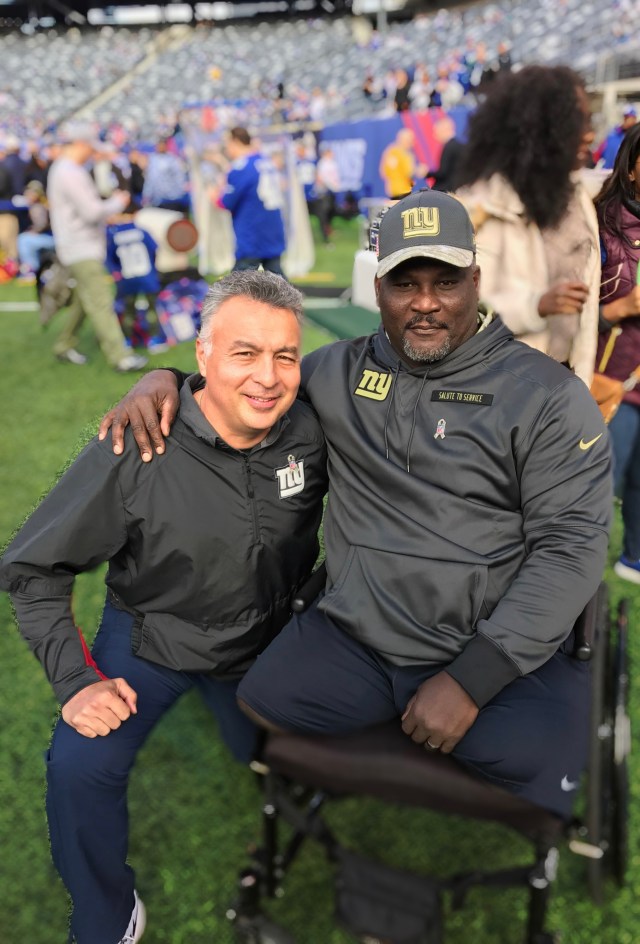
One day a former Army football teammate, Mike Sullivan, came to visit him at WRAMC. He found Gadson’s spirit of recovery so inspiring he wanted to share it with his own team: the New York Giants. Sullivan was then a coach for the team, which had begun the season 0-2. Things were looking grim at the Meadowlands Sports Complex. Sullivan felt the team had talent, but they were playing as individuals, caught up in the hype. They too, needed a glimmer. Sullivan invited Greg to speak to the Giants on the evening before they took on the Washington Commanders.

“I wasn’t a public speaker at the time,” Gadson says. “What was I going to say to a room full of successful professional players? I’d never reached that level.”

But there was one thing Gadson could talk about: resilience in a time of darkness.

“Your life can change in an instant,” he told the room full of players, rapt and wrapped in silk suits and diamond stud earrings. “Everything could turn on one career-ending injury. That’s why you must embrace every opportunity. You can get caught up in the media, the numbers. But none of those matter. What matters is your team. I am alive today because of my team. My team trained. And my team saved my life. That’s how you must play tomorrow—no one on the field matters more than the guy next to you. No one.”

And so began the Giants’ winning streak. It took them all the way to the Super Bowl. Gadson spoke again to the transformed Giants the night before that championship game.

“Believing is better than knowing,” Greg told the Giants. They believed. And in the final two minutes of that game (who could forget David Tyree’s helmet catch?), they beat the undefeated New England Patriots and became world champions.

Gadson travels the country now, bringing his motivational message to corporations, sports teams, and non-profit organizations.

So, what’s the message, Colonel Gregory Gadson’s story is a testament to finding glimmers of hope in the darkest moments and the transformative impact of unwavering determination.

You can learn more about his story in a book co-authored by Gadson and Terese Schlachter (my colleague Jon Coile’s wife) titled, “Finding Waypoints: A Warrior’s Journey Towards Peace and Purpose.” by clicking the links below.

Amazon: Finding Waypoints: A Warrior’s Journey Towards Peace and Purpose  Ridgeback Communications: https://www.ridgebackcomms.com/books

Thoughts on Leadership: Lessons from the late Charlie Munger

By Gino Blefari

This week my travels find me at home, starting Monday with my typical WIG calls. On Tuesday, I joined the early morning Berkshire Hathaway Energy call, then had a few meetings. On Wednesday and Thursday, I co-hosted six succession calls.

On Tuesday I learned of Charlie Munger’s passing at the age of 99. In tribute to this extraordinary individual, I’ve decided to dedicate today’s blog to Charlie Munger.

Read more: Thoughts on Leadership: Lessons from the late Charlie Munger

Reflecting on the experiences that have molded my leadership journey, I find myself drawn to the profound impact Charlie Munger has had on my approach to leadership and personal development. Several years ago, on a sunny afternoon, I stumbled upon a nugget of Munger’s wisdom, and it wasn’t just inspiring—it catalyzed a significant shift in how I perceive leadership.

Charlie Munger, the esteemed vice chairman of Berkshire Hathaway and Warren Buffett’s long-time partner, is renowned not only for his investment acumen but also for his insight into human nature. Munger encourages learning from others’ experiences, particularly through biographies.

He once asserted, “In my whole life, I have known no wise people who didn’t read all the time – none, zero.” This statement struck a chord, inspiring me to delve into the lives of great leaders and thinkers through their biographies. The impact of this seemingly simple habit on my leadership has been transformative.

Reading biographies feels like engaging in a conversation with history’s greatest minds. It allows me to stand on the shoulders of giants, gaining a broader perspective and learning from the triumphs and failures of those who came before us. From Alexander the Great’s strategic brilliance to Steve Jobs’ innovative mindset, each story adds a layer to my understanding of effective leadership.

Reading biographies has also significantly influenced my decision-making process. Munger, a staunch advocate for multidisciplinary learning, showed me how leaders across different eras and fields approach problem-solving. This enriched perspective enables me to draw from a diverse set of principles and experiences when facing complex challenges.

Munger’s wisdom also taught me the value of patience and long-term thinking. In a world that often prioritizes short-term gains, biographies of great leaders emphasize the power of having a visionary, long-term outlook. True leadership, I’ve come to realize, is about building a legacy that withstands the test of time, not just achieving immediate success.

As I navigate my own leadership journey, I’ve strived to emulate Munger’s approach. Whether making business decisions or mentoring my team, I aim to think beyond the immediate horizon. This shift in perspective hasn’t only made me a more effective leader but has also infused a sense of fulfillment and purpose into my work.

Charlie Munger’s influence on my leadership journey can’t be overstated. His emphasis on continuous learning, simplicity, ethical behavior, and long-term thinking has become my compass in both personal and professional spheres. The lessons I have learned from Munger, particularly through the habit of reading biographies, have shaped my leadership style and infused it with a blend of compassion and vision.

Now, let’s delve into the leadership lessons we can extract from Charlie Munger, a figure whose life and work offer a treasure trove of wisdom.

1. The Value of Lifelong Learning

Charlie Munger exemplifies the concept of lifelong learning. His insatiable intellectual curiosity and dedication to continuous education serve as a model for leaders. He shows us that a true leader never stops learning, underscoring the importance of being a voracious reader and keen observer of the world. This commitment to constant learning equips leaders to adapt to changing circumstances and make well-informed decisions.

2. Embracing Simplicity

One of Munger’s celebrated principles was his advocacy for simplicity and clarity. He firmly believed in avoiding unnecessary complexity—a lesson of utmost significance for effective leadership. By focusing on what truly matters and steering clear of unnecessary details, leaders can make more efficient and impactful decisions.

3. The Power of Mental Models

Munger’s reliance on mental models, a multidisciplinary approach to problem-solving, imparts a crucial lesson. Leaders should be adept at approaching challenges from various perspectives. A good leader should possess a diverse set of tools and frameworks, ensuring a well-rounded and thorough understanding before taking decisive action.

4. Understanding the Psychology of Human Misjudgment

Munger’s insight into human psychology, particularly the psychology of misjudgment, offer invaluable lessons for leaders. Grasping the reasons behind people’s decisions, often driven by irrational factors, enables leaders to anticipate challenges, manage teams more effectively, and navigate the intricate dynamics within an organization.

5. The Importance of Ethical Leadership

Above all, Munger exemplifies ethical leadership. His unwavering integrity and adherence to moral principles convey the message that true leadership goes beyond achieving goals and being successful—it also entails doing the right thing and setting a moral example for others to follow.

6. Patience and Long-Term Thinking

Munger’s investment strategies reflect a profound belief in patience and long-term thinking. This approach is equally applicable in leadership. Quick fixes seldom provide solutions to complex problems. Effective leaders need the patience to see through long-term plans and the foresight to plan for the future.

7. Collaboration and Seeking Diverse Opinions

Munger’s enduring partnership with Warren Buffett underscores the importance of collaboration and valuing diverse opinions. Great leaders acknowledge that they don’t possess all the answers and remain open to learning from others. This collaborative spirit contributes to better decision-making and the generation of innovative solutions.

Charlie Munger’s life and teachings offer invaluable lessons for anyone aspiring to be a better leader. His emphasis on continuous learning, simplicity, ethical behavior, and long-term thinking are principles that can guide us in our personal and professional lives. Inspired by the biographies of great leaders like Munger, I am reminded of the profound impact that their experiences and wisdom can have on shaping effective, compassionate, and visionary leadership.

In essence, leadership is not solely about actions but also about cultivating the right mindset and a commitment to ongoing learning. Charlie Munger’s influence has led me to the enriching world of biographies, profoundly shaping my leadership style. This journey serves as a reminder that impactful lessons often arise not just from personal experiences but from the shared wisdom of those who have traversed the path before us. As we progress on our leadership journeys, let’s remember to draw inspiration from the stories of those who have already made the journey, for within their narratives lie the secrets to great leadership.

So what’s the message? The message can be best summed up by something I heard Warren Buffet say about Charlie Munger: “Charlie has given me the ultimate gift that a person can give to someone else – he’s made me a better person than I would have otherwise been.”

Thoughts on Leadership: In Gratitude for Positive Self-Talk

By Gino Blefari

“You are everything that is, your thoughts, your life, your dreams come true. You are everything you choose to be. You are as unlimited as the endless universe.” – Dr. Shad Helmstetter

This week my travels find me starting Monday from my home office, conducting my typical WIG calls. On Tuesday, I participated in the early morning Berkshire Hathaway Energy call then traveled to New Orleans for Wednesday’s creative presentation by Corporate Magic for the Berkshire Hathaway HomeServices Sales Convention 2024. Wednesday afternoon, I traveled home and this morning, I sat down to write this post to you.

Read more: Thoughts on Leadership: In Gratitude for Positive Self-Talk

If you read last week’s post, you’ll know we’ve officially declared November “Gratitude Month” here in Thoughts on Leadership land, a time to talk all about the ways gratitude can positively transform your business and life.

One important element of gratitude is remembering that the way you talk to yourself can have a huge impact on your mindset.

In fact, you can test the efficacy of your self-talk with a single question. Ask yourself this: “Is the way I use language programming me for success or failure?”

Your answer is your barometer for how positive or negative your self-talk is right now.

When it comes to self-talk, one of the preeminent authorities on the topic is Dr. Shad Helmstetter, founder of The Self-Talk Institute, the Self-Talk Plus App and author of more than 25 books about self-talk. (For a fantastic read, I suggest checking out Dr. Helmstetter’s best-seller, What to Say When You Talk to Yourself.) Prior to his work in the field of human behavior, Dr. Helmstetter was a foreign language interpreter for the U.S. government. It was during this time that he realized everyone thinks and speaks with their own “internal language of success or failure.” He says, “I developed a hypothesis that with the right self-talk, we could actually train our brain to think in the positive, just like learning a new language.”

After extensive research, Dr. Helmstetter’s studies found that the hypothesis was correct. One important way to retrain your self-talk is through gratitude. “Gratitude is the conscious recognition of someone else, or of the world itself, sharing its blessings with us,” Dr. Helmstetter described in an interview for Authority Magazine. “Gratitude is one of the few human emotions that can be experienced in the positive.”

Dr. Helmstetter says that one reason we don’t feel gratitude is because our negative self-talk “literally rewires gratitude out of our brains.”

In scientific terms, those who think in the negative wire their brain’s right prefrontal cortex to be stronger, he explained. Why is that so bad? Dr. Helmstetter says that the right prefrontal cortex is the area of the brain that causes us to feel afraid, to hide or to flee, and he says that people who think negatively all the time grow more neural networks and connections in the part of the brain that turns off gratitude. Conversely, those who feel gratitude and think positively build up the neural connections in the left prefrontal cortex, which is the area that helps find solutions and brings about a sense of peacefulness. If gratitude had a home in our minds, it would be in this left prefrontal cortex, according to Dr. Helmstetter, and when you think positive thoughts, this part of the brain is subsequently strengthened.

You might be reading all this and thinking, ‘OK, I want to strengthen my left prefrontal cortex, feel more gratitude and think more positively but how do I change the language of the self-talk in my brain?’

Well, you could stop yourself from what many call “doomscrolling,” or the act of picking up your phone and taking in a torrent of negative news and content. Psychologist Dr. Susan Albers says the reason many people with negative mindsets doomscroll is because for them, it’s comforting to seek out information that confirms any negative feelings they might be experiencing.

So, you could stop opening your phone and doomscrolling the internet at night. You could also repeat a list of positive affirmations in the morning. Remember, great leaders believe anything is possible because they have repeated that idea over and over again in their heads. It’s a simple idea but one that is often overlooked.

There is real strength to be found in repetition. Legendary sales trainer and my first real estate mentor Tom Hopkins once said, “Repeat anything often enough and it will start to become you.”

When I teach my course on mindset routine, I talk about the nonconscious mind being servile, which means it sets no goals of its own. It doesn’t judge the merit or the value of the request; it just tries to carry out the given order.

Denis Waitley, author of “The Psychology of Winning,” said: “When you talk to yourself, you should be your best coach and not your worst critic.” Waitley studied the effect of psycholinguistics on Olympic athletes and their coaches, and how autogenic training allowed their bodies to respond to what they said in their minds. Self-talk like: “My heart rate is slow and regular … my breathing is relaxed and effortless …”

When these athletes said these things in their minds, their bodies responded. Through repetition and the way you speak to yourself, Waitley explained, the body reacts to what you’re saying and does just that.

So, what’s the message? Brian Tracy (quoting the legendary Earl Nightingale from The Greatest Secret) says the greatest discovery in human history is that you become what you think about most of the time, which is one of the reasons why the more you study leaders, the more likely you are to become an effective leader. Self-talk, at its very essence, is what we say to ourselves all day long and how we say it. I’ll end with this anecdote from Johnny Bench, fourteen-time MLB All-Star and a two-time National League Most Valuable Player: “In the second grade, they asked us what we wanted to be. I said I wanted to be a ball player and they laughed. In the eighth grade, they asked the same question, and I said a ball player and they laughed a little more. By the eleventh grade, no one was laughing.”

Thoughts on Leadership: Gratitude Is An Attitude

By Gino Blefari

This week my travels find me working from my home office on Monday, conducting my usual WIG calls and meetings. On Tuesday, I participated in the early morning Berkshire Hathaway Energy call, and then traveled to Maui for a friend’s wedding.

The happy times we’re celebrating at my friend’s wedding remind me that gratitude is important through the good and the bad. Often, it’s even more important to find gratitude when challenges occur, causing you to adjust your strategy and find new ways to succeed. It reminds me a little of what happened when COVID first hit; there were things we did as an organization during that time – communicate more, develop more strategies for transformational change – that we should’ve been doing all along. Implementing those initiatives during the difficulties presented by the pandemic was a reminder that it’s the hard that makes you great. It’s the hard that separates you from the competition. You can have gratitude when something goes right, but you can also have gratitude when something doesn’t go exactly as it should, which in the race of life, makes you run even faster and find your stride in ways you wouldn’t have done before.

Read more: Thoughts on Leadership: Gratitude Is An Attitude

I’ve always said, “gratitude is an attitude,” and in November – National Gratitude Month – that sentiment takes center stage. To celebrate, I’ve decided all Thoughts on Leadership blog posts for the month will be about an aspect of gratitude, and how you can use it to enrich your business and life. (Also, if you have a gratitude story, please share it so we can inspire each other!)

Here are some ways gratitude can have tremendous benefits:

Mindset. Embracing gratitude helps you embrace a positive mindset, deal with adversity, build strong relationships and perpetually improve. Gratitude naturally allows you to look toward the positive and see the potential rather than the obstacles holding you back. 

No downsides. There are no downsides to bringing more gratitude into your daily routine. Oprah Winfrey once said: “Be thankful for what you have; you’ll end up having more. If you concentrate on what you don’t have, you will never have enough.” Tommy Camp, president and CEO of Berkshire Hathaway HomeServices Carolinas Realty, is always quoting Caltech Professor Dr. Roger Sperry, who said: “What you focus on expands.”

Health. Gratitude is a powerful way to improve your mental health and well-being. Zig Ziglar once said: “Gratitude is the healthiest of all human emotions. The more you express gratitude for what you have, the more likely you will have even more to express gratitude for.”

Perseverance. When you express gratitude, you’re more likely to persevere through any kind of adversity. Have you ever thought about why people quit? Or why people break the promises or commitments they make to themselves or others? Often times, it’s directly related to the excuses and justifications they make for avoiding that task or action. They’re OK with living life at half-potential because they can easily excuse away what they didn’t have the mental toughness to achieve. (By the way, on the topic of excuses, an update on my commitment to you from the last blog post: I haven’t missed a day of my 100 push-ups and air squats routine.) With gratitude, excuses become unnecessary. Gratitude allows you the opportunity to reflect on your “why” and then, when you find gratitude in your life, you do the things you need to do to become the person – and leader – you want to be.

Accountability. Do you have a gratitude partner? I know many of us have accountability partners but gratitude partners are people you text every day to let them know the three things you’re grateful for. It could be a person, an achievement, or even a good breakfast! Whatever it is, having a gratitude partner you contact regularly can keep you accountable and allow you to add more gratitude to your everyday routine.

Productivity. In a 2022 study, Harvard Business Review found that the more power leaders have within a given organization, the less likely they are to feel and express gratitude toward others. Conversely, “high-gratitude leaders” generated higher levels of performance and productivity among their teams. Theresearch revealed that“team members [prompted] to reflect on why they were grateful for their team members subsequently engaged in more deliberate and thorough integration of others’ ideas which, in turn, led to enhanced team creativity.”

So, what’s the message? Gratitude is not something to achieve, it is something to generate during the good times and the hard times. The most exciting thing about gratitude is that we all have the potential to achieve it, no matter what circumstances come our way. Everything we need to show gratitude is already within us. That incredible feeling of being grateful for the life you’re living doesn’t come from more wealth, more talent, more connections – it always and forever comes from you. And let me tell you, I’m grateful for you reading this blog week after week as we continue to become the best versions of ourselves.

Thoughts on Leadership: Fourth Quarter Positive Habits and Time Management

By Gino Blefari

This week finds me traveling back on Saturday afternoon from AREAA and meetings in Chicago, then starting Monday conducting my typical WIG calls with CEOs. On Tuesday, I participated in the early morning Berkshire Hathaway Energy call and then the monthly HomeServices of America leadership meeting. Yesterday, I had two succession calls, and today, I sat down in the morning to write this post to you.

We’ve been talking a lot about business planning and scheduling, and how the best way to ensure a strong 2024 is to do those things now. As you’ve heard me say before, real estate operates on a 90-day cycle; so much of what you do in October and November will pay out at the beginning of next year. It’s also why I say this is the perfect time to reinforce positive habits and eliminate negative ones. The time to start changing for the new year isn’t when you make resolutions for January 1 … it’s now.

Read more: Thoughts on Leadership: Fourth Quarter Positive Habits and Time Management

My own morning routine has changed for the better lately. After walking my dog June, I go straight to doing cardio on a power plate that fits right in my office, then spend 30 minutes in an infrared dry sauna before moving to a steam sauna with eucalyptus and lavender, which clears out my sinuses.

And instilling new, positive habits goes hand-in-hand with time management. As Atomic Habits author James Clear said: “Good habits make time your ally. Bad habits make time your enemy.”

It’s true. While in Chicago last week, I had the honor of presenting my “76 Points On Time Management And Efficient Operations” to the Berkshire Hathaway HomeServices Chicago team, and here are 10 takeaways from that talk:

  1. Time management and forming habits is as much about discipline and daily practice as it is about identifying the routines that will give you an edge. Once you decide on the habits you’d like to implement, your next step is committing to the daily practice of those habits, so they become part of your subconscious and a natural element of your everyday life.
  2. Pick four positive time management strategies to focus on each month; once you’ve got those down, move onto the next four in the following month. As I told the team in Chicago, don’t try to do all 76 at one time. If you start this process now, by picking four each month, you should have about 16 new and positive time management strategies incorporated into your routine by the time the new year begins.
  3. Energy is paramount. The secret to time management is that productivity isn’t about time; it’s about energy and focus. There are 1,440 minutes in a day; invest your time wisely to make the most of every moment.
  4. The task that will have the single biggest impact on your time management is prioritization. Determine and prioritize your Most Important Task each day.
  5. Don’t be afraid to say “no” to things that don’t fit your goals or schedule. Research has found that people who say “no” in response to requests for their time tend to be happier and have more energy.
  6. One quick way to improve email management (and thus time management, because how much time do we spend on email?) is to implement a policy of descriptive subject lines. This way, you can know immediately what you’re addressing in that email. Also, when the subject of the email changes, the subject line of that email should change. I abide by the “touch it once rule” for email management: answer it, delete it, or file it.
  7. Each day, list the seven most important things you need to do, noting the time it’ll take to complete each task, and get those seven things done in the time allotted. Put the most important task first. This simple step will give you a tremendous sense of control and accomplishment. According to the Law of Single Handling, the ability to start and complete your most important task determines your productivity more than any other skill. And as for the timeline, the reason why you put timelines next to each of the seven things is Parkinson’s law, which says work expands or contracts to fit the time allotted; that’s why you always want to do everything in the time it should take. You can put buffers in your schedule, but don’t pad the time it takes to do any given task.
  8. Avoid Rocking Chair Syndrome, which is movement without going anywhere at all. Mental toughness is required for real progress, and it means doing what you’re supposed to do even on the days you don’t feel like doing it. Discipline is the ability to make and keep promises to yourself, and it’ll determine your success. Remember, the pain of discipline weighs ounces, the pain of regret weighs tons. Your destiny and professional growth are your responsibility, not anyone else’s.
  9. When it comes to time management and being effective, the most important thing you can do is to follow your schedule and never make a commitment of your time without checking your schedule first. This way you won’t miss any meetings, or anything you’re asked to do. You also won’t make a commitment of your time without checking your schedule first.
  10. Have a goal board in your office. List the goals you have set and the things you have accomplished. They keep you on track. A strong accountability partner will also keep you on track with your commitments and goals. Record your numbers daily, at the same time each day. Allow 15 minutes at the end of your day to complete this task. As the saying goes: When performance is measured, performance improves. When performance is measured and reported back, the rate of improvement accelerates.

In Og Mandino’s The Greatest Salesman in the World, he offers 10 scrolls that are designed to instruct you how to take bad habits and replace them with good habits. You may all recall the famous saying: When you keep your thoughts positive, your thoughts become your words, your words become your actions, your actions become your habits and your habits become your destiny.

If you’re looking for more inspiration to begin better habit-forming practices now, here’s a good reading list to get you started:

  • The Slight Edge by Jeff Olson
  • Atomic Habits by James Clear
  • The Greatest Salesman in the World by Og Mandino
  • The Year of Yes by Shonda Rhimes
  • The Richest Man in Babylon by George S. Clason
  • Think and Grow Rich by Napoleon Hill
  • The Score Takes Care of Itself by Bill Walsh

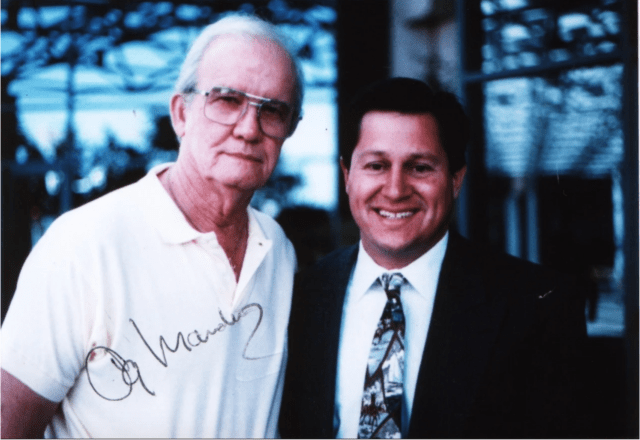
So, what’s the message? There’s no better time than today to take a bad habit and turn it into a good one, and I’ve been endlessly inspired by Og Mandino’s teachings, and was fortunate enough to have him as a friend and mentor. Thank you, Og Mandino, for always reminding me that my life goal should not be to win or be number 1; it’s to be the best version of myself. As another mentor of mine Bill Walsh says, if you do that “the score takes care of itself.”

Pictured: Gino and Og Mandino circa 1986.

No more posts.