Thoughts on Leadership: Lessons from the NFL

By Gino Blefari

This week, my travels took me to Washington D.C. to participate in both the NAR (National Association of REALTORS) Advisory Group Meetings and RISMedia’s 36th Annual CEO & Leadership Exchange. Earlier today, I also had the privilege of spending time with the team at Long & Foster in the area. It’s always inspiring to see how shared insights can further strengthen our connections and enhance our collective performance.

Interestingly, my week in D.C. placed me in close proximity to the fervent energy of the Ravens Flock, the ardent fans of the Baltimore Ravens football team. And what timing! Tonight marks the kickoff for the Baltimore Ravens vs. Kansas City Chiefs game. Like many of you, I’m revved up for some football and eager to see how the season unfolds.

Read more: Thoughts on Leadership: Lessons from the NFL

Football, much like real estate and leadership, is a game of strategy, foresight, and adaptability. As leaders, we must anticipate challenges, navigate complex situations, and make decisions that benefit the entire team. Interestingly, I learned that this NFL season has introduced several crucial rule changes aimed at protecting players while keeping the game fair, competitive, and exhilarating. These adjustments offer valuable lessons in how organizations can balance innovation with tradition and safety.

The rule changes, enacted by NFL clubs, come from a broad and inclusive process, involving collaboration across the sport—coaches, general managers, owners, players, NFL legends, the NFL Players Association, medical staff, and even the media. This approach mirrors effective leadership practices where diverse perspectives enrich decision-making. It’s crucial for leaders to engage and listen to a range of voices to shape the best outcomes.

The questions guiding these NFL deliberations are strikingly relevant to broader leadership challenges:

  • Does this decision improve the team or organization?
  • How will it be communicated and implemented?
  • Can it be coached, trained, or applied in practical scenarios?
  • Does it enhance the well-being and protection of those involved?

One significant rule change for 2024 is the elimination of the hip-drop tackle, which prioritizes player safety while maintaining the competitive integrity of the game. In leadership, similarly, we must continually assess our decisions to ensure they protect our teams and foster a supportive culture.

Another notable adjustment is the kickoff rule change, designed to encourage more returns by aligning players closer and reducing the speed of play. This alteration underscores the importance of strategic positioning and teamwork—fundamental principles in leadership. By properly aligning our teams and taking the time to analyze situations thoroughly, we create more opportunities for success.

These NFL changes were rigorously reviewed in off-season meetings, training camps, and officiating clinics, complete with tailored training videos to aid players and coaches in adaptation. This thorough preparation serves as a reminder that equipping our teams with the right tools, knowledge, and training is essential for adapting to new challenges and realities.

So, what’s the message? Leadership, much like football, demands continuous adaptation and a steadfast commitment to protect and empower our teams. Whether responding to shifts in our industry or refining our strategies for success, it involves balancing innovation with the well-being of those we lead. By observing the NFL’s approach to rule changes—characterized by collaboration, foresight, and thorough preparation—we can enhance our own leadership practices. These lessons from the world of football provide valuable insights for us. Let’s apply these principles to our work and lead with intention, ensuring every decision advances the team.

Thoughts on Leadership: What Our Pets Teach Us About Loyalty

By Gino Blefari

This week, I traveled to Dallas, TX, to speak at the Tom Ferry Success Summit. I had the opportunity to participate in TOMX, a segment of the Summit featuring short talks from industry leaders. My presentation, “Start Strong: The Ultimate Morning Routine for Success,” emphasized the power of a structured morning routine—a key to thriving amidst chaos and achieving sustained excellence.

The theme of this year’s Summit, “Charge the Storm,” was a powerful reminder of the importance of facing adversity head-on. While in Dallas, I also spent valuable time with our team at the Ebby Halliday Companies’ Home Office. We shared laughter, gained insights, and, most importantly, strengthened our bond as a team. It’s moments like these that remind us why we take pride in being part of the HomeServices of America family.

Read more: Thoughts on Leadership: What Our Pets Teach Us About Loyalty

Amidst the busyness of travel and presentations, I found a moment to reflect. This past Monday, August 26th, was International Dog Day—a day to celebrate the loyal companions who bring so much joy to our lives. As I thought about the loyalty of our pets, I realized how much we, as leaders, can learn from them.

Loyalty is a cornerstone in both our personal lives and our professional endeavors. Our pets embody the kind of steadfast loyalty that is essential for successful leadership and thriving business relationships.

1. Unconditional Loyalty Dogs are renowned for their unconditional loyalty. They greet us with enthusiasm after a long day, stick by our side through thick and thin, and offer comfort when we need it most. This kind of loyalty, rooted in genuine care and commitment, is something leaders should strive to emulate. In business, loyalty isn’t just about sticking with your team when times are good—it’s about being there through challenges and uncertainties, showing your team that you’re invested in their success, no matter what.

2. Building Trust Loyalty and trust go hand in hand. Our pets trust us to provide for them, and in return, they offer their unwavering loyalty. As leaders, building trust within our teams is crucial. Trust fosters open communication, collaboration, and a sense of security among team members. When your team trusts you, they’re more likely to be loyal, putting in their best effort and standing by you even when challenges arise.

3. Consistency Matters One of the reasons pets are so loyal is because they rely on consistency. They thrive on routines, knowing that they can count on their owners to be there for them at specific times. Similarly, consistency in leadership builds confidence within your team. When leaders are consistent in their decisions, actions, and values, it creates a stable environment where loyalty can flourish. Team members know what to expect and can trust that their leader will support them, no matter the circumstances.

4. Celebrating Small Wins Anyone who’s ever trained a dog knows the importance of celebrating small wins. Whether it’s a new trick learned or simply obeying a command, those moments of recognition strengthen the bond between pet and owner. In leadership, recognizing and celebrating the small victories within your team is just as important. These celebrations reinforce loyalty by showing appreciation for hard work and dedication, motivating your team to continue striving for success.

5. Loyalty as a Two-Way Street Lastly, loyalty in leadership, like in any relationship, is a two-way street. Just as our pets are loyal to us, we must also be loyal to them, providing them with care, attention, and love. In business, this means being loyal to your team, advocating for their needs, supporting their growth, and being their biggest champion. When leaders show loyalty to their teams, it creates a culture where loyalty is reciprocated, leading to a more cohesive and motivated workforce.

So, what’s the message? As we reflect on International Dog Day, which we celebrated just a few days ago, let’s take a moment to appreciate the loyal companions who enrich our lives and consider how we can bring that same spirit of loyalty into our leadership. Even after the celebration has passed, the lessons remain timeless. In a world that’s constantly changing, loyalty stands as a foundational value that strengthens both our personal and professional relationships.

The Echoes of Equality: Celebrating Women’s Equality Day

By Gino Blefari

This week, while engaged in virtual filming with our team for Berkshire Hathaway HomeServices, exploring magnificent global open houses and dream destinations, I was continually reminded of the broader dreams we share for a more equitable world. These reflections make the upcoming Women’s Equality Day especially resonant for me. As the son of a remarkable mother, brother to two incredible sisters and father to two brilliant daughters, the day’s significance is deeply personal.

This day, which we celebrate on Monday, August 26, 2024, isn’t just a historical marker; it’s a heartfelt call to champion a world where the cherished women in my life, and women everywhere, can flourish unhindered. It’s a day to celebrate our strides forward and to rekindle our dedication to the journey ahead.

Read more: The Echoes of Equality: Celebrating Women’s Equality Day

On August 26, 1920, a monumental shift occurred in the United States: the 19th Amendment was certified, granting American women the right to vote. This historic victory was the result of decades of relentless advocacy by the suffrage movement, an endeavor spearheaded by a courageous group of women who dared to challenge societal norms to secure this fundamental right. As we approach Women’s Equality Day, it’s a moment not only to celebrate this pivotal achievement but also to reflect on the continuous journey toward gender equality and the influential figures who have championed this cause.

Ruth Bader Ginsburg: The late Supreme Court Justice, affectionately known as RBG, was a titan of justice whose legal prowess reshaped the American legal landscape regarding gender equality. Ginsburg’s strategic litigation before she ascended to the Supreme Court helped establish the legal precedents necessary to combat gender discrimination. Her leadership lesson was clear: use the power of the law as a tool for change, proving that steadfast resolve and intellectual rigor can alter the course of history.

John Legend: An unexpected but powerful advocate for women’s rights, John Legend has used his platform in the music and entertainment industry to speak out against gender inequality and promote change. His participation in campaigns focusing on education and justice for women demonstrates the impact of allyship in feminism, showcasing that gender equality should involve the active participation of all genders.

Michelle Obama: As the First Lady of the United States, Michelle Obama transformed the role into a platform for advocating for women’s and girls’ education worldwide. Her initiatives, such as Let Girls Learn, not only aimed to break the barriers that keep girls from achieving their potential but also highlighted the global scale of gender inequality. Her lesson is one of inclusivity and the global sisterhood, reminding us that our efforts must transcend borders.

Prince Harry: Prince Harry’s advocacy for women has often been through his charitable work, focusing on issues like girls’ education in developing countries and support for women in the military. His actions remind us that leadership in gender equality means being an active participant and supporter, not just in public declarations but also in tangible actions that support systemic change.

So, what’s the message? As we honor Women’s Equality Day, let us be inspired by leaders like Ruth Bader Ginsburg and Michelle Obama, who have shown that leadership has many faces and can profoundly impact our pursuit of gender equality. Today, I challenge you to reflect on how you can promote equality, whether through mentorship, improving workplace practices, or meaningful discussions about gender rights. Let’s live out the spirit of this day in all we do, leading the way to a world where everyone can thrive.

Thoughts on Leadership: Insights from the Evolution of the Paralympic Games

By Gino Blefari

This week finds me at home, starting off with my usual WIG calls on Monday. By Tuesday, I was hosting our monthly leadership meeting, which was brimming with innovative ideas shared by our company leaders. These gatherings are always a vibrant testament to the power of collaborative leadership.

Three weeks ago, in my blog titled “Going for Gold,” I delved into the Olympics, capturing the essence of competition and camaraderie. Building on that theme, this week I want to explore the upcoming Paralympic Games. As we look forward to these games, they provide another dimension to our understanding of sportsmanship and resilience.

Read more: Thoughts on Leadership: Insights from the Evolution of the Paralympic Games

As the Paralympic Games are set to unfold in Paris from August 28 to September 8, 2024—just 17 days after the Olympics—the anticipation is building for what promises to be an extraordinary display of human spirit and tenacity. The opening ceremony at Place de la Concorde, heralded as a festival of inclusion, will not only showcase athletic prowess but also symbolize a profound narrative shift in how we view ability and leadership. This event challenges us to rethink the boundaries of what is possible, both in sports and in leadership.

From its humble beginnings in 1960 with just 16 disabled veterans to becoming a premier international sporting event, the Paralympic Games have witnessed phenomenal growth in both scale and impact. What started as an archery contest in Rome has blossomed into a global celebration of athletic prowess and diversity, featuring thousands of competitors worldwide. This evolution highlights core leadership attributes—resilience, inclusivity, and vision—qualities that resonate deeply within the real estate industry. Reflecting on the Paralympics’ growth offers invaluable lessons for thriving in today’s fiercely competitive market.

  1. Resilience Redefined by Hunter Woodhall: Sprinter Hunter Woodhall, who races on prosthetic blades after losing his legs in childhood, teaches us that obstacles are merely opportunities in disguise. His journey to the Paralympics, marked by countless victories and the challenge of balancing athletic and academic commitments, is a testament to an enduring spirit and the power of resilience—a critical lesson for leaders everywhere.
  2. Vision Beyond Limits with Mallory Weggemann: Paralyzed from an epidural injection at 18, swimmer Mallory Weggemann redefines the essence of visionary leadership by continually pushing beyond perceived limits. Her journey back to swimming and subsequent gold medals are not just achievements; they challenge our understanding of the possible, demonstrating that the true limits are the ones we set for ourselves.
  3. Empathy in Action with Jessica Long: Born with fibular hemimelia, resulting in the amputation of both legs, swimmer Jessica Long’s ability to empathize deeply with her teammates’ struggles and strengths enhances her leadership. Her approach underscores the importance of connecting on a human level, which is crucial for strengthening team dynamics and fostering an environment of support and cooperation.
  4. Courage and Commitment by Elizabeth Marks: As a soldier and swimmer, Elizabeth Marks does not shy away from life’s challenges, whether competing in the pool or serving her country. Her remarkable recovery and success in swimming after sustaining serious injuries in service highlight her courage and unwavering commitment. Elizabeth’s story inspires those around her to pursue excellence and integrity relentlessly.

So, what’s the message? The Paralympic Games not only challenge athletes to achieve their best but also provide a platform for emerging leaders to inspire and influence. Each story of resilience, vision, and courage from these games carries profound lessons for leadership in any field, encouraging us to reflect on our values and strive towards creating inclusive, empowering, and visionary communities.

Back to School: Leadership Lessons from the Classroom to the Boardroom 

By Gino Blefari

As another busy week unfolds with WIG calls and a quick flight to Orange County, the closest portal to the magic of Disneyland, I find myself surrounded by families at the airport. The air is charged with excitement and the slight chaos of last-minute summer travels. It’s a clear signal that the back-to-school season is upon us, heralding new beginnings and fresh challenges. Amid this seasonal shift, I’m reminded of my own days navigating back-to-school preparations with my daughters in the ’90s and my 26 years at DeAnza College. As a professor specializing in real estate practices, real estate principles, and professional selling, each semester was a new chapter of insights and enlightenment, shaping the next generation of professionals. 

This period of transition offers more than just a return to academia; it serves as a rich source of leadership lessons applicable to the corporate world. In this blog, I’ll share insights from five different perspectives: parents, children, teachers, family planners, and corporate leaders, highlighting how each offers unique lessons in leadership. 

Read more: Back to School: Leadership Lessons from the Classroom to the Boardroom 

The Adaptive Strategies of Parents and Caregivers 

Consider the adaptability required of parents as they orchestrate everything from purchasing school supplies to managing carpool schedules. This flexibility mirrors the dynamic adjustments leaders must make in the business world. Effective leaders, like seasoned parents, continuously adapt their strategies to navigate changing conditions and seize emerging opportunities. 

Resource Management: A Lesson from the Family Planner 

The meticulous planning that goes into managing a family’s logistics reflects the strategic resource management essential in business. Parents setting a budget for back-to-school expenses resemble executives forecasting for a financial quarter, where prioritization and strategic planning are key to achieving goals without exceeding limits. 

From Children: The Power of Curiosity and Resilience 

Children’s boundless energy and curiosity remind us of the importance of fostering a culture of continuous learning and innovation in our organizations. Their resilience in facing new academic and social challenges also offers a lesson in emotional intelligence for leaders, underscoring the importance of perseverance and adaptability. 

Teaching: The Art of Influence and the Necessity of Feedback 

Behind the scenes of every successful classroom is an extraordinary teacher who masters the art of personalization. Exceptional educators recognize the uniqueness of each student, tailoring their methods to individual learning styles. This personalized approach demands extensive preparation and a deep understanding of each student’s needs, mirroring the bespoke strategies leaders use in managing teams. By adjusting content and teaching styles based on real-time feedback and engagement levels, teachers showcase a high level of responsiveness and care, traits that are invaluable in leadership. 

Furthermore, the best teachers know how to create a safe environment that encourages experimentation and growth. This atmosphere allows students to express themselves and explore new ideas without fear, fostering innovation and learning from mistakes. The preparation involved in creating such a supportive space is significant and often involves careful observation, ongoing adjustments, and a profound understanding of group dynamics. Leaders can draw valuable lessons from this approach by fostering a culture that values trust and psychological safety, which are essential for team effectiveness and resilience. 

Additionally, feedback is utilized by skilled teachers not just to assess, but to inspire and guide. They invest considerable time in crafting feedback that is constructive, timely, and specific, helping students understand not only what to improve but how to improve. This meticulous process involves observing various indicators of understanding, gathering insights, and communicating them in a way that motivates and educates. Similarly, in the corporate world, the ability to deliver effective feedback is critical for professional development and organizational growth, highlighting it as a key skill for leaders who aim to drive high performance and alignment. 

Fostering a Family-Inclusive Culture 

I recognize the strains and stresses that the back-to-school season can bring, and I am deeply committed to fostering an environment where work-life balance transcends being merely a buzzword—it becomes a daily practice. This personal commitment not only aims to enhance productivity but also to significantly boost job satisfaction. It is my hope that by embracing this approach, we see positive outcomes for everyone on my team who puts this philosophy into practice every day. 

In line with fostering this balanced environment, I often share crucial time management strategies in my classes that everyone, from parents to executives, can apply to make the most of their time. Here are a couple of pivotal points: 

  • Make It Exist: If it’s not in your schedule, it doesn’t exist. This simple rule underscores the importance of consciously scheduling time for both work and personal activities to ensure they receive the attention they deserve. 
  • Plan the Year: Start by scheduling every day off—holidays, vacations, birthdays, date nights, exercise sessions, doctor appointments. Anything that contributes to a well-rounded life should be plotted out in advance. This holistic approach to scheduling helps maintain a healthy balance between professional responsibilities and personal well-being. 
  • Commit with Caution: Once your schedule for the year is set, never make a commitment of your time without reviewing your schedule. This discipline ensures that you maintain control over your time and prevents overcommitment, which is essential for sustaining a long-term balance. 

By adopting these time management strategies, we can all improve our ability to juggle the various demands of life and work, ensuring that we not only perform at our best but also enjoy well-deserved breaks that rejuvenate and inspire. 

So, what’s the message? As we navigate the bustling back-to-school season, let’s uncover leadership lessons from an unexpected source—the school diary. From the meticulous planning of parents to the nuanced guidance of teachers, each story is a chapter in what could be the most practical leadership manual. Whether you’re a seasoned executive or a budding leader, remember: the lessons learned on the playground are often just as applicable in the boardroom. Embrace this season not only as a time of academic and personal growth for students but also as a unique opportunity for all of us to refine our own leadership abilities. And who knows? A little homework on these fundamental principles might just be the key to acing your next big leadership challenge! 

Thoughts on Leadership: Cultivating Tomorrow’s Leaders

By Gino Blefari

This week, my routine didn’t take me far; I stayed home to tackle the usual Monday lineup of WIG calls. Today, marking the start of August, we have about 21 weeks left in 2024. It’s this part of the year when I dive into business planning and kick off our regular succession planning process. I’m excited to share what this entails.

A succession meeting, straightforward as it may sound, is a vital opportunity for any CEO to strategize their potential succession should they decide to step down or if unforeseen circumstances arise. As Benjamin Franklin wisely put it, “If you fail to plan, you are planning to fail.”

Read more: Thoughts on Leadership: Cultivating Tomorrow’s Leaders

Succession planning isn’t merely about choosing a successor; it’s about cultivating potential leaders long before there’s an empty seat at the top. Future leaders need to be identified, nurtured, and multiplied to secure the organization’s continuity and success.

In “The Leader’s Greatest Return,” John C. Maxwell outlines a ten-step method for fostering a new generation of leaders within your organization. Here’s how it goes:

  1. Identify: The first step is recognizing potential leaders within your team. Look closely at each member and evaluate their leadership potential.
  2. Attract: To draw in strong leaders, maintain openness and transparency. Let potential leaders know there is a place for them at the top if they stay focused, productive, and dedicated.
  3. Understand: Developing a deep connection with your team members is crucial. I use a set of 18 questions to better understand them, but whatever your approach, aim to build trust and respect.
  4. Motivate: True motivation is self-generated. If you inspire your team to motivate themselves, they’ll sustain their passion far longer than if you’re the sole source of their motivation.
  5. Equip: Preparing leaders means providing them with a clear roadmap to success. This could be through systems of accountability or goal-setting frameworks.
  6. Empower: Once leaders are ready, step back. Avoid micromanagement. Empowered leaders are more effective and drive better results.
  7. Position: A team of synchronized leaders, much like the crew in Daniel James Brown’s “The Boys in the Boat,” achieves more together.
  8. Mentor: Having benefited from many mentors myself, I understand the value of passing on knowledge and experience to groom future leaders.
  9. Reproduce: Good leadership practices should be replicable. Ensuring that your leaders can teach others guarantees a sustainable leadership pipeline.
  10. Compound: According to the Pareto principle, about 80% of effects come from 20% of the causes. In leadership, fostering key leaders is that critical 20% that significantly impacts growth.

So, what’s the message? The measure of a leader’s success is how well they can forge new leaders. It’s not just the best way—it’s the only way to guarantee a future that is both successful and bright.

Thoughts on Leadership: Going For Gold

By Gino Blefari 

This week found me at home, kicking off with my usual WIG calls on Monday. The days that followed were packed with activity—from engaging in Global Open House to participating in a video shoot with The Wall Street Journal. On Wednesday, I led a class at the Intero Academy titled “Upgrading your Buyer’s Presentation with your value proposition.” Amidst these commitments, my excitement for the upcoming Olympics has been growing—a spectacle of athleticism and dedication that inspires this blog.

As we shift focus from my weekly endeavors, let us delve into the Olympics, an event that embodies the pinnacle of high performance and global aspirations. I have always admired the Olympics for its power to bring together the world’s elite, each demonstrating their relentless dedication and exceptional skills. As Jim Rohn wisely stated, “Don’t join an easy crowd; you won’t grow. Go where the expectations and the demands to perform are high.” Indeed, there is no greater stage than the Olympics to witness such extraordinary demonstrations of human potential and achievement.

Read more: Thoughts on Leadership: Going For Gold

The Paris 2024 Olympics are setting a new stage for a time-honored tradition, redefining how we experience the grandeur of these games. Marking a historic first, the Opening Ceremony will break from the traditional confines of a stadium to immerse itself in the heart of Paris, using the iconic Seine as its stage. This transformation is not just a logistical achievement; it’s a bold statement of accessibility and innovation that mirrors leadership qualities of openness and visionary thinking. Imagine the Seine bustling with boats, each one carrying athletes representing their countries’ hopes and dreams, gliding past jubilant crowds. This novel setting isn’t merely a ceremony; it’s a reinvention of tradition that underscores the essence of leadership: the courage to forge new paths and the wisdom to bring everyone along on the journey. With eighty giant screens placed strategically around the city, this spectacle ensures that its magic resonates in every corner of Paris, teaching us that true success is always shared.

From the dynamic skateboarding ramps to the precision-driven gymnastic mats, Paris 2024 sets the stage for a thrilling display of new talents alongside revered champions. These athletes, stepping into the Olympic arena for the first time, are not just participating; they are embracing a transformation that will define their careers forever. I want to share the stories of some of these remarkable newcomers who are ready to make their mark on the world stage in Paris.

Arisa Trew from Australia, at just 14 years old, has redefined the boundaries of skateboarding by becoming the youngest female to land a 900-degree spin—a feat announcing her presence on the world stage with gravity-defying audacity. Her journey reminds us that leadership often involves breaking norms and inspiring others with bold, groundbreaking achievements.

B-Boy Shigekix of Japan, another young trailblazer, brings his unique blend of technical mastery and creative expression to the breaking stage. The sport of breaking is set to make its Olympic debut in Paris and therefore will see an entirely new class of Olympians take to the stage. His journey from the Youth Olympic Games to his first Olympic appearance illustrates a key leadership lesson: growth is an ongoing journey, and true leaders continuously seize new opportunities to inspire and excel.

Hezly Rivera, a 16-year-old gymnastic prodigy from the USA, shines as a prime example of how fresh talent can invigorate a team. Rivera’s rapid ascent through the ranks underscores her role as a beacon of hope and inspiration. Her perseverance and commitment were vividly displayed at the U.S. Olympic Team Trials for gymnastics in June, where she distinguished herself by becoming the only female gymnast to secure a spot for the Games without a prior Olympic medal. As she prepares to represent her country, Rivera embodies the spirit of leadership that uplifts and motivates those around her.

Sha’Carri Richardson, though not a newcomer to the track, will make her Olympic debut with a resume that speaks volumes about her speed and determination. Transitioning from a record-setting college athlete to a world champion, Sha’Carri’s quest for Olympic gold is not just about personal achievement but about setting a new standard for excellence and leadership on the global stage.

So, what’s the message? As the Paris 2024 Olympics approach, we are reminded that the quest for gold is not solely about the accolades or the record-breaking moments; it’s about the journey of relentless pursuit, the spirit of resilience, and the leadership shown in every stride, leap, and spin. These athletes, from the seasoned champions to the ambitious newcomers, teach us that leadership is a constant evolution of pushing boundaries and elevating others along the way. Let their stories inspire us to pursue our own versions of gold in all we do, striving to embody the Olympic creed to be “Faster, Higher, Stronger – Together,” as we all forge ahead in the relentless pursuit of excellence.

The Power of a Morning Routine: Key to Daily Success

By Gino Blefari

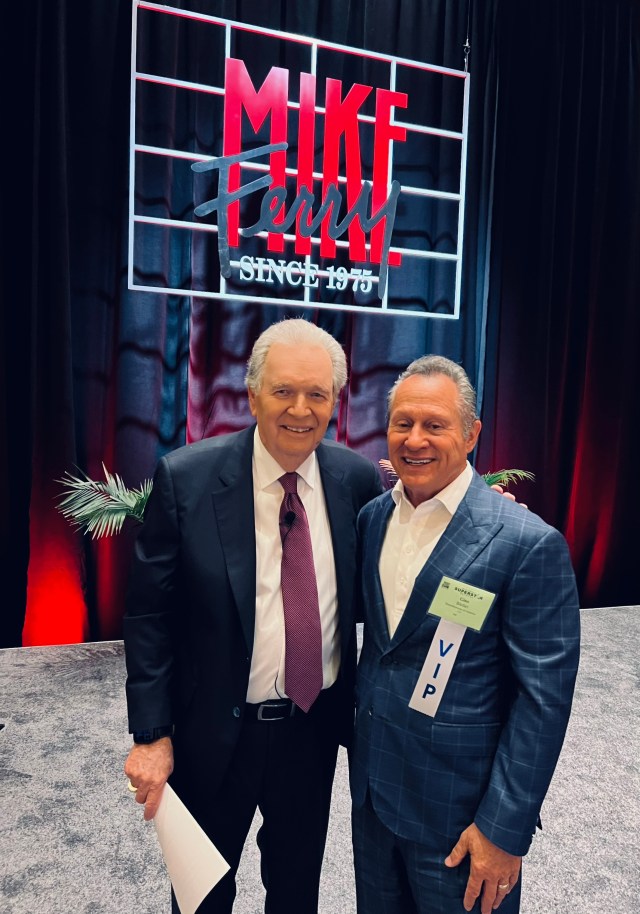
This week’s blog is sparked by my recent experience at the Mike Ferry Superstar Retreat in Las Vegas, NV—an annual event that not only gathers the crème de la crème of the real estate world but also serves as a potent reminder of the foundational practices that fuel success. Immersed in the electrifying atmosphere of this renowned gathering, I reconnected with core principles that resonate deeply with Mike Ferry’s philosophy. It reinforced the need to cultivate discipline, maintain consistency in our routines, engage actively with our community and database, and commit to daily action. These elements are not just strategies but are the bedrock upon which sustainable business growth is built. Inspired by the collective energy and shared insights, this blog aims to explore how these fundamental practices can be integrated and tailored to enhance our professional and personal growth.

Read more: The Power of a Morning Routine: Key to Daily Success

Building on the inspiration from the retreat, let’s dig deeper into how these foundational practices manifest most effectively in our daily routines. The simple truth is, the power of a well-structured morning routine cannot be overstated. This week’s discussion is not just about the routine itself, but about transforming our approach to every day through disciplined, purposeful actions.

In the relentless pursuit of success, the magic often lies not in the extraordinary but in mastering the mundane. A structured morning routine stands as a cornerstone for thriving in chaos and achieving sustained excellence. This week’s blog delves into the transformative power of morning routines, a ritual endorsed by history’s most successful figures and supported by modern science.

The Science of Starting Strong

The significance of a solid morning routine is well-documented. Researchers like Steffanie Wilk and Nancy Rothbard found that individuals starting their day on a positive note continued to experience and project positivity throughout the day. This isn’t just about feeling good; it’s about setting a tone that enhances interaction quality and job performance, particularly in roles dependent on client interaction.

A well-orchestrated morning ritual harnesses the psychology of ‘small wins.’ Engaging in M.E.D.S.—Meditation, Exercise, Diet, and Sleep—each component serves as a mini-victory that collectively gears the mind and body for the day’s challenges. These are not just activities but small steps that lead to massive transformations over time, proving the adage by Vince Lombardi, “Fatigue makes cowards of us all.”

The Routine of Champions

Drawing parallels from sports, Michael Phelps’s commitment to his morning and race-day routines was pivotal in his journey to becoming the most decorated Olympian. It wasn’t just about the physical training but also about mental preparation, reflecting a balance between body and mind that facilitated peak performance under pressure. His coach, Bob Bowman, emphasized that the key to victory on the world stage was as much about the right physical training as it was about mental and emotional preparation.

This approach is not limited to athletes. CEOs and leaders across industries mirror this discipline. A survey highlighted that a majority of successful executives wake up early, integrating physical activity and a nutritious breakfast into their morning routines, which they credit for their high energy levels and sharp focus throughout the day.

Integrating Routine into Every Facet of Life

The benefits of a structured routine extend beyond personal success; they foster professional excellence and collective well-being. Regular routines enrich the professional environment, enhancing creativity, reducing stress, and promoting a proactive rather than reactive mindset.

Whether it’s through a gratitude journal that boosts well-being or a rigorous exercise regimen that prepares one for daily challenges, the essence of a successful routine lies in its regularity and the intention behind it. As Aristotle famously said, “We are what we repeatedly do. Excellence, then, is not an act, but a habit.”

Embracing the M.E.D.S Philosophy

To anyone looking to overhaul their morning routine or understand its impact better, consider adopting the M.E.D.S strategy. Start your day with meditation to clear your mind, exercise to energize your body, a nutritious diet to fuel your endeavors, and ensure you get enough restful sleep to recover and rejuvenate.

So, what’s the message? The morning routine is your secret weapon. It’s the quiet time you spend on yourself before the world demands your attention. It’s the daily commitment to your physical, mental, and emotional health. And most importantly, it’s the small daily discipline that leads to lifelong success. So, set your alarm, plan your morning, and prepare to transform your day, one morning at a time.

Thoughts on Leadership: Celebrating Independence Day

By Gino Blefari

This week finds me at home, starting Monday with my usual WIG calls—a staple of my weekly routine. On Tuesday, I ventured out to the Intero Real Estate Services office in Cupertino. I’ve really come to cherish this new rhythm of spending a few days each week at a local office. It not only brings a refreshing change to my workflow but also helps me stay connected with the daily activities of a realtor.

Just yesterday, I sat down to craft this blog, filled with thoughts stirred by the upcoming July Fourth celebrations—a time of year that always sweeps me back to my childhood joys.

Read more: Thoughts on Leadership: Celebrating Independence Day

To better connect with my team, I’ve introduced an “Innerview” consisting of 18 questions we ask each other. One favorite question is, “What’s a childhood memory that stands out?”

My answer is always the same: July Fourth.

Growing up, I lived on a cul-de-sac and during July Fourth, the entire cul-de-sac (about 10 neighborhood families) would gather. They’d all chip in to buy fireworks and we’d have a big potluck BBQ in the middle of the street. Each family brought their own meat to BBQ and potluck dishes – baked beans, a salad, desert – for everyone to enjoy. After we devoured a delectable summer meal, we’d set off the fireworks and celebrate the Fourth of July.

Even just writing about those childhood BBQs right now makes me smile.

But I don’t just love July Fourth for its youthful nostalgia. I also love it because it’s a celebration of teamwork coming together for the greater good.

Imagine we’re not in 2024 but in 1776. Most of the 13 colonies have been in existence for more than 150 years. There’s a strong middle-class economy in development made up of farmers, artisans, lawyers and tradespeople. Everyone travels by horse-drawn carriages. Food is prepared by the heat of a wood-burning fire. The American Revolution, which had begun in April 1775 was still raging and colonists were deeply passionate about winning their independence.

In June 1776, Thomas Jefferson sat down to pen the Declaration of Independence, and on July 2, the Continental Congress declared freedom from Great Britain. And on August 2, 1776, the Declaration of Independence was signed.

So, if the document was written in June, declared July 2nd (not 4th) and signed in August, what are we celebrating on July 4?

This.

After independence was declared, the Continental Congress needed a document to explain to the public what had happened. A smaller committee proposed the draft on July 2, and it took two days for the wording of the Declaration of Independence to be approved. With that consent, the completed document was sent to a printer named John Dunlap, who printed 200 copies of the document. When the printed copies of the Declaration of Independence were distributed, the date on the document said July 4, 1776.

So, what’s the message? July 4th is of course a celebration of America’s independence but on another level, it’s a time to look back on what teamwork can achieve. Had the Continental Congress not been able to come to an agreement that the document was complete, had there been less synergy, less positive culture and less collaboration between them, the date of our independence might have been different – if it even happened at all. This week, although I’m not back on my old cul-de-sac enjoying the deliciously smoky taste of just-barbecued steaks, I will be with my family and friends, thinking about our country and the team that instilled the ideal of a nation where freedom should always ring.

Happy Fourth of July!

Thoughts on Leadership: Omotenashi

By Gino Blefari

This week, my travels took me to Orange County, CA, where I joined our dedicated HSF Affiliates team for a series of inspiring meetings and dynamic filming sessions at our headquarters. To cap off a bustling Tuesday, I had the wonderful opportunity to join Tom Ferry in his Santa Ana studio to record a podcast that I can’t wait for you all to hear. Each moment was filled with insightful exchanges and laughter, truly embodying the joy of our collaboration.

I returned home Wednesday evening, and earlier today, I had the privilege of joining forces with Intero Real Estate Services, East Bay, and the legendary Mike Ferry. Immersed in Mike’s invaluable wisdom and coaching, our session was enlightening. I’m eagerly anticipating our next meeting at the Superstar Retreat in Las Vegas, NV, next month.

Read more: Thoughts on Leadership: Omotenashi

This week, I also came across an inspiring article shared by my friend and esteemed colleague, Rishi Bakshi, Broker & General Manager at Intero Real Estate Services, East Bay. Authored by Matthew Ferrara, the piece explores the elegant Japanese concept of omotenashi, which represents the heart of hospitality, focusing on hosts dedicating themselves to ensure the happiness and success of their guests.

I’m thrilled to credit Matthew for sparking the idea behind this week’s blog. I’m excited to share his insights with you and hope you find them as valuable as I did. Dive in and let the spirit of omotenashi enrich your day as it has mine. Enjoy!

IT’S TIME TO EXCEL

This summer is your big opportunity to get out in front, and stay there!

As the summer approaches, changes to business, technology, even politics promise to alter the landscape forever. But for most people, the real opportunity isn’t reacting to what’s new: It’s learning to do things at an unparalleled level of excellence that will set them apart. Here’s how.

OMOTENASHI

Let me introduce you to my favorite Japanese concept: omotenashi. Simply put, it’s the mindset of a host who is fully committed to the hospitality and success of their guest. Or in our case, the client. It’s a cultural phenomenon in Japan, and something anyone can learn with practice. A way of thinking about clients that redefines contractual relationships entirely. And of approaching our work where guests are cared for so deeply, we anticipate their satisfaction, not their service requirements.

It would be a fresh take on what’s happening in real estate, where everyone is much too worried about contracts and not focused enough on our contacts.

YOU NEVER FORGET THIS KIND OF EXPERIENCE

A few years ago, I was in Tokyo fulfilling a lifelong bucket-list trip. While Japanese politeness and manners are legendary – and sometimes awkward for Westerners – I was definitely enjoying the attention-to-detail. Cab doors that open themselves. Checking into my room from the lounge, not a line at the desk. The cleanest bathrooms I’ve ever seen — in the subway station!

At one point, I was so overwhelmed with the feeling of being cared for that I wondered if I was being watched.

One morning, I tossed an empty toothpaste tube in the trash; After lunch, I found two fresh tubes left by housekeeping on the sink. Grabbing my camera, I asked the concierge for directions to the subway; by the time he explained, a nearby colleague had printed a map with the route from the lobby, and reminders about buying passes.

She even wrote her name and phone number on the paper in case I got lost walking around by myself!

Later that evening, I returned to find an envelope on my desk. Inside, a pamphlet of photography spots around Tokyo had been highlighted, with a special star next to a night tour, courtesy of the Concierge. For a moment, I thought about checking my room for hidden cameras: Then, I laughed out loud. Imagine taking your guest’s experience in your country so seriously, that you anticipated what they would enjoy — not just what you were obligated to serve — and then offered it —

Wholeheartedly!

BEYOND PAR

For the past few months, real estate has been talking about articulating value propositions. Smart, since the press has deeply tarnished the industry’s image. I’ve written recommendations, including going all-in, and hosting a webinar on articulating invaluable propositions, plus an ebook on Ten Things Buyer’s Agent Should Do Today.

So you should have plenty of great ideas to get prepared.

But to be honest, getting ready is just par for the course. You’ll easily do what you’ve always done: adapt, adjust and accelerate your approach to new conditions. But here’s the catch:

So will 1.5 million other real estate agents!

By the end of the summer, you’ll be doing new things, back on an even playing field with everyone else.

ACT (EXCELLENTLY) WHILE OTHERS ARE DISTRACTED

Which is why you might want to practice your Japanese this summer.

I believe there’s a historic opportunity for our industry this summer. While many people remain distracted by the noisy parts of the post-settlement world, you could be working on something even better. Forget about disruption, replacing NAR, or something-something-artificial-intelligence (today’s Chia pet). None of that creates anything close to the one thing serious sales professionals can do that will resonate for years:

GET EXCELLENT AT DELIVERING EXCELLENCE

Think about my experience in Tokyo: It was a level of excellence that’s unforgettable. More importantly, it’s rare in too many areas of the modern world. In places where great service once excelled — five-star hotels, first-class seats, top-notch universities, platinum/black/premier everything have been cutting corners and hedging bets for the past couple of years. And it shows; you’ve felt it:

They just don’t take your coat and hat like they used to anymore.

And yet, an opportunity exists this summer to change all of that, if only for yourself and your career. The time is now, because by November, it will be too late. Everyone else will have caught up on the changes, and ready to put energy back into competitive advantages.

So act, now.

PRACTICE OMOTENASHI: EXCEL AT THREE THINGS

It’s a rare moment, where excellence instead of tools or technology or price can set you apart in such a lasting way. If you decide to capture the moment and make excellence your partner in success, you can start by developing a wholehearted client experience in three ways:

  1. Focus on being present. Let empathy, not systems guide your manner of increasing value with clients. Your attention is the rarest commodity today.
  2. Develop a habit of thinking ahead. Practice chess not tennis, where your actions are focused on the end goal, not merely a compensated service request.
  3. Act with heartfelt intention, such that the time together with clients becomes unforgettable, more than delivering the goods specified in a contract.

Delivering excellence like this means developing a way of acting and being with others that cannot be copied, and therefore cannot be commoditized by others.

Just as your invaluable proposition by your personality and core values, your excellence can only be experienced at the moment, heart-to-heart, in flow with someone who matters.

EXCELLENCE BECOMES PRICELESS

Mastering the minor changes to business practices and contracts will be the easy part. Using the moment to raise the excellence of care will insulate your success against future consumer skepticism. Clients won’t compare it to anything else, past or present, because it’s not delivered by an artificial formulaonly a human interaction. Competitors can’t copycat it either, because excellence must be experienced, not packaged or price-reduced.

Best of all, your personal care will rise as well: Any lingering doubts about your worth, especially in novel buyer conversations, will fade as you become so focused on delivering unparalleled excellence that there’s no time for anxiety. As your excellence rises, it will become a magnet for something just as valuable:

Excellent clients — who wouldn’t dream of asking for more for less.

Let’s get excellent this summer!

—M

No more posts.