Thoughts on Leadership: Lessons from NCAA Women’s Basketball

By Gino Blefari

This week my travels find me starting Monday with my typical WIG calls. On Tuesday, I participated in an early morning Berkshire Hathaway Energy call followed by meetings in Los Altos. On Wednesday, I had several meetings and conference calls and then this morning, I participated in the Berkshire Hathaway Energy “Our Familia” Employee Resource Group (ERG) panel with facilitator Angelica Silveyra, current Chair of the panel and director of Customer Contact at NV Energy, Amy Key, Principal Engineer with Mid-American Energy and Antoine Tilman, Vice President of Customer Operations with NV Energy. Now, I sit down to write this post to you.

It’s been a while since we covered any sports news on the blog, and if you know me, you know I love sports and the lessons they can teach us about life and leadership. So, this week, I thought we’d dive into some lessons from the NCAA women’s basketball tournament. On Sunday, Louisiana State University defeated the University of Iowa 102-85 to win the 2023 NCAA women’s college basketball national championship, claiming its first-ever national title – not only in women’s basketball but also in collegiate basketball for the university.

Read more: Thoughts on Leadership: Lessons from NCAA Women’s Basketball

In other history-making updates, the LSU Tigers and Iowa Hawkeyes combined for the most points scored in title game history, and LSU set a record for the number of points scored by a team in the final.  Here are a few key leadership takeaways from the NCAA women’s basketball tournament this year:

Play by your own rules.

After winning the tournament, LSU’s Angel Reese said: “Just keep being you. Never let anybody tell you no or that you can’t do this, you can’t do that.” She talked about how people tried to create an image of her that was unlike the way she really was – or saw herself. But as Reese explained, nobody can define who you are but you.

Yahoo! Sports writer Shalise Manza Young wrote in a poignant article published earlier this week: “Reese [is] smart enough to see the game for exactly what it is and insistent that she’ll play by her rules, thank you very much.”

I was sent Young’s article by Johnnie Johnson, my good friend and former All-Pro for the Los Angeles Rams, author of “From Athletics to Engineering: 8 Ways to Support Diversity, Equity and Inclusion for All.” In his note to me, Johnnie said when he wrote his book, he knew that talking about race would cause discomfort for a great many people. He also knew that sports at all levels of the game would continue to provide an outlet for these necessary conversations.

Reese’s “just being you” mentality is an excellent example of the kind of straightforward, honest discourse we as leaders must embrace for our team members and organizations. Diversity is as much about togetherness as it is about individuality, and Reese’s insistence that she is defined by no one but herself celebrates the progress-making combination of the two.

This tournament was more than just a collection of fantastically played games; it was a movement toward greater equality.

Caitlin Clark, a star player for the University of Iowa, helped take her team to their first championship appearance. She was named Naismith Player of the Year and was also the first player ever – in women’s and men’s NCAA basketball – to earn a 40-point triple double in tournament history. For my non-sports readers, a triple double is when a player scores at least ten points, ten rebounds, and ten assists in a single game (i.e., double digits in three categories).

The history-making, record-breaking games translated into bigger audiences than ever before. A reported 2.5 million people watched Iowa defeat Louisville in the Elite Eight, and to put that number into perspective, televised NBA games this season have averaged about 1.6 million viewers, according to Nielson data.

Yet as fantastic an athlete as Clark is, she still faced microaggressions and inappropriate comments on her highlight reels and videos. The uncalled-for comments raise serious questions about the connection between the rise in popularity of women’s sports and why they were less popular in the first place. These women are extraordinary athletes, with passion, commitment, and talent that’s incredible to watch. Everyone should tune in with just as much enthusiasm as they do for the men’s tournament – if not more. I was on the edge of my seat watching Iowa play South Carolina, texting with Iowa Realty General Manager John Dunn. At exactly 8:49 p.m. Pacific time on Friday, I texted him and asked if he was watching, to which he responded: “Epic. I can’t wait for your Thoughts on Leadership.” So, if you like this post, you have John Dunn to thank.

Sports should bring people together, not tear them apart.

This year’s NCAA women’s basketball tournament experienced a 42% jump in viewership compared with last year. And the championship game was the most-watched college women’s basketball game in the history of the sport, peaking at 12.6 million viewers.

In a Harvard Crimson article, staff writer Marley E. Dias said: “Sports are meant to bring communities together, teach children important life skills in cooperation and discipline, and entertain. The suggestion that history-making athletes like Caitlin Clark and Angel Reese are anything less than extraordinary is more than false. It is a harm to the young girls on the court striving for excellence.”

So, what’s the message? The truth is, I wish this was one leadership post I didn’t have to write. Women athletes don’t just deserve their day in the spotlight because of this tournament, they deserve their day in the spotlight because they work hard, fight for every win, and commit to greatness in a way that will inspire generations to come.

Thoughts on Leadership: Lessons Learned – Cardboard Boxes & Apple Pancakes

By Gino Blefari

This week my travels found me in Las Vegas for the Berkshire Hathaway HomeServices Sales Convention. We learned. We recharged. We celebrated and most of all, we inspired each other to find even greater success tomorrow than we have today.

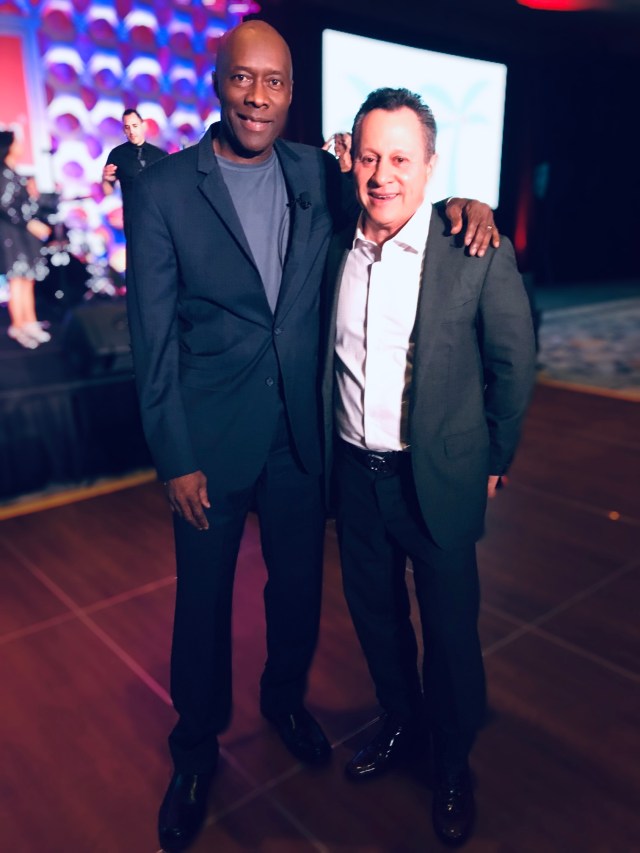
Each year at General Session, the presentations and awards are followed by a keynote speaker who shares their words of wisdom with the crowd. This year, after our keynote speaker Kevin Brown took a bow at the end of his speech, I heard someone behind me yell: “I’m feeling all the feels now.”

And I couldn’t agree more.

Read more: Thoughts on Leadership: Lessons Learned – Cardboard Boxes & Apple Pancakes

Kevin Brown made us laugh, cry, jump up from our seats to a standing ovation and recognize in his leadership lessons, the ways we can enrich our own. Here are a few takeaways from Kevin’s keynote:

There’s one question you should ask yourself, always. As Kevin said, ask yourself: “What can I do to add value to the people I serve?” He says when you look in the mirror, do you see yourself or do you see the people who helped you become you? We are the sum and the byproduct of all the people who have passed into (or out of) our lives.

Heroes are not ordinary people who do extraordinary things. Kevin believes heroes are far from ordinary. “I don’t think there’s a person in this room doing ordinary things,” he said. The true definition of a hero for Kevin is extraordinary people who choose not to be ordinary.

Splash brilliance on your cardboard box. As a child, our vision for the future is limitless. Then, Kevin explained, our vision begins to narrow, and we don’t see the world as it should be; we see the world as it is. Growing up, Kevin and his friends would live for the day someone bought a washer or dryer in the neighborhood. Why? Because once the box was discarded, they could use it for anything. “If someone got a refrigerator, jackpot!” He said. “We had a time machine. Inside the box, time stood still.” They’d color on the box, “splashing their brilliance” across the cardboard canvas. Then we grow up, Kevin said, and a box no longer stands for imagination, it stands for conformity. We say things like, “Think outside the box,” but Kevin said that phrase makes no sense. “The game is played in the box,” he explained. Why are we drawn to certain people and certain leaders? Because they never lost their ability to decorate the box. They still splash their unique brilliance on it every day. That’s why, to us, their approach to life and leadership looks different – because fundamentally, it is.

Nobody notices normal. A trip to Disney with Kevin’s son, Josh, who was diagnosed with autism, proved to be a turning point in Kevin’s theory of heroes and in his young son’s life. Josh was on a specific diet, and when they went to a restaurant at Disney on the first day of the trip, the chef didn’t have all the ingredients necessary to make the apple pancakes Josh requested. The next day, Josh asked to return to the restaurant, and the same chef was working. This time, she came out to their table and said she could make the pancakes. How? After the interaction the day before, she’d gone to the store on her way home from work and bought all the ingredients necessary for Josh’s apple pancakes. It was an incredible lesson in love, support, and customer service. “Nobody notices normal,” Kevin said. “Satisfied is code for ordinary and organizations chase it like gold.” Instead, you want enthusiastic ambassadors for your brand – the apple pancake variety of ambassadors – and that only happens with extraordinary customer service. Josh went to that restaurant every day for the entire trip, enjoying Mickey-shaped apple pancakes, and on his next trip to Disney, he returned once again, near-famous for his meal request. The chef had taken the interaction and transformed it into an opportunity to launch a menu for children with special dietary needs, and more than one million kids were served. The experience was so profound for Josh, he’d wind up moving to Orlando just to be closer to the chef, who he kept in touch with for years.

Customer feedback usually follows two kinds of interactions. Kevin said: “There are only two times when people talk about you: When you exceed expectations or miss them completely.” We’ll pay a premium for people who reach beyond the requirements and achieve something remarkable. Like the Disney chef, leaders must constantly ask that question: What can I do to make your life better? The chef could’ve easily said, “No, we don’t have apple pancakes on the menu.” And that would’ve been that. But she went to the store. She purchased the ingredients. She went above and beyond, and it did no less than change Josh’s life and the lives of the one million kids she’d go on to serve. Ordinary has become commoditized. It’s what some people wrongly compete with others to achieve. Extraordinary makes heroes.

Be careful of the vision people cast on your lives. Kevin said we either live up to or down to the vision people cast upon us and that practice isn’t right. Instead, we need to create our own storylines – just like his son, who was told by teachers and doctors he’d be lucky to even graduate high school. With hard work and support from his “Mama Bear” and family, Josh graduated high school … with honors.

So, what’s the message? Yes, a hero is an extraordinary person who chooses not to be ordinary but as Kevin explained, it’s also someone who understands the storyline life tries to give them and rewrites it their own way.

Thoughts on Leadership: In Memory of Wes Foster

By Gino Blefari

This week my travels find me starting Monday with my typical WIG calls. On Tuesday morning I participated in Intero’s Spring Blitz and the following day, I joined Intero’s Leadership Sessions then attended Intero’s Honors Awards. Today, I flew to Las Vegas to prepare for the upcoming Berkshire Hathaway HomeServices Sales Convention, which officially kicks off this weekend. And now, I sit down to write this post to you.

A few days ago, we received the sad news that Wes Foster, co-founder, and chairman emeritus of the Long & Foster Companies, passed away on March 17 at his home in Alexandria, Virginia. He was 89 years old.

Read more: Thoughts on Leadership: In Memory of Wes Foster

Wes was a real estate icon, and his story is quite the lesson in leadership. A onetime aluminum siding salesman, Wes would go from building materials to building one of the largest independent real estate companies in the nation.

I remember the first time I met Wes Foster. It was the 90s, and I was a young partner at Contempo Realty. What stood out to me was not only all his accomplishments and everything he had achieved in his incredible career but also what a gentleman he was. He was polite, courteous, and honorable.

The story of Wes Foster’s career begins on the football field. He received a partial football scholarship to attend Virginia Military Institute, where he graduated in 1956 with a bachelor’s degree in English. He then served as an artillery officer in Germany and upon returning to the U.S., took a sales job for Kaiser Aluminum. Through his work, he met many home builders and eventually, in 1963, one of those builders offered him a job as a new home sales manager, the start of his real estate career. In 1966, he joined Nelson Realty, serving as vice-president of sales until 1968, when Wes and Henry A. “Hank” Long co-founded Long & Foster.

There were many similarities between the two leaders: Hank was an Air Force veteran and Wes served in the Army. They were both in their 30s with a few years of experience in real estate. They were also willing to name their business on the chance of fate. In an interview with the Washington Business Journal, Wes recalled how Long & Foster came to be. Apparently, the two men flipped a coin. Wes said: “[Hank] got his name first. I became president. We took off.”

If only every success story began so succinctly.

At first, Long & Foster operated out of a 600-square-foot office and had just three real estate agents including Hank, who specialized in commercial real estate and Wes, who specialized in residential. Of course, as we all know, the brokerage grew exponentially, expanding from Northern Virginia into Maryland in 1974 and into D.C. in 1977. In 1979, Wes bought out his partner after Merrill Lynch offered to buy the company. As Wes explained to The Post in 1988: “I told [Hank], ‘Gosh, I really like this crazy business.’”

Now solo, Wes eventually built one of the largest privately held companies in the Mid-Atlantic area. In September of 2017, Long & Foster joined the HomeServices of America family of companies. Today, Long & Foster has more than 200 offices, over 8,500 agents and staff, and is No. 1 in total transactions in the Mid-Atlantic region.

But Wes’ success wasn’t without sacrifice. In 1995, Wes told The Post he’d cut his salary down to zero to keep his company afloat. Years earlier, Wes and Hank had led the brokerage through the “stagflation” of the 1970s, finding ways to withstand the difficult economic conditions even as so many businesses around them were failing.

Wes was also a pioneer of the “one-stop-shop” real estate business model that almost everyone is trying to duplicate today. Under Wes’ steady leadership, the company developed services like mortgage, settlement services and insurance, to provide customers with everything they needed for the real estate transaction, all under one roof. Later, Wes launched property management and vacation rental divisions.

When asked about Wes’ leadership, Patrick Bain, president and CEO of The Long & Foster Companies, said: “Working with Wes for several years, what stood out most was his appreciation and attention for everyone he met. Wes always treated you as the most important person and knew it was the agents and employees who chose to work here, who were the heart and soul of the company.”

In 2004, Wes was inducted into the Washington Business Hall of Fame. In 2006, Virginia Military Institute’s football stadium was dedicated as the P. Wesley Foster Jr. Stadium, a fitting tribute to the place where Wes once played.

So, what’s the message? When The Post asked Wes Foster what contributed to his famously competitive drive to succeed, he said he believed he was “born that way.”

Wes, your drive may have started from birth, but your legacy and memory will remain in the hearts and minds of all those you inspired forever. 

Thoughts on Leadership: Lessons from Amadeo Pietro Giannini

By Gino Blefari

This week my travels found me starting Monday at home with an early morning Berkshire Hathaway Energy call followed by my typical WIG calls. On Tuesday, I hosted the monthly HomeServices of America leadership meeting and yesterday, virtually joined the team members at Long Realty to celebrate their 2022 accomplishments and talk about finding opportunities amid chaos. Today, I drove with HomeServices of America’s SVP of Research and Development Allan Dalton to visit Berkshire Hathaway HomeServices Drysdale Properties, where we celebrated 2022 award winners from the brokerage.

The big news story this week was the collapse of Silicon Valley Bank, which happened after the bank’s announcement it would have to sell part of its bond holdings at a major loss, subsequently causing a run on the bank. The tech-focused lender was taken over by federal regulators, and we’ve been following the fallout ever since.

Read more: Thoughts on Leadership: Lessons from Amadeo Pietro Giannini

The story reminds me of another Northern California banking narrative that began in the small Italian town of Acereto …

Amadeo Pietro (“A.P.”) Giannini was born in San Jose, California, the child of Maria Virginia De Martini and Luigi Giovanni, who left Acereto just a few months before Amadeo’s birth on May 6, 1870. When Giannini’s father died, his mother remarried the owner of a produce business and moved the family to San Francisco. As the A.P. Foundation describes, Giannini left school at the age of 13 to work full-time for his stepfather. Just six years later, Giannini was a partner in the successful produce enterprise, servicing farms throughout the Santa Clara Valley.

In 1892, Giannini married Florinda Agnes Cuneo, the daughter of wealthy Italian immigrants who owned a substantial share in Columbus Savings & Loan, a small bank located in San Francisco’s “Little Italy,” located in a neighborhood known as North Beach. At age 31, Giannini decided to retire, selling his interest in the produce business. The Wall Street Journal estimates that at his retirement, he was worth about $300,000 or the equivalent $9 million today. But Giannini’s business career was far from over.

Not even a year after Giannini’s “retirement,” Giannini’s father-in-law died, leaving Giannini to take over his position on the Columbus Savings & Loan board. For Giannini, this new role was a chance to help the city’s growing immigrant population, who had trouble securing loans. The directors disagreed. Frustrated, yet far from defeated, Giannini left the board and on October 17, 1904, founded the Bank of Italy with $150,000 raised from family and friends. Coincidentally, he headquartered the bank in a converted saloon that was directly across the street from the Columbus Savings & Loan. Giannini said this new bank was for the “little fellow” and was determined to service the hardworking, predominantly Italian immigrants from San Francisco’s Little Italy.

During the early 1900s, banks only worked with the wealthy. If you were poor, things like savings accounts, checking accounts, even home mortgages or auto loans simply didn’t exist – at least not for you. Those who were poor had to hide their money under mattresses and borrow funds from loan sharks at outrageously high rates. Giannini’s Bank of Italy gave these people hope. He focused on lending to merchants, farmers, and laborers, encouraging immigrants to transfer their money from beneath their mattresses to the safety of his newfound bank. It wasn’t just a whole new way of banking; it was the democratization of the entire banking system, and from an old saloon-turned-bank in San Francisco, Giannini led the charge.

Then, as most stories do, this one took an unexpected turn. On April 18, 1906, a massive earthquake shook San Francisco. Lasting less than a minute, the earthquake sent the city into shambles. More than 3,000 people died from the destruction and the subsequent fires it caused. Giannini was somehow able to get to the Bank of Italy building and salvage about $80,000 in gold and cash, loading everything into two horse-drawn produce wagons, which he discretely covered with crates of oranges then wheeled to his home in San Mateo, about 18 miles from the bank. (The Wall Street Journal reported Giannini said the money smelled like oranges for weeks.)

His careful retrieval of the bank’s funds paid off. While other city banks struggled to recover, Giannini set up a makeshift bank on the docks near North Beach. He leaned a wooden plank on top of two barrels and used that as his “desk.” On a cardboard sign nearby, he wrote: BANK OF ITALY: OPEN FOR BUSINESS.

From his new Bank of Italy “headquarters,” Giannini met with customers who were able to secure loans with a simple handshake, allowing them to get the money they needed to survive and rebuild. His efforts are widely regarded as pivotal in the redevelopment of the city. The Wall Street Journal, citing a 1921 interview, published Giannini’s remarks about his work: “The ‘glad hand’ is all right in sunshine,” he said. “But it’s the helping hand in a dark day that folks remember to the end of time.”

After the 1906 earthquake, Giannini wanted to do more to help. He decided that instead of one central banking location, he’d open “branches” of his bank to service additional customers. In 1909, the first Bank of Italy branch opened in San Jose, and in 1913, branches opened throughout Southern California. On November 1, 1930, Bank of Italy merged with another bank, and Giannini’s new bank was called Bank of America, which in time became the largest banking institution in North America.

Customers weren’t the only beneficiaries of Giannini’s vision. In 1923, when Giannini set up a motion-picture loan division at the bank, hundreds of films were financed, including “West Side Story,” and “It’s a Wonderful Life.” When a filmmaker named Walt Disney couldn’t secure the loan for his first feature-length film, Giannini’s bank loaned him the $1.7 million and Disney finished “Snow White and the Seven Dwarfs.” Giannini’s bank also helped finance “Pinocchio,” “Peter Pan,” “Cinderella” and later, Disneyland. And when an innovative engineer named Joseph Strauss came to Giannini with the idea to build a bridge spanning the Golden Gate Strait, Giannini famously asked Strauss how long the bridge would last. “Forever,” the engineer told him, to which Giannini replied, “California needs that bridge.” In 1933, with Giannini as a financial guarantor, construction of the Golden Gate Bridge began.

So, what’s the message? Before Giannini retired (again) in 1945, he worked almost every day on the main floor of Bank of America’s headquarters, interacting with customers well into his 70s. After his passing in 1949, Giannini left behind just $500,000. Famously, he believed in only keeping as much money as he absolutely needed. When Transamerica Corporation gave him a $1.5 million bonus, he donated it to the University of California to develop a school for agriculture economics. Beyond his inspiring selflessness, Giannini’s tale reminds us that when a crisis occurs, we must be nimble – rolling that vegetable wagon down the road, nailing the wooden plank to the barrels on the wharf, and serving everyone. It’s not when things are simple and quiet that legends like Giannini are made. It’s during times of upheaval when the real heroes of our story emerge.

THOUGHTS ON LEADERSHIP: LESSONS FROM JENNIFER LOPEZ

By Gino Blefari

This week my travels find me at home, starting Monday with my typical WIG calls. On Tuesday, I attended an early Berkshire Hathaway Energy call and was in team meetings for most of Wednesday before flying out this morning to Cabo San Lucas for a business trip to attend Rishi Bakshi’s Intero Peak Performer’s Getaway 8-Cabo. While there, I will also visit with the team at Berkshire Hathaway HomeServices Los Cabos Properties including Owner/Managing Broker Ian Gengos and Owner/COO Michelle Wilhelm.

March marks the start of Women’s History Month and Wednesday was International Women’s Day, so I’d like to dedicate this post to women leadership and specifically, to one woman leader who is blazing a path in entertainment as bright as her superstar status: Jennifer Lopez.

Continue Reading

Thoughts on Leadership: Leadership Lessons from Rosa Parks

By Gino Blefari:

Remember: The tallest oak was once a little nut that stood its ground.

This week my travels find me starting Monday at my home office, conducting WIG calls with our team. On Tuesday, I attended the early Berkshire Hathaway Energy weekly executive team meeting and hosted our monthly HomeServices of America Leadership meeting. On Wednesday morning, I met with Dominic Nicoli at Intero Real Estate Services and delivered a no-nonsense speech on the realities of business and life to his accountability group. This afternoon, I was a virtual guest speaker for a class at the University of Colorado entitled “Real Estate Technology.” Each semester, Mike DelPrete, who teaches the class, invites about 15 different industry guest speakers to provide their insights and share their experiences. As a perpetual student myself, I always love chatting with a room full of people eager to learn. And after class, I sit down to write this post to you.

As part of Black History Month, we’ve been celebrating Black leaders on the blog and for today’s post, I’d like to talk about leadership lessons from Rosa Parks.

Read more: Thoughts on Leadership: Leadership Lessons from Rosa Parks

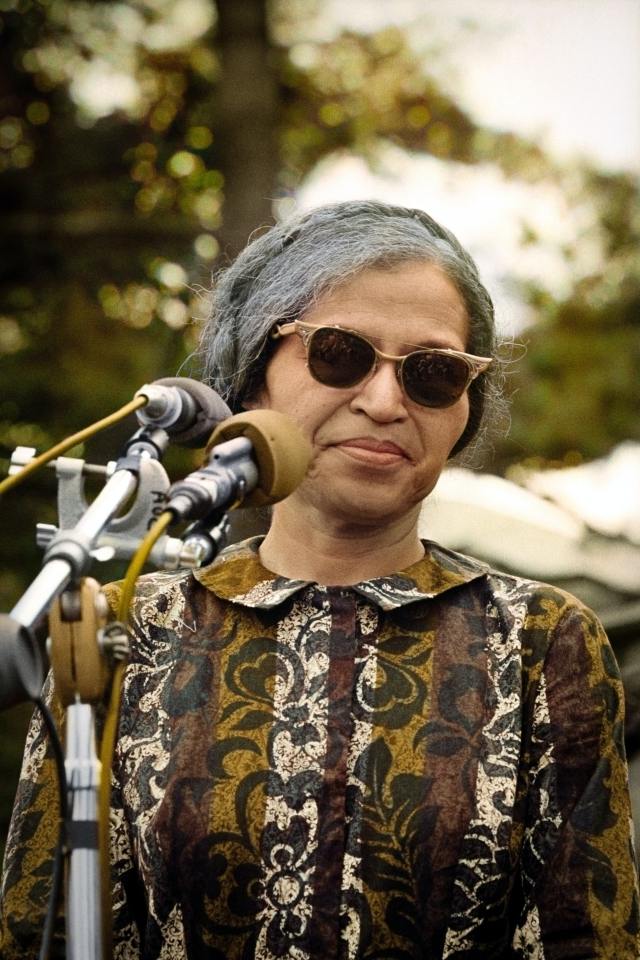
Parks is credited with helping to initiate the civil rights movement in the U.S. after she famously refused to give up her seat to a white man while riding a bus in Montgomery, Alabama. At the time, African Americans were required by city ordinance to sit in the back half of all city buses and yield their seats to white bus riders should the front half of the bus become full.

According to History.com, on December 1, 1955, Rosa Parks – a seamstress from Tuskegee, Alabama and a respected member of the African American community in Montgomery – was sitting in the front row of what was called the “colored section” of the Cleveland Avenue bus. She had just finished a long day of work at the Montgomery Fair department store. When the “white seats” filled up, the bus driver asked four Black riders to give up their seats, as per the existing city ordinance. Three of those riders vacated their seats but the fourth rider – Rosa Parks – wouldn’t budge.

In her official autobiography, Parks recalls that pivotal decision. She wrote: “People always say that I didn’t give up my seat because I was tired. No, the only tired I was, was tired of giving in.”

By the time she was sent to jail, everyone in the Montgomery community had heard about Parks’ arrest, including the former head of the Montgomery National Association for the Advancement of Colored People, E.D. Nixon. He’d been waiting for the perfect case that could challenge the segregated bus system in Montgomery … and believed he’d just found it in the unstoppable Rosa Parks.

As Stanford University’s King Institute describes, a group quickly assembled to bail Parks out of jail, including: Park’s close friend Virgina Durr; Virginia’s husband, Clifford Durr; and E.D. Nixon. Virginia Durr played a pivotal role in Parks’ civil rights advocacy; in 1955, Durr organized for Parks to receive a scholarship to attend a two-week workshop at the Highlander Folk School. The workshop focused on the implementation of school desegregation and cultivating local leaders for social change. What Parks learned at that workshop is believed to have (at least in part) inspired her actions on the Cleveland Avenue bus. Durr’s husband, Clifford Durr, was a lawyer who long championed diversity and equal rights.

Back at home, Parks spoke with Nixon about her case and its potential to ignite real change in the Montgomery community and around the country. The following day, when Parks’ trial was set to take place, there’d also be a citywide bus boycott and by midnight, 35,000 flyers were sent out with details about the upcoming event.

On December 5, 1955, History.com describes that about 40,000 Black bus drivers (most of the drivers in the city) participated in what would become known as the Montgomery Bus Boycott. Later in the afternoon, Black organizers also formed the Montgomery Improvement Association and elected a 26-year-old pastor from Montgomery’s Dexter Avenue Baptist Church as the president of the group. His name? Martin Luther King, Jr.

The Montgomery Bus Boycott continued for 13 months – exactly 381 days – until December 20, 1956 when the Montgomery buses became officially integrated. Several months later, on June 5, 1956 a federal district court in Montgomery ruled that bus segregation was in violation of the 14th Amendment to the U.S. Constitution. In November 1956, the U.S. Supreme Court upheld the decision. 

So, what’s the message? One of my father’s favorite quotes was that the tallest oak tree in the forest was just a little nut that held its ground. Stand tall. Fight for what you believe in. Have courage. Be brave. Parks once said: “To bring about change, you must not be afraid to take the first step. We will fail when we fail to try.”

Thoughts on Leadership: Lessons from the NFL

By Gino Blefari:

This week my travels found me starting Monday with my typical WIG calls. On Tuesday I traveled to Orange County to film some videos with Berkshire Hathaway HomeServices Beach Properties of Florida CEO Jimmy Burgess at our Berkshire Hathaway HomeServices HQ. On Wednesday, I was the guest speaker at the in-person Berkshire Hathaway HomeServices REthink Council 2023 Kick-off Meeting, which took place at the HQ as well, hosted by Jimmy and Vince Leisey, CEO of Berkshire Hathaway HomeServices Ambassador Real Estate. I also attended Berkshire Hathaway HomeServices California Properties’ event, “Secrets, Tips & Tools for Success” featuring California Properties President Martha Mosier and California Properties’ Ronnie Hackett, Chris Lee, and Jill White. Today, I recorded a podcast with Andrew Undem of Berkshire Hathaway HomeServices Homesale Realty’s Sure Group and sat down to write this post to you.

Read more: Thoughts on Leadership: Lessons from the NFL

With this being the Thursday eve of Super Bowl and Black History Month, I want to give a shout out to Kansas City Chiefs quarterback Patrick Mahomes and Philadelphia Eagles quarterback Jalen Hurts. Did you know this is the first Super Bowl ever with both teams starting a Black quarterback? It’s a historic moment for the sport, for our country and for the millions around the world who will be tuning into the game this Sunday.

And while we’re on the topic of football, let’s talk about probably the greatest football player of all time, none other than the GOAT Tom Brady who announced his retirement on February 1 of this year.

If you took Tom Brady’s first 21 seasons and broke them into three distinct periods, every seven years he accomplished enough to become a first-ballot Hall of Famer. His first seven years match up perfectly with Troy Aikman’s career. His next seven years match up perfectly with Dan Marino’s career, and his last seven years match up with my own 49ers Joe Montana’s career.

Let’s look at the stats:

Troy Aikman Era: Tom Brady’s 2000-2006 Career vs. Troy Aikman’s Career

  • Division Titles: 5 vs. 6
  • Super Bowl Titles: 3 vs. 3
  • Super Bowl MVP: 2 vs. 1
  • Regular Season MVP 0 vs. 0

Dan Marino Era: Tom Brady’s 2007-2013 Career vs. Dan Marino’s Career

  • Division Titles: 6 vs. 5
  • Super Bowl Appearances: 2 vs. 1
  • Regular Season MVP: 2 vs. 1
  • Pass Touchdown Leader: 2 vs. 3

Joe Montana Era: Tom Brady’s 2014-2020 Vs. Joe Montana’s Career

  • Super Bowl Titles: 4 vs. 4
  • Super Bowl MVP: 3 vs. 3
  • Regular Season MVP: 1 vs. 2

So that’s three Hall of Fame careers, and with another Super Bowl win and a passing record in 2021, and another record-setting passing season in 2022, (breaking his own 2021 record) if he played another five years, my money would be on Brady to have a fourth Hall of Fame career.

Beyond all the amazing numbers, he’s one of the greatest quarterbacks of all time because of the high standards he sets for leadership excellence. His career is proof that with hard work, perseverance, and a selfless, put-your-team-before-everything mentality, you can achieve anything. These are some of his incredible traits that make him such an outstanding leader on and off the field:

  1       The power of preparation: Brady is known for his meticulous preparation, both on and off the field. He spent countless hours studying game film and working on his technique, which allowed him to perform at a high level consistently. Brady went to sleep at 8:30 every night to get proper rest and maintained a strict diet to be in top form for every game. This attention to detail serves as a reminder that preparation is key to success in any field. And his preparation started early; even in high school, Brady would invite his teammates to his house to review tapes while his mom made them lunch.

        2       The importance of teamwork: Despite being one of the best players in the NFL, Brady has always emphasized the importance of teamwork. He recognizes that success in football, or any sport, is the result of everyone working together towards a common goal. This lesson can be applied to any organization or team, where the collective effort of everyone is more important than individual achievement.

        3       Mental toughness: Brady has faced numerous challenges throughout his career, including injuries, controversies, and more. However, he has always remained mentally tough, focusing on what he can control and not getting discouraged by setbacks. This level of mental toughness is a key attribute of great leaders, who must be able to remain calm and focused even in the face of adversity.

        4       Adaptability: Brady has had to adapt to new systems, coaches, and players throughout his career. He has shown that he is capable of quickly adjusting to new situations and that he is open to new ideas and approaches. Leaders who are adaptable and open to change are more likely to be successful in today’s rapidly changing business environment.

        5       Passion for excellence: Brady has a relentless drive to be the best and to win. He is always striving for excellence and pushing himself and his team to perform at their highest level. This level of passion for excellence is infectious and inspires others to strive for their own personal best. During the 2021 Super Bowl, Brady texted the team on a nightly basis: “We will win.” Those three words reinforced Brady’s confidence in his teammates and drive for excellence.

So, what’s the message? Tom Brady is a successful quarterback and a great leader who sets high standards. Tom Brady yelled when his teammates weren’t meeting his expectations. Tom Brady barked at coaches and was allegedly tough during practice. “Let’s go! Do it again! Line up and do it again!” He’d say. But all that proves he not only holds his teammates to a higher standard of accomplishment but also demands they achieve it.

Thoughts on Leadership: Celebrating Black History Month

By Gino Bleafri:

This week my travels find me starting Monday at home, conducting my typical WIG calls. On Tuesday, I had an early morning Berkshire Hathaway Energy call, and in total this week, I had 20 appointments with the mission to help team members achieve their goals faster than they would in my absence. Today, I attended Iowa Realty’s 70th Anniversary and Agent Award Ceremony.

One of my Wildly Important Goals this week was to attend and participate in our “Diversity Meets” monthly meeting, which just so happens to coincide with the start of Black History Month this February.

All month long (but really, all year long) we celebrate the leadership of incredible Black leaders whose wisdom and insights challenged and changed our world in extraordinary ways. For this post, I’d like to focus on my pal Johnnie Johnson.

A fearless leader, advocate, good friend, and former All-Pro defensive back for the Los Angeles Rams, today Johnnie is president and CEO of World Class Coaches. He’s also the author of a must-read book, From Athletics to Engineering: 8 Ways to Support Diversity, Equity and Inclusion.

In the book, Johnnie outlines 8 tactics for creating a more diverse and inclusive environment at work, at home and in every facet of your life. Here are his 8 ways:

  1. It starts with each of us. Johnnie says the first step to supporting diversity, equity and inclusion is deciding that you will. If you wait around for someone else to do it, it’ll never happen in the way it should. A more inclusive approach must always start with you.
  2. Love your neighbor. But don’t just love them, says Johnnie, take the time to really get to know and appreciate who they are as human beings. This removes barriers that inhibit the flow of a diverse, inclusive society.
  3. Talk about it. Engage in constructive conversations, Johnnie writes. Be sure to create a safe environment where tough questions can be asked without fear of recrimination. There is always more knowledge to gain.
  4. Check your biases and blind spots. Identifying the places where you have bias allows you to correct and eliminate them.
  5. Expand your comfort zone. Johnnie defines a comfort zone as the place where we can be productive and operate with confidence. When we operate outside of it, our performance suffers. Therefore, it’s critical to expand our comfort zone, so we can perform comfortably at a high level in a variety of circumstances.
  6. Build diverse teams. Diversity inherently brings varying perspectives to a company, which helps teams perform better. A McKinsey & Company study cited in the book found that “the most diverse companies outperform less diverse companies on key indicators, such as profitability.”
  7. Collaborate. Creating a team with diverse backgrounds is what Johnnie calls “a good start.” Next comes the actual collaboration to ensure the team performs. When you collaborate, you must not only acknowledge the differences among the team but also celebrate them.
  8. Align actions with goals and values. Johnnie says goals must be in alignment with personal values, and we should take time to define and articulate our core values. Then, we must ensure that we’re following them with everything we say and do.

So, what’s the message? At HomeServices of America, diversity is who we are and who we’ll forever strive to be. It’s a perpetual journey, adding new perspectives and fresh ideas as we travel this diverse, inclusive, and equitable road together. Johnnie Johnson is an example of a leader who does just that … and in sharing his strategies this Black History Month, we find inspiration to create a better world for all.

Thoughts on Leadership: Tough Love and Butterflies

By Gino Blefari:

This week my travels find me starting Monday at home, conducting my typical WIG calls. On Tuesday, I had my early morning Berkshire Hathaway Energy call and then prepped for several meetings with the team. Today, I had the opportunity to support newly inducted Santa Clara County Association of REALTORSⓇ (SCCAOR) president Will Chea of Intero Real Estate at the 2023 Installation of SCCAOR Officers and Directors. Now, I sit down to write this post to you.

Read more: Thoughts on Leadership: Tough Love and Butterflies

Even though we’re about midway through the academic year, I happened to see Steve Jobs’ 2005 Stanford commencement speech online, and it inspired me to think about what an ideal talk to a graduating class should be. “The only way to do great work is to love what you do,” Jobs famously told the new grads. “If you haven’t found it yet, keep looking. Don’t settle. As with all matters of the heart, you’ll know when you find it.”

His speech was moving, but it was also direct. As a leader, it’s about imparting tough love, the kind of love that’s no-nonsense, gritty, and real.

Many times people who love you don’t have those difficult, tough-love conversations because their instinct is to protect, comfort and shield you from all the bad things about the world; they only want you to see what’s shiny and good.

Tough love will help you recognize that life isn’t easy, and tough love implores you to learn those difficult lessons all on your own.

Here’s a scenario: You’re sitting in your backyard one afternoon. Suddenly, you spot a butterfly attempting to break free from its chrysalis – that hard shell formed during its metamorphosis. The struggle is difficult for you to watch, and your instinct is to help the creature out. So, you get some scissors from the kitchen and cut the chrysalis, allowing the butterfly to emerge into the world.

Success, right?

Wrong.

You wait for the butterfly, still shriveled up and weak, to flap its wings and fly away. But it never does. Instead, it just walks on the ground, and that’s where it will remain, if it even survives as all.

What the metamorphosis of a butterfly teaches us is that struggle is necessary for survival. As the butterfly pushes through a small opening at the bottom of the chrysalis, the fluid from its body is sent to the wings, making the butterfly’s wings strong enough to support its eventual flight.

This is the tough-love lesson those students – and all of us – need to hear when times get challenging. It’s the hard that makes us great. Just like the butterfly must fight against its cocoon to develop wings solid enough to fly, so too do people need to experience adversity to grow strong enough to overcome it. Remember, it is not what struggles happen during our lives that determine how well we’ve lived. It is what we choose to do next during those unexpected times of struggle that defines our character and determines our happiness.

In other words, we must develop grit. In author Paul Tough’s book, How Children Succeed, the journalist says that using IQ and academic success as a predictor of future accomplishment is wrong. Through exhaustive research, he discovers that noncognitive skills like gratitude, optimism, curiosity, and grit are far better predictors of high achievement.

So, what’s the message? When it comes to success, it doesn’t really matter what other people say, or even how they perceive you. It doesn’t matter what talent you’re born with or what skills you acquire early in your career. It doesn’t even matter whether the economy is strong or weak, or what the market is doing today and where it’s going tomorrow. What matters is that you understand there’s no substitute for hard work. As the saying goes, if you’re interested in being successful, you’ll do what’s convenient, but if you’re committed to being successful, you’ll do whatever it takes. Basketball coach Tim Notke said, “Hard work beats talent when talent doesn’t work hard.” Your competition may have more innate talent than you do, but tell yourself they’ll never outwork you. That’s tough love. That’s the chrysalis you’ll have to break on your own. Because in the end, the only one who can determine how high you’ll really fly is you.

Thoughts on Leadership: Lessons from Katherine Johnson

By Gino Blefari

This week my travels found me at home on Monday celebrating Martin Luther King Jr. Day. On Tuesday, I had an early morning Berkshire Hathaway Energy call and monthly leadership virtual meetings. Wednesday through today (and really, for the rest of this week), I’m working on various projects and in between those projects, sat down to write this post to you.

This week our HomeServices family of companies honored the tradition of MLK Day of Service with a wide variety of company events. So, in the spirit of leaders who give back, I want to dedicate this post to a Black leader whose contributions changed our country, our world and really, our entire universe: Katherine Johnson.

Read more: Thoughts on Leadership: Lessons from Katherine Johnson

Johnson lived an extraordinary life. She was born in White Sulphur Springs, West Virginia in 1918 and immediately it was clear she had a penchant for – and brilliance with – numbers. By age 13, Johnson was already attending high school classes. At age 18, she enrolled at West Virginia State College, where she excelled in mathematics and was mentored by math professor W.W. Schieffelin Claytor, the third Black American to earn a PhD in mathematics. In 1937, she graduated West Virginia State College with the highest honors and began working at a teaching job at a Black public school in Virginia.

In 1939, when West Virginia quietly integrated its graduate schools, West Virginia State president Dr. John W. Davis chose Johnson and two other men to be the first Black students at the state’s flagship graduate school, West Virginia University. Johnson left her job teaching and enrolled in the program, though she left the program shortly after the first session to start a family. When her children were older, Johnson returned once again to teaching.

Several years later, in 1952, a relative told Johnson about a few open positions at the all-Black West Area Computing section at the Langley laboratory at the National Advisory Committee for Aeronautics (NACA). Johnson moved with her family to Newport News, Virginia and started working at Langley in the summer of 1953.

For the next four years, she analyzed fight data and plane crashes, and in 1958, her mathematics work was used in “Notes on Space Technology,” a series of lectures by engineers in the Flight Research Division and the Pilotless Aircraft Research Division (PARD) who would become the Space Task Group, NACA’s first official exploration into the possibilities of space travel. Later that year, when NACA turned over operations to NASA, Johnson, according to NASA “came along with the program.” The year prior, she co-authored a report along with engineer Ted Skopinski – “Determination of Azimuth Angle at Burnout for Placing a Satellite Over a Selected Earth Position” – and this credit marked the first time a woman in the Flight Research Division was named on a research report.

Her work on NASA’s Mercury program (1961-1963) was perhaps what she’s most well-known for today. In 1961, Johnson’s calculations of the path from Freedom 7 sent the first U.S. astronaut – Alan B. Shepard, Jr. – into space. In 1962, Johnson began work on an orbital flight for astronaut John Glenn that required the building of a complex communications network around the globe.

Despite the intense work to create this network, astronauts were hesitant to trust their lives to electronics. “Get the girl,” Glenn told his engineers, during the preflight checklist.

“The girl,” of course, was the brilliant Johnson, who ran the same equations that were programmed into the computer all by hand, using a desktop mechanical calculating machine.

Johnson would later recall Glenn saying, “If she says they’re good, then I’m ready to go.”

On February 20, 1962, Glenn became the first American to orbit Earth. The mission, thanks to Johnson, was a success, and marked the beginning of NASA’s accomplishments in human spaceflight.

So, what’s the message? During Johnson’s 33 years spent at Langley, she co-authored 26 research reports and among many, many achievements, was part of the team that made calculations about when to launch the rocket for the 1969 Apollo 11 mission that sent the first three men to the moon. She also worked on the space shuttle program. In 2015, at age 97, President Barack Obama awarded her with the prestigious Presidential Medal of Freedom, though sadly in February 2020 Johnson passed away at the age of 101. When once asked about her time at Langley, Johnson said, “I loved going to work every single day,” proving that when you love something that much, you can achieve goals that are out of this world.

No more posts.