Thoughts on Leadership: Honoring Black History Month

By Gino Blefari

This week my travels find me at home. The dust has settled from the heart-wrenching 49ers loss in the Super Bowl. Despite the disappointment, I couldn’t help but feel an overwhelming sense of pride in our 49ers season. From the intensity of the Super Bowl to the significance of Black History Month, February is a month filled with reflection, celebration, and recognition of both triumphs and struggles.

As February 2024 marks Black History Month, it’s a time to reflect on the profound contributions and enduring legacy of Black leaders throughout history. From civil rights activists to trailblazing entrepreneurs, Black individuals have shaped our world and inspired generations with their resilience, courage, and visionary leadership. In honor of Black History Month, let’s explore 10 invaluable leadership lessons learned from the rich tapestry of Black history.

1. Resilience in the Face of Adversity:
Black history is a testament to the power of resilience in overcoming adversity. From the horrors of slavery to the struggles for civil rights, Black leaders have exhibited unwavering resilience in the face of immense challenges. Leaders can learn from this resilience by understanding that setbacks are temporary, and true strength lies in perseverance and determination.

2. Courage to Challenge Injustice:
Throughout history, Black leaders have demonstrated remarkable courage in challenging injustice and fighting for equality. From Rosa Parks refusing to give up her seat to Martin Luther King Jr. leading the Civil Rights Movement, these leaders inspire us to confront injustice with courage and conviction. As leaders, it’s essential to stand up for what is right, even in the face of adversity.

3. Visionary Leadership:
Black history is replete with visionary leaders who have shaped the course of history through their bold ideas and transformative leadership. Leaders like Frederick Douglass, Harriet Tubman, and Malcolm X envisioned a world free from oppression and inequality, inspiring others to join their cause. As leaders, it’s crucial to cultivate a visionary mindset and inspire others with a compelling vision for the future.

4. Empowering Others Through Education:
Education has been a cornerstone of empowerment in Black history, with leaders like Booker T. Washington and W.E.B. Du Bois advocating for access to knowledge and learning. These leaders understood the transformative power of education in empowering individuals and communities. As leaders, it’s essential to prioritize education and create opportunities for continuous learning and growth among team members.

5. Collaboration and Community Building:
Black history is a testament to the importance of collaboration and community building in driving social change. From the Underground Railroad to the Montgomery Bus Boycott, Black leaders have mobilized communities to work together towards common goals. Leaders can learn from this by fostering a collaborative culture within their teams and leveraging the collective strength of diverse perspectives.

6. Persistence in Pursuit of Excellence:
Black history is characterized by stories of persistence and determination in the pursuit of excellence. Leaders like Madame C.J. Walker and Oprah Winfrey overcame countless obstacles to achieve success, inspiring others with their resilience and tenacity. As leaders, it’s essential to persevere in the face of challenges and maintain a relentless focus on achieving excellence.

7. Advocacy for Diversity and Inclusion:
Diversity and inclusion have been central themes in Black history, with leaders advocating for equality and representation across all sectors of society. From the civil rights movement to contemporary activism, Black leaders have championed diversity and inclusion as essential pillars of social progress. Leaders can learn from this by fostering diverse and inclusive environments within their organizations, where every individual feels valued and respected.

8. Leading with Empathy and Compassion:
Black history teaches us the importance of leading with empathy and compassion towards others. Leaders like Nelson Mandela and Michelle Obama exemplify this by showing empathy and understanding towards those they lead. As leaders, it’s crucial to cultivate empathy and compassion in our interactions with team members, fostering a supportive and inclusive environment.

9. Harnessing the Power of Resilient Leadership:
Black history is filled with examples of resilient leadership, where leaders have persevered in the face of adversity to achieve remarkable success. Leaders like Barack Obama and Shirley Chisholm overcame numerous obstacles to break barriers and pave the way for future generations. As leaders, it’s essential to embrace resilient leadership by remaining steadfast in our commitment to our goals, even in the face of setbacks.

10. Inspiring Hope and Empowerment:
Above all, Black history teaches us the power of leadership in inspiring hope and empowerment among others. Leaders like Harriet Tubman and Martin Luther King Jr. inspired millions with their vision of a better world, sparking movements for change that continue to resonate today. As leaders, it’s crucial to inspire hope and empowerment among those we lead, fostering a sense of purpose and optimism for the future.

So what’s the message?

As we celebrate Black History Month, let us honor the legacy of Black leaders who have paved the way for progress and social change. By embracing the invaluable leadership lessons learned from Black history, we can become more effective and compassionate leaders, driving positive change in our organizations and communities.

Thoughts on Leadership: Celebrating Black History Month Innovators

By Gino Blefari:

This week my travels found me starting Monday at home with an early morning Berkshire Hathaway Energy call followed by my typical WIG calls with the team. On Tuesday I attended team meetings and on Wednesday I drove the 160 miles from Los Altos to Fresno, California for the Guarantee Real Estate all-company sales meeting at the brokerage’s Fig Garden office. I had lunch with the home office management team then returned north for a total of 320 miles driven within a 12-hour time frame. The enthusiasm and energy of the Guarantee Real Estate agents and leadership team made it worth every mile.

Throughout the month, these Thoughts on Leadership posts have featured Black leaders whose work and wisdom changed the course of history. One of the things I like the most about my blog is getting all the responses and different stories that come back because of the topics I’ve shared. This blog post is a direct result of two of those responses.

Read more: Thoughts on Leadership: Celebrating Black History Month Innovators

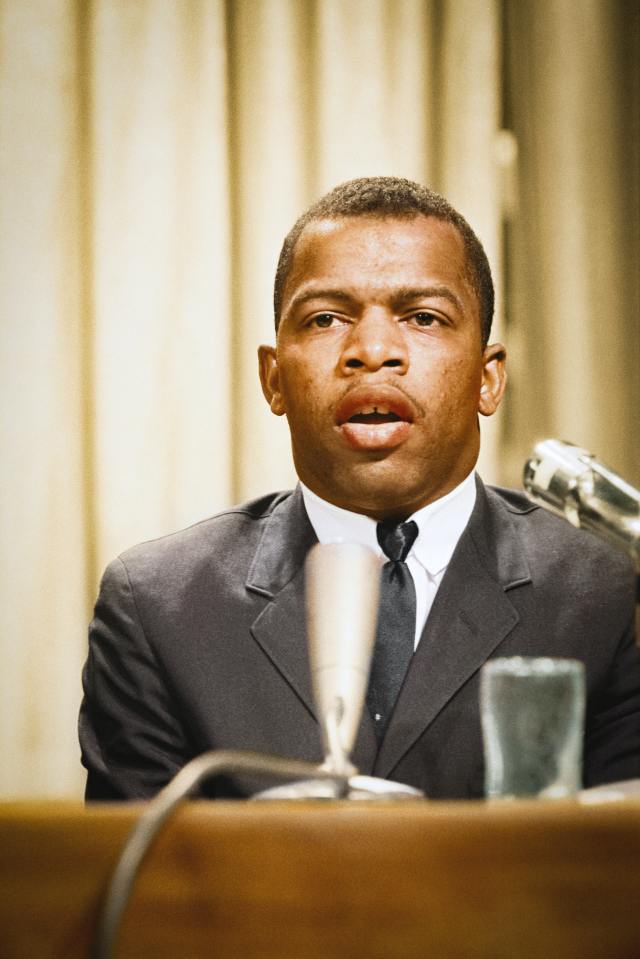
After writing about Rosa Parks last week, Rod Messick, CEO of Berkshire Hathaway HomeServices Homesale Realty, responded with a book recommendation: “His Truth Is Marching On: John Lewis and the Power of Home” by John Meacham.

John Lewis, as Rod explained, was known during the Civil Rights Movement as the “Boy from Troy.” Coincidentally, Rod grew up in Troy, Alabama and didn’t know about Lewis’ connection to his hometown until recently. Rod said he knew of John Lewis as a Civil Rights leader who was attacked on the bridge at Selma, as a congressman from Atlanta but not until the end of Lewis’ life did Rod realize that Lewis grew up mere miles from his own home.

“You see there was no civic pride in the ‘70s and ‘80s around being the home of John Lewis,” Rod told me. “We had a major thoroughfare named after George Wallace but no recognition of John Lewis.”

All that changed in 2020 after Troy University – a school that in 1957 denied John Lewis admission because of the color of his skin – named a building after Lewis.

Soon, the town of Troy began to learn about the amazing life of the human rights activist and advocate for non-violent change. Finally, John Lewis got the long-overdue recognition he deserved. It’s also worth noting that despite his initial rejection by Troy University, Lewis never held any spite or hatred for the school. He chose forgiveness, and even visited the Troy University campus in 1989 to receive an honorary doctorate. He returned in 2006, after Troy University awarded Lewis with the Hall-Waters Prize for his memoir, “Walking with the Wind.”

Gladys West is another Black leader whose legacy was brought to my attention by Helen Cocuzza of Berkshire Hathaway HomeServices Fox & Roach, REALTORS®. She shared with me that Gladys West developed the GPS technology most of us use daily today.

West was born in rural Virginia on October 27, 1930. As her Britannica biography notes: “In her community the only clear options for a young Black girl’s future were continuing to farm or working at a tobacco-processing plant.”

But West’s penchant for learning took her somewhere new, and after she graduated valedictorian of her high school, West was offered a full scholarship to Virginia State College. She graduated in 1952 with a degree in mathematics then received a master’s degree in mathematics. In 1956, the U.S. Naval Proving Ground hired West to work in the weapons laboratory in Dahlgren, Virginia. She was the fourth Black employee in the entire organization, and she quickly earned a reputation for solving complex mathematical problems by hand. Her work eventually led to a satellite that was programmed to create computer models of the Earth’s surface, and it’s this model (and subsequent updates) that allows GPS systems today to make accurate calculations of any location on the planet.

So, what’s the message? Like Mary W. Jackson, Gladys West was once a “hidden figure” of history, but the more we have these conversations about Black leaders like Jackson, like West, like Lewis, the more we can be sure their stories, contributions and legacies will never, ever be forgotten.

Thoughts on Leadership: Celebrating Black History Month

By Gino Bleafri:

This week my travels find me starting Monday at home, conducting my typical WIG calls. On Tuesday, I had an early morning Berkshire Hathaway Energy call, and in total this week, I had 20 appointments with the mission to help team members achieve their goals faster than they would in my absence. Today, I attended Iowa Realty’s 70th Anniversary and Agent Award Ceremony.

One of my Wildly Important Goals this week was to attend and participate in our “Diversity Meets” monthly meeting, which just so happens to coincide with the start of Black History Month this February.

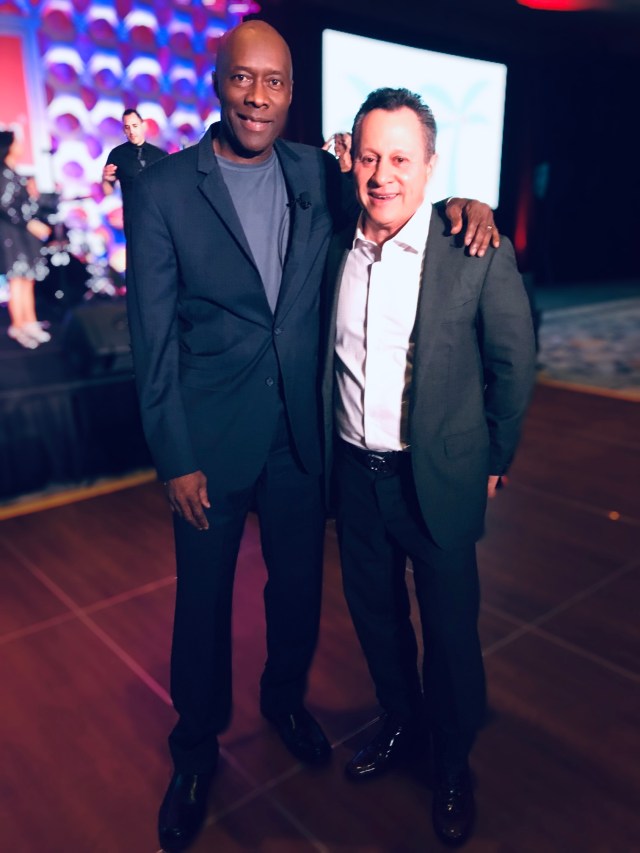
All month long (but really, all year long) we celebrate the leadership of incredible Black leaders whose wisdom and insights challenged and changed our world in extraordinary ways. For this post, I’d like to focus on my pal Johnnie Johnson.

A fearless leader, advocate, good friend, and former All-Pro defensive back for the Los Angeles Rams, today Johnnie is president and CEO of World Class Coaches. He’s also the author of a must-read book, From Athletics to Engineering: 8 Ways to Support Diversity, Equity and Inclusion.

In the book, Johnnie outlines 8 tactics for creating a more diverse and inclusive environment at work, at home and in every facet of your life. Here are his 8 ways:

  1. It starts with each of us. Johnnie says the first step to supporting diversity, equity and inclusion is deciding that you will. If you wait around for someone else to do it, it’ll never happen in the way it should. A more inclusive approach must always start with you.
  2. Love your neighbor. But don’t just love them, says Johnnie, take the time to really get to know and appreciate who they are as human beings. This removes barriers that inhibit the flow of a diverse, inclusive society.
  3. Talk about it. Engage in constructive conversations, Johnnie writes. Be sure to create a safe environment where tough questions can be asked without fear of recrimination. There is always more knowledge to gain.
  4. Check your biases and blind spots. Identifying the places where you have bias allows you to correct and eliminate them.
  5. Expand your comfort zone. Johnnie defines a comfort zone as the place where we can be productive and operate with confidence. When we operate outside of it, our performance suffers. Therefore, it’s critical to expand our comfort zone, so we can perform comfortably at a high level in a variety of circumstances.
  6. Build diverse teams. Diversity inherently brings varying perspectives to a company, which helps teams perform better. A McKinsey & Company study cited in the book found that “the most diverse companies outperform less diverse companies on key indicators, such as profitability.”
  7. Collaborate. Creating a team with diverse backgrounds is what Johnnie calls “a good start.” Next comes the actual collaboration to ensure the team performs. When you collaborate, you must not only acknowledge the differences among the team but also celebrate them.
  8. Align actions with goals and values. Johnnie says goals must be in alignment with personal values, and we should take time to define and articulate our core values. Then, we must ensure that we’re following them with everything we say and do.

So, what’s the message? At HomeServices of America, diversity is who we are and who we’ll forever strive to be. It’s a perpetual journey, adding new perspectives and fresh ideas as we travel this diverse, inclusive, and equitable road together. Johnnie Johnson is an example of a leader who does just that … and in sharing his strategies this Black History Month, we find inspiration to create a better world for all.

No more posts.