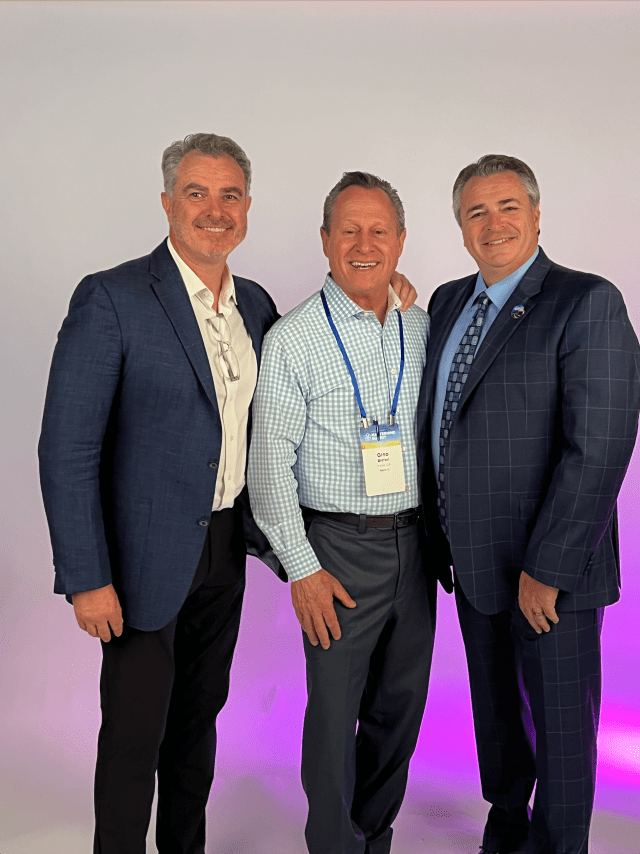
Thoughts on Leadership: Takeaways from the Buffini Mastermind Summit

By Gino Blefari

This week my travels find me at my home office on Monday, conducting WIG calls with our CEOs. On Tuesday, I participated in the early morning Berkshire Hathaway Energy call then traveled to San Diego in the afternoon to attend the Buffini Mastermind Summit. On Wednesday morning, I finished up the awesome Mastermind Summit then drove to Irvine, California to the Berkshire Hathaway HomeServices HQ. I’m still in Irvine today attending business meetings and of course, at my desk, writing this post to you.

Today I want to talk about the takeaways from the Buffini Mastermind Summit that I found particularly inspiring. The Summit is always great because it’s not just for real estate professionals; it’s for anyone in business looking to continually improve and achieve their own Wildly Important Goals.

Read more: Thoughts on Leadership: Takeaways from the Buffini Mastermind Summit

This year’s Summit was all about “Putting the Joy Back In Your Journey,” and described actionable ways to make that happen. Joy, as the Summit described, is a sense of well-being, a feeling of great pleasure and good fortune that comes from success. How do we put joy back into our journey? We answer two questions: What steals our joy? What brings us joy? And we also execute on Wildly Important Goals: Eliminate the negative and accentuate the positive.

Let’s dive into what the Buffini Mastermind Summit had to say about these four aspects of joy, along with some of the notes I wrote in the workbook as the ideas were explained:

What steals our joy?

  • Complaining (to express dissatisfaction). As Jay Shetty said: “If you don’t sacrifice for what you want, you become the sacrifice.”
  • Criticizing (to find fault with something or someone). As Aristotle said: “There is only one way to avoid criticism: do nothing, say nothing and be nothing.”
  • Being negative (to lack positive or constructive feedback). As Willie Nelson said: “Once you replace negative thoughts with positive ones, you’ll start having positive results.”
  • Making excuses (to apologize for yourself). As Benjamin Franklin once said: “[The person who] is good for making excuses is seldom good for anything else.”
  • Worrying (to afflict with mental distress or agitation). As Erma Bombeck once said: “Worry is like a rocking chair. It gives you something to do but never gets you anywhere.”

I also learned that according to a survey published by The Wall Street Journal, only 12% of respondents indicated that they were happy. Clearly, we need to get rid of those things stealing our joy and discover what can generate happiness in our lives! So …

What brings us joy?

  • The sweetness of our relationships.
  • A deep sense of purpose.
  • Meaningful work.
  • Physical and emotional wellness.
  • The magic moments.

As Terry Orlick, internationally acclaimed sport psychologist and author of “In Pursuit of Excellence,” said: “The heart of human excellence often begins to beat when you discover a pursuit that absorbs you, frees you, challenges you, or gives you a sense of meaning, joy or passion.” It’s why I say that I love what I do largely because of who I get to do it with. For me, real estate isn’t just a job. It’s a passion. It’s a calling. And that kind of work never feels like work. It always feels like joy.

How can we eliminate the negative?

  • Detox: A process or period in which one abstains from or rids the body of toxic or unhealthy substances. We must detox our attitude and our body. Increase our intake of joy, broaden and deepen positive associations and affirm what is true. Detox your attitude.

People do better together. Eliminating the negative is about being intentional, not only with your thoughts and actions but also with the people you find yourself hanging around with every day. Spend time with people who bring you joy. A study by Harvard Medical School and the University of California, San Diego found that “happiness is a collective phenomenon that spreads through social networks like an emotional contagion.”

How can we accentuate the positive?

  • Sweeten your relationships. Be grateful, kind (a mixture of patience and care), and intentional. Cultivate a deep sense of purpose by asking: What drives you? What are you willing to sacrifice? Who do you want to help? Make your work meaningful and easy through the right mindset, motivation and methodology that will generate positive results. Tend to your physical and emotional wellness by making self-care a priority, creating daily routines, and taking time for yourself. Live up the magic moments by being present and celebrating success with those you care about most!

So, what’s the message? You don’t have to wait for joy or for magic moments to happen. You can proactively go out, create, and plan them into your business and life. Positivity and joy can be found all around us – in our community, our relationships, and our beliefs. We can make joy something we seek out and discover every day. As Brian Buffini, creator of the Mastermind Summit, would say, don’t wait to find joy in your life. Do it now.

Thoughts on Leadership: Lessons from Col. Nicole Malachowski

By Gino Blefari

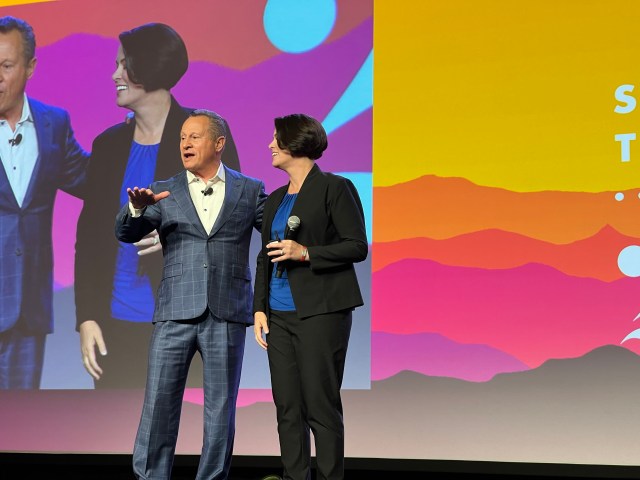
This week my travels find me traveling to Palm Springs, California on Monday. On Tuesday, I participated in the early morning Berkshire Hathaway Energy call then joined an all-day CEO leadership meeting before kicking off Stronger Together 2023. Stronger Together is HomeServices’ annual conference for top-producing real estate professionals from across our family of brokerages. It’s been an awesome few days at the iconic J.W. Marriott and for today’s post, I’d like to share some wisdom imparted by one of our keynote speakers, Col. Nicole Malachowski, who wowed the crowd with her thoughts on a “push the envelope” mindset.

First, let’s talk about Col. Malachowski. She’s not only a 21-year U.S. Air Force veteran – with combat experience in Iraq and Kosovo – but also a pioneering aviator who was commander of an F-15E fighter squadron and the first woman Thunderbird pilot. In addition, she was a White House Fellow and advisor, among other Pentagon roles.

Read more: Thoughts on Leadership: Lessons from Col. Nicole Malachowski

Needless to say, when Col. Malachowski spoke about being the best, we listened. Because for an aviation innovator, being the best means never feeling like the turbulence of life can throw you off course, no matter what kind of headwinds you encounter along the way.

An unexpected headwind for Col. Malachowski was surviving a late-stage neurological tick-borne illness (Lyme disease). Even something so crippling and uncontrollable couldn’t hold this fighter pilot back. She says don’t waste energy on things you can’t control. It’s not how you become your very best.

“Nicole,” people would ask the award-winning fighter pilot. “What’s it like to be the best?”

And do you know how she’d respond? She’d laugh. Because to Col. Malachowski, being “the best” isn’t about individual achievements, so she says she really wouldn’t know. Being the best to Col. Malachowski is about being part of some of the very best teams.

Col. Malachowski says elite teams like the ones she’s been a part of have what she calls the “push the envelope” mindset. The phrase “push the envelope” comes from aviation lingo, meaning to take an aircraft to its designated altitude and speed limits.

But how does this play out in real life? As an example, one of the single-greatest honors of Col. Malachowski’s career was when she taught young lieutenants how to fly F-15E Strike Eagles. She calls the aircraft “a beast,” capable of flying 50,000+ feet, pulling nine times the force of gravity and flying twice the speed of sound.

When Col. Malachowski would teach the new lieutenants and pilots how to fly the aircraft, she found the same thing happened every time: They’d get into the aircraft – eyes wide and voices shaking. Then, they’d fly up safely into the training airspace when she’d say, “You have the aircraft.”

The new lieutenant would grab the stick and take the F-15E to about 20,00 feet, 250 miles an hour, pulling 2 Gs.

“What a waste,” Col. Malachowski says with a laugh. She knew this incredible piece of technology could do far more than what the students were asking of it, and it was her job to show them how to take it to the very edge of its capabilities. As part of their team and as their instructor, it was her responsibility to show them how to make the aircraft do its best, and how they can become their best, too.

So, what’s the message? Here are some takeaways Col. Malachowski listed at the very end of her speech, which are all practical ways to be your best:

  • Nothing of significance is ever accomplished alone.
  • Acknowledge and show gratitude for others’ expertise.
  • Honor the wingman contract, which is defined by Col. Malachowski as “an unspoken promise to each other that our actions will always represent the mission, the professional standards, and the values of the whole team.”
  • Ask for and offer help.

Those are just some of the key lessons from Col. Malachowski’s incredible keynote speech, which focused on how being the best can only happen when we are stronger together.  

Thoughts on Leadership: Lessons from Steph Curry

By Gino Blefari

This week my travels find me starting Monday at my home office, conducting my regular WIG calls with CEOs, then flying to Orange County for meetings and events. On Tuesday, I had the early morning Berkshire Hathaway Energy call, then a breakfast meeting with Greg Abel, vice chair of non-insurance operations at Berkshire Hathaway Inc. and chairman of Berkshire Hathaway Energy. On Wednesday morning, I presented a training class at Intero’s headquarters, then joined HomeServices of America’s Chief Diversity, Equity and Inclusion Officer Teresa Palacios Smith on the debut broadcast of the new “Diversity Matters” podcast. The rest of the week was about preparing for the HomeServices of America leadership meeting and Stronger Together, both taking place next week in Palm Desert, California. Of course, between meetings, I sat down to write this post to you.

When I was on the “Diversity Matters” podcast yesterday, Teresa asked me about this blog and, for the first time ever, I announced the topic of the next “Thoughts on Leadership” before it was published. So, for those who tuned in, you’d know today I’m going to talk about Steph Curry, not only because his new documentary, “Stephen Curry: Underrated” was recently released on Apple TV+, but also because on July 16, he won the American Century Championship (ACC) celebrity golf tournament in spectacular fashion. The day before, Curry made a hole-in-one on the seventh hole, and on the last day of the tournament, he made a clutch 20-foot eagle putt on the 18th hole to win the title. As I told Teresa, there are so many lessons we can learn from the basketball superstar.

His documentary is inspiring: a tale of against-the-odds achievement on a grand scale. It begins with basketball legend Reggie Miller reading Curry’s pre-draft scouting report. The critics did not mince their words:

“Far below NBA standard in regard to explosiveness and athleticism …”

“Can overshoot and rush his shots …”

“Doesn’t like when defenses are too physical with him …”

And the best one by far:

“Do not rely on him to run your team …”

Juxtapose those comments with Curry’s four championship rings and you will laugh at how history proved these sentiments wrong. And that, perhaps, is one of the most magical things about Steph Curry and his leadership story. He constantly fought (and won) against those who second-guessed his abilities. The result? In addition to being a four-time NBA champion, Curry is also a two-time NBA Most Valuable Player, NBA Finals MVP, NBA All-Star Game MVP and a nine-time NBA All-Star. He also holds the record for all-time leader in total-3 pointers.

Underrated no more. But in the beginning, even Curry’s mom, Sonya, worried about whether her son could become an NBA player. (Notably, his father, Dell Curry, was an NBA player who retired as the all-time leading scorer of the Charlotte Hornets.) Virginia Tech, where Curry’s parents went to school, turned him down. Duke, where Curry attended a basketball camp, didn’t accept him on the team. Curry signed with Davidson College, where he played an integral role in taking the Davidson Wildcats’ basketball team to the 2008 Elite Eight in the NCAA championship. It was called “a Cinderella story for the ages,” with Curry leading the charge, and it set him on a path to greatness.

In addition to being a basketball superstar, Curry is also an avid – and scratch – golfer, who began playing at the age of 10. His commitment to the sport showed last Sunday at the Edgewood Tahoe South golf course in Stateline, Nevada for the ACC tournament. During the practice rounds, Curry walked the course with coaches, asking questions about the greens. Before the tournament, Curry spent time with legendary golf coach Butch Harmon, who has helped PGA greats Tiger Woods, Dustin Johnson and Rickie Fowler. Curry admitted to Golf Week after the coaching that what Harmon taught him would help him “build a little confidence.”

Maybe it was added confidence that propelled Curry’s tournament win, but it may have also been his desire to provide himself yet again, focusing intently on the shot in front of him. “The next shot mentality is huge,” Curry said during the tournament, according to NBA.com. “Basketball’s a little more reactive so you don’t have too much time to dwell on what’s going on. In golf, you have a long walk from shot to shot to deal with the thoughts going on between the ears. You have to have a bit of amnesia out there.”

A focus on the future informs more than Curry’s golf game. He’s also a champion for diversity, equity and inclusion, and that advocacy has intertwined with his love for golf. Curry committed to funding the Howard University golf program for six years, and he started the Underrated Golf Tour, established “to provide a positive, competitive, safe space environment for culturally diverse” junior golfers. For his tremendous efforts, the PGA honored Curry earlier this month with the 2023 Ambassador of Golf Award.

So, what’s the message? Curry’s success story proves that no matter what others say, passion will always fuel progress on and off the court.

Thoughts on Leadership: The Magic of Music Pt. 2

By Gino Blefari

This week finds me starting Monday with my typical WIG calls then hopping on a flight to Las Vegas for dinner with Troy Reierson, CEO of Berkshire Hathaway Arizona Properties, California Properties and Nevada Properties; and Doug Cannon, president and CEO of NV Energy. On Tuesday, I joined the early morning Berkshire Hathaway Energy call then attended the Mike Ferry Superstar Retreat for the rest of the day. Yesterday, I departed Las Vegas and touched down in Orange County, California to coach and spend time with the Berkshire Hathaway HomeServices California Properties team at their leadership meeting, led by California Properties President Martha Mosier. From there, I went to the Berkshire Hathaway HomeServices HQ in Irvine to film some videos and prepare for the debut broadcast of the Diversity Matters podcast, hosted by HomeServices of America’s Chief Diversity Equity & Inclusion Officer Teresa Palacios Smith. Today, I had a HomeServices of America 10-year plan working session with Berkshire Hathaway Energy, and of course, made some time between meetings to sit down and write this post to you.

Last week we talked about the magic of music and I promised you more to come … so here it is.

We ended our last “music is magic” discussion talking about how music can elicit certain feelings in others, and how Jim Kirk, CEO of Corporate Magic, uses that knowledge when putting together emotionally charged shows like the General Sessions at the annual Berkshire Hathaway HomeServices’ Sales Convention.

Jim says that this idea of music creating feelings within us is something we’ve been trained (whether we know it or not) to understand. There’s a historical connection, too. For instance, Jim explains that when we hear bagpipes, because we’ve often heard them at a funeral, they often have a calming or sorrowful effect on us. Similarly, the string section – cellos, violas, bass violas – are richer and soothing in their sounds, whereas banjos and electric guitars are more upbeat and fun. Trumpets are brighter, Jim explains, and flugelhorns and French horns imbue a sense of warmth. 

For me, the historical effect of music happens when I hear certain bands. I can’t hear REO Speedwagon without thinking of John Thompson and I working together at the Cherry Chase Public Golf Course in the 1980s. And beyond history, there are songs that remind us of relationships, not just moments in time. For my one daughter, Alex, it’s “Sister Golden Hair” by America that always reminds me of her. For my other daughter, Lauren, it’s “Butterfly Kisses.” And every time I hear “Unchained Melody” by the Righteous Brothers, I’m reminded of my wife Joanie and how we’d watch the movie “Ghost” together.

Research supports the idea that music and emotions are intertwined. Petr Janata, associate professor of psychology at the University of California, Davis, conducted research on the link between brain activity and music, ultimately concluding that “the region of the brain where memories of our past are supported and retrieved also serves as the hub that links familiar music, memories and emotion.”

As Professor Janata explained: “What seems to happen is that a piece of familiar music serves as a soundtrack for a mental movie that starts playing in our head. It calls back memories of a particular person or place, and you might suddenly see that person’s face in your mind’s eye. Now we can see the association between those two things – the music and the memories.”

Beyond creating a picture in our minds, listening to music can cause physical reactions, too. According to scientific studies, music can lower stress, heart rate and blood pressure, as well as our cortisol levels, while increasing serotonin and endorphins, eliciting a similar feeling to spending some rejuvenating time outdoors, exercising or getting a good night’s sleep. The American Music Therapy Association writes extensively on the pain-reducing effects of music therapy, which the association says can be used for patients of all ages, from young children to adults, to help lessen acute and procedural pain. NorthShore University HealthSystem reports that playing soft music (especially when coupled with dim lighting) can help you consume a meal at a slower rate, which aids with digestion.

And if you want a better workout, experts say try listening to music while you exercise. Not only will it boost your mood, but it will also increase your endurance by decreasing the perceived effort required for you to complete the physical task at hand. Professor Costas Karageorghis of Brunel University in London conducted research that showed people can run farther, bike longer and swim faster while listening to music – and they often don’t even realize it.

So, what’s the message? Like I said last week, music is magic.

Thoughts on Leadership: The Magic of Music

By Gino Blefari

This week my travels find me starting Monday with my typical WIG calls. On Tuesday, I joined the early morning Berkshire Hathaway Energy call then spent the rest of the week preparing for next week’s agenda and our upcoming Stronger Together top producers’ event.

Of course, between meetings and preparation, I sat down to write this post to you.

Read more: Thoughts on Leadership: The Magic of Music

Today, I want to talk about the magic of music.

There are some songs that from the minute I hear the opening notes, I’m transported to a very specific time in my life: “Changes in Latitudes, Changes in Attitudes,” “Fire and Rain,” “Dancing in the Moonlight,” “Lyin’ Eyes” …

If an old song from the ‘70s comes on, I’m not wherever I am when it’s playing. I’m in my Mustang convertible bringing Frank Horst home from football practice or Dave Smithson home from work at Cherry Chase Public Golf Course.

And the meaning of a song can change with the passage of time.

For instance, now when I hear “Leader of the Band,” I’m carried away to early September 2021, hand-feeding my dad ice cubes as he lay in bed, just an hour before he died.

The leader of the band is tired, and his eyes are growing old

But his blood runs through my instrument and his song is in my soul

My life has been a poor attempt to imitate the man

I’m just a living legacy to the leader of the band

Certain songs transport you back in time, to happy moments, to sad moments, to the moments you wish you could forget but never will. Music is like that. Music is magic.

And as leaders, we can take this magic and positively harness it to achieve our Wildly Important Goals. Athletes do it all the time. During the 2016 Olympics, Michael Phelps famously got into the zone by listening to Future’s “Stick Talk,” which he said motivated him for the races ahead.

While “Stick Talk” pumped Phelps up for the pool, another athlete in another sport might choose something to calm them down. Costas Karageorghis, a professor of sports and exercise psychology at Brunel University London, explained in an article for CBC.ca that athletes competing in high-octane sports like snowboarding or surfing “might choose a song with a tempo that is close to resting heart rate at a moment of high anxiety.”

Whenever possible, I’ve always tried to bring the magic of music to the leaders around me. At last year’s Stronger Together event, I asked the CEOs to select the song they wanted to play while they walked onto the stage. At Contempo Realty and Intero, I’d come up on stage to the theme song from “The Godfather.” In fact, just writing that line right now I’m already humming the music. Daa daaa daaa daaaaa …

Jim Kirk, CEO of Corporate Magic, the creative team behind the music and performances during General Sessions at the Berkshire Hathaway HomeServices Sales Convention, told me an old college friend of his who became a vocal teacher wrote a dissertation on the healing effects of singing and the positive benefits singing can have on the immune system.

It makes sense when you think about all the ways music can alter our mood and mindset.

Jim also said that from a young age, he taught himself to analyze the impact a particular song would have on people, then choose what style, instruments, choral progressions, tempos, voices or lyrics to use to elicit those feelings in others. It’s why if you’ve ever been to a General Session at Sales Convention, you’re taken on a rollercoaster of emotions as the music twists and turns with drama and excitement. Every choice Jim and his team make is strategic and purposeful. But more on that next week. Please (pun intended) stay tuned.

So, what’s the message? Music is magic.

Thoughts on Leadership: The Power of Recharging

By Gino Blefari

This week my travels find me at home, starting the week on Wednesday with my early morning Berkshire Hathaway Energy call and WIG calls, followed by reviewing the initial rounds of budgeting for 2024. And of course, between meetings, I sat down to write this post to you.

Today I want to talk about something you probably experienced this past weekend, as you celebrated our country’s freedom with friends, family, food, and fireworks for the Fourth of July. Because believe it or not, while you were floating in that backyard pool, making sandcastles in the summer sunshine or dodging July raindrops, you were practicing a powerful yet often-overlooked leadership skill: recharging.

Continue Reading

Thoughts on Leadership: Hamilton, July Fourth and a $4 Frame

By Gino Blefari

This week my travels find me starting Monday at home, conducting my typical WIG calls. On Tuesday, I participated in the early morning Berkshire Hathaway Energy call and on Wednesday, I presented virtually to a global franchise prospect in Puerto Rico for Berkshire Hathaway HomeServices. This morning, I was a virtual guest speaker for the Silicon Valley Association of REALTORS® and spoke on The Leadership Factory Podcast with Greg Taylor, before sitting down to write this post to you.

Last week, while in Nevis for the Berkshire Elite Circle conference, we were treated during the awards dinner to performances by Greg Treco and Meecah. Treco, an artist originally from Nassau, Bahamas, played Aaron Burr in Lin-Manuel Miranda’s Tony-award winning Broadway musical “Hamilton” more than 500 times. Meecah – a singer, actress and producer from West Palm Beach, Florida – played all three Schuyler sisters in Broadway’s “Hamilton.”

Read more: Thoughts on Leadership: Hamilton, July Fourth and a $4 Frame

Did you know Alexander Hamilton was born in Nevis? Hamilton grew up in poverty, was abandoned by his father and around the age of 13, his mother died, leaving him to fend for himself as an orphan. Despite these hardships, he persevered, and through a penchant for learning and an ambitious spirit, eventually moved to the American colonies and attended King’s College in New York City (now Columbia University). Through incredible song and dance, the show tells Hamilton’s story and impact on American history. Famously, Hamilton was our country’s first Secretary of the Treasury and a Founding Father who promoted the new Constitution throughout the United States.

But today, I want to tell a different story – and I think it’s one Alexander Hamilton himself would’ve enjoyed. This story is also about untapped potential hidden in plain sight, and it happened in 1989.

But first, let’s travel back to 1776 and to a Philadelphia print shop on the night of July 4. The Declaration of Independence had just been triumphantly signed. Earlier in the day, a committee member brought over the manuscript document (possibly, according to the Library of Congress, Thomas Jefferson’s copy of his rough draft) to John Dunlap, the official printer at the time for the Continental Congress. Dunlap completed the task that night and the next day, distributed an estimated 200 printed copies. These “Dunlap broadsides” as they’re now called were thus the first published version of the Declaration of Independence. They were like modern-day press releases, but for the history of our nation. And for a long time, historians believed only 24 copies of the Dunlap broadsides had survived.

Then, one day in 1989, a financial analyst from Philadelphia was visiting a flea market in Adamstown, Pennsylvania when a small painting for sale caught his eye. It was an old, torn depiction of a charming country scene, according to the L.A. Times, and the analyst purchased it for $4 simply because he liked the frame. After he got home, the analyst carefully removed the painting, so he could use the frame and that’s when saw it: a folded-up document stuck between the canvas and the wood backing of the frame. He asked a friend who collected Civil War memorabilia what he thought about the piece of paper, and the friend said he should get it appraised, which is exactly what he did.

And guess what?

That paper stuck behind the ripped-up painting, in the broken, $4 picture frame from the flea market in Adamstown was the 25th copy of the Dunlap broadside version of the Declaration of Independence. In 1991 the document was auctioned off for $2.4 million and then in 2000, it was auctioned off again, this time for $8.14 million from TV producer Norman Lear. It was the highest sale at the time for an American historical document.

So, what’s the message? The story about the Philadelphia analyst and his Declaration of Independence flea market find speaks to the endless opportunities that make the United States of America such an extraordinary place to call home. In America, anything is possible – an orphaned child living in poverty can go on to influence the hearts and minds of our nation, or a financial analyst from Philadelphia can make an unexpected discovery that changes the history of the world. July Fourth is a celebration of freedom, and it’s freedom that allows the impossible to become possible. Freedom lets us make our story whatever we want it to be. As Philip Hamilton says in “Hamilton” the musical: “You can write rhymes but you can’t write mine.”

Happy Fourth of July!

Thoughts on Leadership: A Belated Father’s Day Message

By Gino Blefari

This week my travels find me starting Monday in Nevis for the 2023 Berkshire Elite Circle Conference. I flew back on Wednesday, and this morning, sat down to write this post to you.

With all the traveling happening this week, I didn’t have a chance to recognize one leader who has been a source of endless inspiration to me: my father. Pappy.

Read more: Thoughts on Leadership: A Belated Father’s Day Message

Paul Frank Blefari (1925-2021) not only taught me how to be a better leader but also how to be a better brother, son, father and human being.

Whenever I’m asked the question: “Who had the biggest impact on you growing up?” I always say my dad. He was – and still is – my hero.

My dad fought in Patton’s Third Army and received two purple hearts for his service, the second of which was handed to him personally by Generals Eisenhower and Patton when they were visiting the wounded. How awesome of a selfie would that have been?

During Sales Convention this year, I dedicated my keynote speech to my father, sharing lessons he taught me about leadership – lessons in humility, accountability, bravery, positivity, kindness – with a crowd of several thousand attendees. I hope those messages inspire them as much as they’ve inspired me.

Before my dad passed away, I would always make time in my schedule each week for my parents. Every Sunday, we’d get in the car and drive for three hours, we called it the “three hour tour” (Gilligan’s Island). We never had a plan; we’d just drive. My parents would be in a hurry for most of the week, and the only place they really hurried to was the doctor’s office. Sunday was our time to have no agenda except to drive.

Before  it became too difficult for him, I would take my dad golfing with JT and his dad in the morning and then we’d have a barbecue and watch the U.S. Open. I’d also get my dad and my father-in-law U.S. Open shirts every year. I really wish I could have gotten him one this year from the tournament in L.A. He would’ve loved that.

Another recent news event he would’ve really connected with is the true story of the four Indigenous children who spent 40 harrowing days lost in the Amazon rainforest after a plane crashed. As NPR reported, the children – ages 13, 9, 4 and 11 months – are members of the Huitoto Indigenous group. They’d been flying in a single-engine Cessna with their mother, fleeing turmoil in their village and on the way to visit their father.

NPR reports that on May 1, the Cessna had engine trouble and disappeared. When the children were eventually rescued, the landscape of their location was so treacherous, a helicopter had to hover overhead while the children were hoisted aboard.

After the rescue, NPR says, the children explained that they stayed alive by eating fruit and a box of food they’d found. The baby was fed a mix of water and yucca flower from a bag they discovered on the plane. According to MSN, the children’s mother actually survived the crash, living for four days before she ultimately succumbed to her injuries. Before she passed, she told them that they must get out of there. And they did.

This story of extraordinary survival reminds me of another story from my dad’s time serving in the Third Army, fighting valiantly across France. My dad and a radio operator were moving in the woods through deep snow when they came across a German unit with a machine gun nest. The machine gun was an MG 22, arguably the most deadly and effective machine gun the Germans had. Dad and the radio operator returned fire and got close to the nest. As dad told me and my friend Pat Cardwell over lunch one day, “We lobbed a few grenades up there and that was that.”

Well yes, but there’s more to the story. While they were running through the snow, trudging through this frozen river bed with the radio operator carrying his big, heavy radio, the operator kept falling because of the weight of the radio on his back and because the Germans were shooting at them.

My dad kept pulling up the radio operator as he stumbled while taking fire as they ran in a serpentine pattern through a snowy riverbed.

He’d fall, my dad would lift him up. He’d fall, my dad would lift him up. But the Germans were relentless in their chase.

The radio operator was shot in the back. But the bullet hit his radio and saved his life. My dad and the radio operator took the radio and destroyed it so the Germans couldn’t use it, and then made it back to their unit.

So, what’s the message? Of course, children courageously fighting to stay alive deep in the Amazon rainforest and two Army soldiers fighting Germans in France during WWII are completely different things, but at heart, these stories are both about survival. They’re both about embracing that now-famous phrase, “No person left behind.”

It’s a lesson my dad taught me and a lesson that I now carry on my leadership journey. It’s also a lesson to be learned from those incredibly brave children who kept each other alive through extraordinary circumstances to honor their family and save their brothers’ and sisters’ lives. I really do think Pappy would’ve loved to hear about that – humans helping one another with kindness, compassion and love.

Thoughts on Leadership: Commemorating Juneteenth

By Gino Blefari

This week my travels find me starting Monday with an early morning Berkshire Hathaway Energy call followed by my typical WIG calls. On Tuesday, I participated in the monthly HomeServices of America leadership meeting. Today, I’m en route to Nevis to co-host the Berkshire Elite Circle Conference, writing this to you now as I look out my airplane window and (unbelievably) see snow on the Sierras in June.

For today’s Thoughts on Leadership, I want to talk about how we can commemorate Juneteenth, the federal holiday that occurs on Monday, June 19.

Read more: Thoughts on Leadership: Commemorating Juneteenth

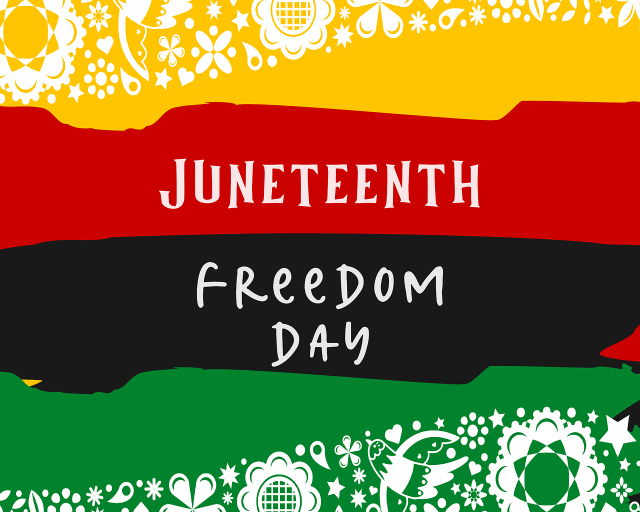
Juneteenth marks the historic day (June 19, 1865) in Galveston, Texas when the last remaining enslaved people in the U.S. received the long-awaited news that the Civil War was over. Under President Abraham Lincoln’s Emancipation Proclamation, they were finally set free.

Today, Juneteenth – called “the longest running African-American holiday,” Freedom Day, Emancipation Day and Liberation Day – is a celebration of African American freedom, achievement and progress, and the resiliency of African American leaders who took on the greatest hardships and ultimately prevailed.

How can the world continue to honor this legacy and encourage further unity? How can we do what must be done, as leaders, as advocates, as human beings and come together to rid any traces of intolerance that seek to divide?

My friend Johnnie Johnson, former All-Pro defensive back for the Los Angeles Rams, president and CEO of World Class Coaches, and author of From Athletics to Engineering: 8 Ways to Support Diversity, Equity and Inclusion, says the first step to a more diverse, inclusive, and accepting world is deciding that you want it to be that way. The change starts with each of us, Johnnie explains.

Juneteenth reminds us of the endurance and bravery of the African American community and the ability we all possess to support it in so many important ways. If you’re looking for exactly how to celebrate and show your support, here are a few helpful resources to get you started:

So, what’s the message? At HomeServices, Monday, June 19th – Juneteenth – is observed as an official company holiday and everyone within our organization is encouraged to take the day to reflect on what Juneteenth means to them. But reflection is not enough. We, as leaders, must also do, achieve, and act. We must seek out the Black-owned businesses in our marketplaces and support them. Participate in local Juneteenth activities. Put in the work necessary to create a more positive, inclusive, and diverse future. Celebrate Black history and Black culture. Visit museums and cultural spaces that are sharing Black stories new and old. Have those difficult conversations about our past, and our future. We must do it on Monday, and we must do it forever. Because as Johnnie Johnson wisely says, change starts with each of us, and that is the beautiful, enduring message Juneteenth brings to us all.

Thoughts on Leadership: 10 Lessons from Charlie Munger

By Gino Blefari

This week my travels find me starting Monday at home, participating in an early morning Berkshire Hathaway Energy call followed by WIG calls. On Wednesday, I attended the monthly HomeServices Diversity MEETS virtual meeting with diversity leaders from across our family of companies. In between meetings, I worked on speech preparation for the upcoming Stronger Together and Berkshire Hathaway HomeServices Summit conferences.

Last week, I wrote about my biography-a-week plan, inspired by Charlie Munger, so this week, I want to focus on Mr. Munger and his endlessly inspirational leadership. Charlie Munger, vice chairman of Berkshire Hathaway Inc., was born on January 1, 1924, in Omaha, Nebraska. Munger worked for Warren Buffett’s grandmother but didn’t meet Mr. Buffett until he was 35 years old. He has served the Berkshire Hathaway organization since 1978, and at the age of 99, still helps Mr. Buffett manage the company’s legendary stock portfolio. Another fact about Mr. Munger and his extraordinary intellect? He entered Harvard Law School without an undergraduate degree (he dropped out of college to serve in the military during WWII) and still graduated magna cum laude.

Here are 10 lessons from the incredible Charlie Munger:

  1. Keep learning your whole life. Munger believes learning must be an ongoing, perpetual activity that lasts a lifetime – not one that ends at the completion of formal education. Munger once said: “You’d be amazed at how much Warren reads—at how much I read. My children laugh at me. They think I’m a book with a couple of legs sticking out.”
  2. Study the models of science. Munger says science, and especially the science of evolution, plays a key role in understanding humans – what motivates them, what inspires them, what makes them who they are.
  3. Don’t be afraid to destroy some of your best-loved ideas. Munger once said: “If Berkshire has made modest progress, a good deal of it is because Warren and I are very good at destroying our best-loved ideas. Any year that you don’t destroy one of your best-loved ideas is probably a wasted year.”
  4. Understand the power of incentives. Munger has spoken at length about the power of incentives and how they can influence your success in business, life and investing. For instance, if you’re considering investing in a stock, he says it’s important to consider whether the managers have an ownership stake in the company. The decisions these managers make will impact the long-term success of the business, and if they have stock ownership, as an investor, your incentives and their incentives will align.
  5. Forever seek “worldly wisdom.” According toMunger: “I constantly see people rise in life who are not the smartest–sometimes not even the most diligent–but they are learning machines. They go to bed every night a little wiser than when they got up and wake up every morning able to attack the problems they faced the day before.” To achieve what Munger calls “worldly wisdom,” we must acquire information from new perspectives and different angles. Munger didn’t just study investing and finance. He also studied psychology, biology, and historical leaders like Benjamin Franklin, John D. Rockefeller, and Andrew Carnegie.
  6. Never be overly confident. “To a man with a hammer, everything looks like a nail,” Munger said. Overconfidence increases the probability of mistakes because you tend to only see your way of looking at the situation, rather than being open to new ideas. It’s like that time-honored saying: Smugness leads to arrogance, and arrogance is the precursor to disaster. Once you think you know it all, your slide to mediocrity has already begun.
  7. Embrace humility. It’s not enough to simply avoid overconfidence. Munger says we must also embrace humility. “It is astonishing how much long-term advantage people like us have gotten by trying consistently not to be arrogant,” he explained. For leaders, Munger believes humility is one of the best character traits to possess. Humility keeps the mind nimble, and it creates leaders who ask questions – not just of their team but also of themselves. A humble leader is open to transformative change and thoughtful, flexible decision-making.
  8. Know the importance of patience. “The big money is not in the buying or the selling, but in the waiting,” Munger said. Patience, he believes, helps leaders avoid impulsive decisions and lead with rationality and calm. It helps avoid the temptation of quick, short-term gains for the sustainable, lasting prospect of long-term success.
  9. Don’t worry about what everyone else is doing. Munger says at Berkshire Hathaway, leaders don’t really worry about what anyone else is doing and focus on investing their way. If you watch everyone else and what they’re doing, he says you lose the inner roadmap that brought about your success in the first place. You’ll be mired down in the unproductive game of comparison, and in the end, you won’t win. Instead, Munger says focus on the principles and values that matter to you most, then lead with those as your guide.
  10. Don’t hire consultants. Berkshire Hathaway doesn’t have one, single system of operation. Instead, it has many systems that work in different ways but are all based on the guiding principle of simplicity. When Berkshire Hathaway purchased See’s Candies, Buffett and Munger wrote a one-page deal with former See’s Candies CEO Chuck Higgins, and it’s never been touched since.The simplicity of that deal is also a reminder to stay true to the business and stay away from outside consultants. With consultants trying to tell leaders how to lead, Buffett and Munger say the intensity on both sides is rarely equal. Consultants deal in “play money,” they say, while a CEO is dealing with something close to their heart – the business. The executive team will find it difficult to get much done if they’re working with a consultant who is disconnected from the soul of the organization, the very thing that makes it special.

So, what’s the message? Here’s what Munger told CNBC’s Becky Quick during an interview in 2019. Quick asked Munger for the secret to a long and happy life. The secret, he said, is “easy, because it’s so simple.” He told her people often ask him, ‘How can I become like you, except faster?’” His answer? “Spend each day trying to be a little wiser than you were when you woke up. Discharge your duties faithfully and well. Step by step you get ahead, but not necessarily in fast spurts. But you build discipline by preparing for fast spurts… Slug it out one inch at a time, day by day. At the end of the day, if you live long enough, most people get what they deserve.”

No more posts.