Thoughts on Leadership: Lessons from Chuck Yeager

By Gino Blefari

This week my travels find me starting Monday commemorating Memorial Day (thank you Pappy and many others for your service) then Tuesday, participating in an early morning Berkshire Hathaway Energy call followed by WIG calls. Yesterday, I traveled to Atlanta to meet with the team at Harry Norman Realtors and then joined Berkshire Hathaway HomeServices Georgia Properties’ 60th anniversary celebration. Today, I sat down to write this post to you.

Charlie Munger, vice chairman of Berkshire Hathaway, once said: “There is no better teacher than history in determining the future. There are answers worth billions of dollars in a $30 history book.”

Because of that I decided one of my ways to improve so I’m better this week than I was last week is by listening to a biography every week. In honor of Memorial Day, I listened to “Yeager,” an autobiography by Chuck Yeager.

Brigadier General Charles Elwood Yeager made history on October 14, 1947, when he became the first pilot ever to exceed the speed of sound in level flight. A native of Hamlin, West Virginia, the United States Air Force officer broke the sound barrier about 40,000 feet over the Mojave Desert, flying a bright orange Bell X-1 experimental rocket engine-powered aircraft.

Here are a few lessons to learn from this flying ace:

Find Comfort in the Uncomfortable

Many times in the book, Yeager references the value of pushing past your comfort zone to achieve success. It’s something he did throughout his lifetime – as a fighter pilot in World War II, testing the experimental plane that broke the sound barrier, and as a leader of one of the most effective fighter squadrons to ever exist. He parachuted into a pine forest to escape being captured, slid down a mountain on an improvised log slide to escape a German patrol and even performed field surgery by amputating a navigator’s leg with a pen-knife. Many people recognize Yeager as one of the greatest military pilots ever, and it’s in large part due to his ability to not only step outside his comfort zone but also thrive once he got there. Albert Boyd, who was Colonel and Chief of the Flight Test Division at Wright Field during the summer of 1947, once described selecting Yeager as the primary X-1 pilot for the famous supersonic flight because of his “tremendous ability as a pilot” and “coolness under pressure.”

Lead By Example

Yeager’s leadership in combat during WWII is a textbook case of leading by example. He set high standards for the rest of the team and gave them confidence in what they could accomplish together. One example of Yeager’s extraordinary feats can be found in the way he became a fighter “ace,” which is defined as a pilot who has shot down a minimum of five enemy aircraft in aerial combat in their career. Very few wartime pilots achieve this status in their lifetime; Yeager did it in one single combat mission. On October 12, 1944, while flying Glen III, he got his squadron in chase position behind German fighters and downed five Bf 109 fighters to become an ace by the end of the day.

Persevere No Matter What

The historic flight that broke the sound barrier might not have happened without Yeager’s perseverance. Only two days before the scheduled supersonic 1947 flight, Yeager was thrown off while riding a horse at night with his wife and broke two ribs. He didn’t want to tell his superiors because he thought they might delay or choose another pilot for the upcoming flight, so he visited a civilian doctor who taped his ribs. On the day of the flight, Yeager fought through incredible pain and discomfort – he had to use a broom handle to secure the cockpit canopy – and ultimately made history. Then, on October 14, 2012, to celebrate the 65th anniversary of his record-breaking supersonic flight, Yeager returned to the Mojave Desert as a military consultant to co-pilot an F-15D fighter at supersonic speed. He was 89 years old. 

Thirst for New Knowledge

Richard H. Frost, a chief flight test engineer on the X-1 supersonic flight program described Yeager as “completely nerveless,” adding: “He’s the coolest guy I’ve ever seen, and it’s been my business to see a lot of pilots preparing for flights of doubtful outcome.” Another notable quality of Yeager’s observed by the program staff was his “unquenchable thirst for knowledge” as Frost described it. Yeager wanted to know absolutely everything he could about the airplane and its systems. He asked questions others hadn’t even thought of and grasped highly technical concepts with the understanding of an engineer. It was this depth of knowledge – and continual hunt for it – that made him not just a fantastic pilot but arguably the best pilot to ever fly.

Experience is Everything

One of the things that stood out for me the most in listening to the book was Yeager’s comment about experience. Explaining why experience is so valuable, Yeager said that he’d rather face an enemy with a superior plane and less experience than someone with more experience flying a less superior plane.

So, what’s the message? Yeager famously noted that just before the sound barrier is broken, the plane’s cockpit shakes more than at any other point in the flight. But without this risk, there is no reward. Yeager’s view? “You don’t concentrate on risks. You concentrate on results. No risk is too great to prevent the necessary job from getting done.”


Thoughts on Leadership: A Chip Off the New Block

By Gino Blefari

This week my travels find me starting Monday with my typical WIG calls. On Tuesday, I participated in an early morning Berkshire Hathaway Energy call and today I joined Intero’s Rally, where I shared “10 Things to Do Right Now to Crush it in Today’s Market” before sitting down to write this post to you.

Today I want to share an incredible story about an event that happened over the weekend. It all began when Michael Block, head club pro at Arroyo Trabuco Golf Club in Mission Viejo, California – located just a stone’s throw away from our Berkshire Hathaway HomeServices franchise headquarters where I spent time last week – played in the 2023 PGA Championship.

But this story isn’t only about a golf club pro entering the 105th PGA Championship, one of four major PGA tournaments that take place each season. After Block arrived at Oak Hill Country Club in Pittsford, New York – the host of this year’s tournament – he went on to capture the hearts of golf fans around the world with a brilliant (and unexpected) run for the title.

On Saturday at the end of play, Block was in the Top 10, something that hadn’t been achieved by a golf club pro in a PGA Major in over 30 years. And he did it with humility and charm.

On Sunday, he hit not just a hole-in-one at the par-3, 151-yard 15th hole but slam-dunked it, meaning he hit the ball off the tee and directly into the hole without disturbing even a single blade of grass.

In a post-tournament interview just after he turned in his scorecard, Block explained how it all went down. He said he didn’t see the ball go in but knew it was a good shot and knew it was at the pin, though he thought it was a little short. Professional golfer Rory Mcllory, who was paired with Block for the round, walked up to him and gave him a big hug as the crowd cheered. Block thought, “Why in the world is he giving me a hug?” Then Mcllroy said: “Blocky, it went in!”

“Are you serious?” Block asked against the roar of the crowd.

He sure was.

Later, when describing the shot, PGA sportscaster Jim Nantz called it an “all-time up and down.”

In the end, Block finished the tournament in 15th place, winning $288,333, though he’d also be offered $50,000 for his trusty 7-iron, the one he used to make the hole-in-one. Two-thousand congratulatory texts poured in for the tournament hero, including, Block said, one from Michael Jordan. And when a reporter asked him how he felt about his performance over the weekend, Block said: “It’s amazing. I’m living a dream. I’m making sure that I enjoy this moment. I’ve learned that after my 46 years of life, it’s not going to get better than this. There’s no way.”

After Block finished the tournament, he received a sponsor’s exemption to compete at the Colonial in Fort Worth, Texas this coming weekend. Cameras captured the now-famous moment when Block received the news and said: “If you could talk to my boss real quick and tell them that I won’t be at work next week …”

So, what’s the message? Michael Block’s improbable tale of an Orange County golf club pro turned PGA Championship legend can be summed up in the same two words he’s had stamped for decades on every single one of his golf balls–including the ones he used at the tournament: “Why not?”

Thoughts on Leadership: Lessons from Bruce Lee

By Gino Blefari

This week my travels find me starting Monday with my typical WIG calls, then traveling to Orange County, California. On Tuesday, I joined the early morning Berkshire Hathaway Energy call followed by the HSF Leadership Summit and the monthly HomeServices of America leadership meeting. On Wednesday, I continued the HSF Leadership Summit and filmed videos with the team for various brand projects. This morning, I participated in the HomeServices Connect Series live event before sitting down to write this post to you from the airport gate, as I wait for my flight back to Northern California.

May is Asian American and Pacific Islander Heritage Month, a time to recognize the outstanding achievements, historic contributions, and cultural influence of this community on the United States and beyond. So, in honor of AAPI Heritage Month, I’d like to dedicate this post to an AAPI leader who had a profound impact on my career and life.

One of the earliest influences on my leadership style was the films of actor Bruce Lee. Born in San Francisco in 1940 while his parents were there on tour with the Chinese Opera, Lee became an actor at a young age. He appeared in more than 20 Chinese films – the first one when he was just three months old! At age 13, Lee began studying martial arts with the legendary Yip Man. He also studied dancing and was the 1958 Crown Colony Cha Cha dancing champ of Hong Kong! (He would later credit his dancing background for the signature grace and poise of his martial arts style.)

After he turned 18, Lee moved to Seattle, Washington, where he would eventually enroll at the University of Washington to pursue a degree in philosophy. He also opened a martial arts school, the Jun Fan Gung Fu Institute (humbly launched inside a Seattle-area parking garage), then expanded by opening two more schools in Oakland and Los Angeles.

As the story goes, Lee was discovered in 1964 by celebrity hairstylist Jay Sebring, who saw him at the Long Beach Karate Championships and immediately phoned a client – producer/actor William Dozier – to tell him about this incredible martial artist he just saw named Bruce Lee. The rest, as they say, is history.

Lee’s life story is incredible. Did you know that despite how precisely he fought, he had bad eyesight? He wore glasses for most of his life and was one of the first people to ever try on newly invented contact lenses.

Credited with bringing martial arts mainstream, Lee was also an early pioneer of diversity, equity, and inclusion. Lee believed that martial arts shouldn’t be some secretive endeavor attempted by a few; martial arts should be available to everyone, no matter their race, age, or gender. In his movies “Enter the Dragon,” which eventually grossed more than $200 million, and “Fist of Fury,” he sought to shatter any prevailing stereotypes about Asian actors. Additionally, his 1972 movie “The Chinese Connection” helped shine a spotlight on Chinese music, cuisine, and language.

Beyond his blockbuster films, Bruce Lee has shared unique philosophies, many of which are written in Tao of Jeet Kune Do, a collection of thoughts from Lee’s personal notebooks that was published after his tragic death at the age of 32. He wrote: “I fear not the [person] who has practiced 10,000 kicks once, but I fear the [person] who has practiced one kick 10,000 times.”

Famously, Lee also said: “Be afraid of the calmest person in the room.”

Why? Lee believed the opponent to fear in a boardroom or on a playing field isn’t the one jumping up and down or yelling at the crowd. It’s the one who remains calm, knowing exactly what they are capable of and possessing the unrattled confidence they will achieve it.

So, what’s the message? This Bruce Lee quote perfectly encapsulates his life and legacy: “Absorb what is useful, discard what is not, add what is uniquely your own.”

Thoughts on Leadership: Lessons from the Kentucky Derby

By Gino Blefari

This week my travels find me participating in my typical WIG calls on Monday, joining an early Berkshire Hathaway Energy call on Tuesday, and on Wednesday, going to the California Theatre in San Jose, California for The Dwight Clark Legacy Series: Playmakers. The event featured round table conversations with San Francisco 49ers greats, including Fred Warner, Bryant Young, Jerry Rice and John Taylor. Today, I sat down to write this post to you.

Over the weekend I was entranced – as I am each year – by the Kentucky Derby. (Berkshire Hathaway HomeServices network members will remember 2022 when the network took over historic Churchill Downs for an incredible Sales Convention celebration.) I love the Kentucky Derby not only because it’s exciting, but also because it always provides important leadership lessons. Here are a few from the 2023 races:

Read more: Thoughts on Leadership: Lessons from the Kentucky Derby
  • You can win against all odds. Mage entered the Winner’s Circle as a new champion in the 149th year of the Kentucky Derby, racing against tremendous 15-1 odds and eventually, getting that coveted garland of roses. Before the race, Mage was far from a favorite. In fact, he only had three starts this spring. Mage’s success proves that it doesn’t matter what the odds are, what happened in the past or whether people doubt you. Only you can make the outcome yours.
  • You only fail when you fail to keep going. The jockey riding Mage, Venezuelan Hall of Famer Javier Castellano, was far from a trending name in the race. He was 0-15 before he broke his streak by this Kentucky Derby win. “I never give up,” Castellano said. “I always try hard to do the right thing. It took me a little while to get there. I finally got it.”
  • You can use your critics as motivation. As Castellano was in the jockey’s room preparing for the race, he said he looked up and saw NBC’s pre-race broadcast where the network had written: “0-15, Javier Castellano” below his name. When he saw the not-so-encouraging stat, Castellano told himself, “This is the year … I’m going to win the race.” Well, we all know what happened next.
  • You must write down your goals so they become etched into your subconscious. When asked, Mage’s assistant trainer and co-owner Gustavo Delgado Jr. said the win was a fulfillment of a dream – or we could say a Wildly Important Goal – that he had written down a year-and-a-half ago. Delgado said: “I wrote a note: ‘We’re going to win the Derby next year.’” Then, he won. Delgado’s story reminds me of my own start in real estate and a box I still have in my storage closet that has my old 3×5 index cards inside. On each card, I had written out my goals and affirmations. Re-reading those years later, it’s surreal to me that they all came true. As an example, in 1985, I set a goal of making $60,000, noting that it would be in direct proportion to the service I give. Even though it took me six months to get my first pending sale, I still hit my goal by the end of the year.
  • You can’t stop until you reach the finish line. In the backstretch of the race, Mage focused on the horse in the leading position and passed him at the eighth pole, going on to win the Kentucky Derby. Imagine if he gave up when he was behind? Instead, Mage didn’t stop until he was ahead of them all. “He’s a little horse with a big heart,” Castellano said.
  • You should always remember those who support you on your way up the ladder (or around the racetrack) of success. According to Cincinnati.com, Castellano’s win was as much about loyalty as it was about fate. For the last five years, Castellano has been sponsored by restaurateur Jeff Ruby, proudly sporting the Jeff Ruby Steakhouse brand. But in a tweet by Ruby, the restaurateur said Castellano almost didn’t wear the brand during the race. Why? Castellano was originally set to ride a horse called Raise Cain but the owners of that horse told him “at the eleventh hour” that he couldn’t wear the Jeff Ruby Steakhouse pants. Castellano said if he couldn’t support his sponsor, he simply wouldn’t race. He was going to give up a chance to be in the Kentucky Derby! Then in April, Castellano switched from Raise Cain to Mage so he could represent his sponsor. And when he triumphantly crossed the finish line with Mage, he was proudly sporting the Jeff Ruby Steakhouse pants. (Castellano also went to dinner at Ruby’s Louisville steakhouse after the win, where diners gave him a well-deserved standing ovation.)

So, what’s the message? Berkshire Hathaway HomeServices California Properties President Martha Mosier said it best when she shared her experience attending the Kentucky Derby this year. From the horses to the friendships to the leadership lessons this race contains, it is truly, as she wrote: “The experience of a lifetime.”

Thoughts on Leadership: Lessons from Neil deGrasse Tyson

By Gino Blefari

This week my travels find me starting Monday at home, participating in an early morning Berkshire Hathaway Energy call followed by leadership WIG calls. My WIGs for the week are to prepare for the T3 Sixty roundtable I’ll participate in soon and take two days at the end of the week to attend my niece’s out-of-town wedding. Of course, this morning, I sat down to write this post to you.

Last week we talked about mentors, and how you can have mentors you’ve never even met – such as from a book, podcast or documentary. I’d like to tell you about another mentor of mine. Let’s rewind a few years …

Read more: Thoughts on Leadership: Lessons from Neil deGrasse Tyson

One of the benefits of staying at home during COVID was watching TV shows I didn’t have the time to watch before. After a few weeks of this new habit, I got concerned I was spending too much time watching mind-numbing Netflix series. I’ve always had a morning routine, but I decided I needed an evening routine that would consist of doing some sort of cardio for 30 minutes, walking after dinner, going in my infrared sauna, and watching a series for at least one hour that would teach me something new.

So, with this mission in mind, I started the “Cosmos” series (highly recommend it), which is how I first became enamored with a mentor I’d never met: Neil deGrasse Tyson. When I finished the “Cosmos” series I was so interested in how the universe works that I started the aptly named series “How the Universe Works.” It was through this series that I discovered and later met Hakeem Oluseyi, who became another mentor of mine and was the keynote speaker at our HomeServices of America Stronger Together conference and the Berkshire Hathaway HomeServices Summit conference.

But let’s get back to the cosmos. A brilliant educator, Neil deGrasse Tyson has inspired so many – including myself – to think bigger (like the entire universe bigger) and analyze complex ideas with a different frame of mind. Here are a few leadership lessons from this fascinating astrophysicist:

Be careful with the word “nothing.” In leadership, a tiny task might seem like nothing, or a small win might seem insignificant but as Neil deGrasse Tyson explains, our concept of a “true nothing” is harder to find than one might think. What is nothing? Is nothing what separates the empty space between the device you’re using to read this post and yourself? No. That’s air. Let’s then move to a place where there’s no air, outside of our atmosphere. Is that nothing? No, deGrasse Tyson says there are “still a few particles floating there between the planets.” What about between the stars? There may be less there but there is still something. How about between the galaxies? Well, there’s less than between the stars but still, deGrasse Tyson says a “few particles per cubic meter lurk there.” If you could hypothetically remove those particles, is what’s left considered nothing? He says, according to quantum physics: “In the pure vacuum of space there’s something called virtual particles that pop in and out of space.” Ah, again that’s not nothing. To get a true nothing, deGrasse Tyson says you’d have to arrive at a place where there is no space and no time; however if the laws of physics apply, then “there’s still something there” he says. A true nothing would be a place where there’s no matter, no space-time, and no laws at all. So, the next time you say, “Oh that’s nothing” or dismiss a small accomplishment as “nothing,” think about the true definition of nothing, and it will bring much more meaning to the topic at hand.

You lead by providing understanding, not by exercising authority. deGrasse Tyson says he wants his lasting impact on the world to be that people no longer think of him when they think about the things he’s taught them. With his guidance, they have arrived at a whole new way of understanding how the world works because he gave them the tools to think differently. “I become irrelevant,” deGrasse Tyson says. Instead of leading with authority – do this or say that – he wants to teach. Then, he says, “They can run off and don’t even look back.”

Never lose your sense of curiosity. As a kid, “everything is new” deGrasse Tyson explains, relaying a tale about a mother he saw walking with her small 3- or 4-year-old child approaching a “big, juicy puddle” on the ground. “I said, ‘please let this kid jump in the puddle,’” deGrasse Tyson explains. But instead, the mother pulled him away. “It was an experiment in cratering,” deGrasse Tyson says. If the child had jumped in the puddle, the child would get to see the impact of a downward force operating on a fluid, but because he was prevented from experiencing the puddle jump, the child can’t see it at all. “It was a bit of curiosity in that moment that was extinguished,” deGrasse Tyson says. With his own kids, if it was something that wasn’t going to severely harm them, de Grasse Tyson let them jump in puddles and experiment with the world. “I have pretty high confidence they will retain that curiosity,” he explains, defining an adult scientist as “a kid who has never lost their curiosity.” Similarly, the best kind of leaders are ones who never lose their curiosity to explore and learn about the world around them.

There’s a difference between opinion and objective fact. Interestingly, deGrasse Tyson isn’t a big fan of debates, which he thinks are mostly won on charisma and the strength of a debater’s communications skills. “If I’m good at saying, ‘the sky is green’ and I have charisma and I win the debate, that doesn’t make the sky green,” he explains. He says debating is grandstanding an idea rather than arriving at an actual solution. Instead, he separates debating opinions from objectively analyzing a solution and arriving at a decision based on fact and truth, which is the basis of scientific discovery.

So, what’s the message? In the spirit of learning something new every day, I encourage you to google Neil deGrasse Tyson, read his books and listen to his StarTalk podcast. I’m amazed and learn so much every time I do.

Thoughts on Leadership: Celebrating Black History Month

By Gino Blefari:

This week my travels found me starting Monday with an early morning Berkshire Hathaway Energy call followed by my typical WIG calls with the team. On Tuesday, I participated in several event planning meetings for the upcoming Berkshire Hathaway HomeServices Summit, HomeServices’ Stronger Together event and Berkshire Hathaway HomeServices Sales Convention 2023. Yesterday, I joined the Berkshire Hathaway HomeServices Sales Convention virtual review, and today I’m writing this post to you.

Continue Reading

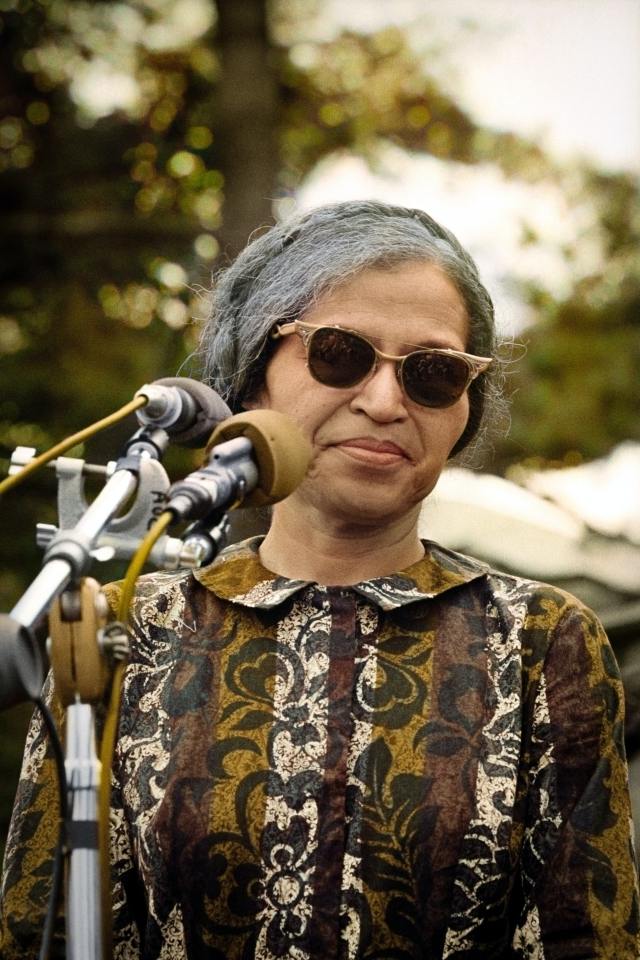
Thoughts on Leadership: Leadership Lessons from Rosa Parks

By Gino Blefari:

Remember: The tallest oak was once a little nut that stood its ground.

This week my travels find me starting Monday at my home office, conducting WIG calls with our team. On Tuesday, I attended the early Berkshire Hathaway Energy weekly executive team meeting and hosted our monthly HomeServices of America Leadership meeting. On Wednesday morning, I met with Dominic Nicoli at Intero Real Estate Services and delivered a no-nonsense speech on the realities of business and life to his accountability group. This afternoon, I was a virtual guest speaker for a class at the University of Colorado entitled “Real Estate Technology.” Each semester, Mike DelPrete, who teaches the class, invites about 15 different industry guest speakers to provide their insights and share their experiences. As a perpetual student myself, I always love chatting with a room full of people eager to learn. And after class, I sit down to write this post to you.

As part of Black History Month, we’ve been celebrating Black leaders on the blog and for today’s post, I’d like to talk about leadership lessons from Rosa Parks.

Read more: Thoughts on Leadership: Leadership Lessons from Rosa Parks

Parks is credited with helping to initiate the civil rights movement in the U.S. after she famously refused to give up her seat to a white man while riding a bus in Montgomery, Alabama. At the time, African Americans were required by city ordinance to sit in the back half of all city buses and yield their seats to white bus riders should the front half of the bus become full.

According to History.com, on December 1, 1955, Rosa Parks – a seamstress from Tuskegee, Alabama and a respected member of the African American community in Montgomery – was sitting in the front row of what was called the “colored section” of the Cleveland Avenue bus. She had just finished a long day of work at the Montgomery Fair department store. When the “white seats” filled up, the bus driver asked four Black riders to give up their seats, as per the existing city ordinance. Three of those riders vacated their seats but the fourth rider – Rosa Parks – wouldn’t budge.

In her official autobiography, Parks recalls that pivotal decision. She wrote: “People always say that I didn’t give up my seat because I was tired. No, the only tired I was, was tired of giving in.”

By the time she was sent to jail, everyone in the Montgomery community had heard about Parks’ arrest, including the former head of the Montgomery National Association for the Advancement of Colored People, E.D. Nixon. He’d been waiting for the perfect case that could challenge the segregated bus system in Montgomery … and believed he’d just found it in the unstoppable Rosa Parks.

As Stanford University’s King Institute describes, a group quickly assembled to bail Parks out of jail, including: Park’s close friend Virgina Durr; Virginia’s husband, Clifford Durr; and E.D. Nixon. Virginia Durr played a pivotal role in Parks’ civil rights advocacy; in 1955, Durr organized for Parks to receive a scholarship to attend a two-week workshop at the Highlander Folk School. The workshop focused on the implementation of school desegregation and cultivating local leaders for social change. What Parks learned at that workshop is believed to have (at least in part) inspired her actions on the Cleveland Avenue bus. Durr’s husband, Clifford Durr, was a lawyer who long championed diversity and equal rights.

Back at home, Parks spoke with Nixon about her case and its potential to ignite real change in the Montgomery community and around the country. The following day, when Parks’ trial was set to take place, there’d also be a citywide bus boycott and by midnight, 35,000 flyers were sent out with details about the upcoming event.

On December 5, 1955, History.com describes that about 40,000 Black bus drivers (most of the drivers in the city) participated in what would become known as the Montgomery Bus Boycott. Later in the afternoon, Black organizers also formed the Montgomery Improvement Association and elected a 26-year-old pastor from Montgomery’s Dexter Avenue Baptist Church as the president of the group. His name? Martin Luther King, Jr.

The Montgomery Bus Boycott continued for 13 months – exactly 381 days – until December 20, 1956 when the Montgomery buses became officially integrated. Several months later, on June 5, 1956 a federal district court in Montgomery ruled that bus segregation was in violation of the 14th Amendment to the U.S. Constitution. In November 1956, the U.S. Supreme Court upheld the decision. 

So, what’s the message? One of my father’s favorite quotes was that the tallest oak tree in the forest was just a little nut that held its ground. Stand tall. Fight for what you believe in. Have courage. Be brave. Parks once said: “To bring about change, you must not be afraid to take the first step. We will fail when we fail to try.”

Thoughts on Leadership: Celebrating Black History Month

By Gino Bleafri:

This week my travels find me starting Monday at home, conducting my typical WIG calls. On Tuesday, I had an early morning Berkshire Hathaway Energy call, and in total this week, I had 20 appointments with the mission to help team members achieve their goals faster than they would in my absence. Today, I attended Iowa Realty’s 70th Anniversary and Agent Award Ceremony.

One of my Wildly Important Goals this week was to attend and participate in our “Diversity Meets” monthly meeting, which just so happens to coincide with the start of Black History Month this February.

All month long (but really, all year long) we celebrate the leadership of incredible Black leaders whose wisdom and insights challenged and changed our world in extraordinary ways. For this post, I’d like to focus on my pal Johnnie Johnson.

A fearless leader, advocate, good friend, and former All-Pro defensive back for the Los Angeles Rams, today Johnnie is president and CEO of World Class Coaches. He’s also the author of a must-read book, From Athletics to Engineering: 8 Ways to Support Diversity, Equity and Inclusion.

In the book, Johnnie outlines 8 tactics for creating a more diverse and inclusive environment at work, at home and in every facet of your life. Here are his 8 ways:

  1. It starts with each of us. Johnnie says the first step to supporting diversity, equity and inclusion is deciding that you will. If you wait around for someone else to do it, it’ll never happen in the way it should. A more inclusive approach must always start with you.
  2. Love your neighbor. But don’t just love them, says Johnnie, take the time to really get to know and appreciate who they are as human beings. This removes barriers that inhibit the flow of a diverse, inclusive society.
  3. Talk about it. Engage in constructive conversations, Johnnie writes. Be sure to create a safe environment where tough questions can be asked without fear of recrimination. There is always more knowledge to gain.
  4. Check your biases and blind spots. Identifying the places where you have bias allows you to correct and eliminate them.
  5. Expand your comfort zone. Johnnie defines a comfort zone as the place where we can be productive and operate with confidence. When we operate outside of it, our performance suffers. Therefore, it’s critical to expand our comfort zone, so we can perform comfortably at a high level in a variety of circumstances.
  6. Build diverse teams. Diversity inherently brings varying perspectives to a company, which helps teams perform better. A McKinsey & Company study cited in the book found that “the most diverse companies outperform less diverse companies on key indicators, such as profitability.”
  7. Collaborate. Creating a team with diverse backgrounds is what Johnnie calls “a good start.” Next comes the actual collaboration to ensure the team performs. When you collaborate, you must not only acknowledge the differences among the team but also celebrate them.
  8. Align actions with goals and values. Johnnie says goals must be in alignment with personal values, and we should take time to define and articulate our core values. Then, we must ensure that we’re following them with everything we say and do.

So, what’s the message? At HomeServices of America, diversity is who we are and who we’ll forever strive to be. It’s a perpetual journey, adding new perspectives and fresh ideas as we travel this diverse, inclusive, and equitable road together. Johnnie Johnson is an example of a leader who does just that … and in sharing his strategies this Black History Month, we find inspiration to create a better world for all.

Thoughts on Leadership: Tough Love and Butterflies

By Gino Blefari:

This week my travels find me starting Monday at home, conducting my typical WIG calls. On Tuesday, I had my early morning Berkshire Hathaway Energy call and then prepped for several meetings with the team. Today, I had the opportunity to support newly inducted Santa Clara County Association of REALTORSⓇ (SCCAOR) president Will Chea of Intero Real Estate at the 2023 Installation of SCCAOR Officers and Directors. Now, I sit down to write this post to you.

Read more: Thoughts on Leadership: Tough Love and Butterflies

Even though we’re about midway through the academic year, I happened to see Steve Jobs’ 2005 Stanford commencement speech online, and it inspired me to think about what an ideal talk to a graduating class should be. “The only way to do great work is to love what you do,” Jobs famously told the new grads. “If you haven’t found it yet, keep looking. Don’t settle. As with all matters of the heart, you’ll know when you find it.”

His speech was moving, but it was also direct. As a leader, it’s about imparting tough love, the kind of love that’s no-nonsense, gritty, and real.

Many times people who love you don’t have those difficult, tough-love conversations because their instinct is to protect, comfort and shield you from all the bad things about the world; they only want you to see what’s shiny and good.

Tough love will help you recognize that life isn’t easy, and tough love implores you to learn those difficult lessons all on your own.

Here’s a scenario: You’re sitting in your backyard one afternoon. Suddenly, you spot a butterfly attempting to break free from its chrysalis – that hard shell formed during its metamorphosis. The struggle is difficult for you to watch, and your instinct is to help the creature out. So, you get some scissors from the kitchen and cut the chrysalis, allowing the butterfly to emerge into the world.

Success, right?

Wrong.

You wait for the butterfly, still shriveled up and weak, to flap its wings and fly away. But it never does. Instead, it just walks on the ground, and that’s where it will remain, if it even survives as all.

What the metamorphosis of a butterfly teaches us is that struggle is necessary for survival. As the butterfly pushes through a small opening at the bottom of the chrysalis, the fluid from its body is sent to the wings, making the butterfly’s wings strong enough to support its eventual flight.

This is the tough-love lesson those students – and all of us – need to hear when times get challenging. It’s the hard that makes us great. Just like the butterfly must fight against its cocoon to develop wings solid enough to fly, so too do people need to experience adversity to grow strong enough to overcome it. Remember, it is not what struggles happen during our lives that determine how well we’ve lived. It is what we choose to do next during those unexpected times of struggle that defines our character and determines our happiness.

In other words, we must develop grit. In author Paul Tough’s book, How Children Succeed, the journalist says that using IQ and academic success as a predictor of future accomplishment is wrong. Through exhaustive research, he discovers that noncognitive skills like gratitude, optimism, curiosity, and grit are far better predictors of high achievement.

So, what’s the message? When it comes to success, it doesn’t really matter what other people say, or even how they perceive you. It doesn’t matter what talent you’re born with or what skills you acquire early in your career. It doesn’t even matter whether the economy is strong or weak, or what the market is doing today and where it’s going tomorrow. What matters is that you understand there’s no substitute for hard work. As the saying goes, if you’re interested in being successful, you’ll do what’s convenient, but if you’re committed to being successful, you’ll do whatever it takes. Basketball coach Tim Notke said, “Hard work beats talent when talent doesn’t work hard.” Your competition may have more innate talent than you do, but tell yourself they’ll never outwork you. That’s tough love. That’s the chrysalis you’ll have to break on your own. Because in the end, the only one who can determine how high you’ll really fly is you.

Thoughts on Leadership: Lessons from Damar Hamlin

By Gino Blefari:

This week my travels find me starting Monday with an early morning Berkshire Hathaway Energy call followed by seven WIG calls. On Tuesday, I traveled to Dallas for Berkshire Hathaway HomeServices Sales Convention 2023 video shoots and speech coaching, which continued into Wednesday. Also on Tuesday, the Swanepoel Power 200 list was released.  Congratulations to all the extraordinary leaders who were recognized on the list this year!

Today, I’m home and I have one incredible leadership story on my mind: Damar Hamlin.

Read more: Thoughts on Leadership: Lessons from Damar Hamlin

On January 2, as football fans watched the Buffalo Bills play the Cincinnati Bengals, 24-year-old Bills safety Hamlin tackled Bengals wide receiver Tee Higgins during the final moments of the first quarter. An ESPN correspondent broadcasting the game described what happened next: “[Hamlin] made a hit, he got up, took a couple of steps and then just fell to the ground.” 

The response was immediate. First, the players knelt over Hamlin, aware he was in serious distress even before ESPN could identify the player who had collapsed on the field. The first wave of first responders came from the Bills sideline. According to the NFL’s Chief Medical Officer Dr. Allen Sills, when a player is injured, doctors and trainers from that player’s team will be the first to get to the athlete.

“If they get out on the field and they sense that this is a significant emergency, then they will give a hand signal in addition to the radio signal,” Sill explained. “It’s basically an all-call, meaning everyone come.”

During that Monday night game, everyone came, including the code leader, who is responsible for taking charge in an emergency. Sills continued to explain the medical response protocol: “If there is a cardiac arrest, who’s going to lead?” he said. “Who’s going to be the captain of the ship in that moment to make determinations, decisions about various aspects of the resuscitation?”

In the NFL, those leadership questions are critical; the answers could be the difference between life and death. It’s why the choreography of emergency response is planned before every NFL game, from preseason games to the Super Bowl.

Before kickoff, a 60-minute meeting of medical personnel takes place where the emergency action plan is reviewed, discussed and committed to, and most importantly a code leader (the person in charge should a medical emergency occur) is acknowledged by the medical team – you could almost call it an NFL-style emergency response WIG meeting. This code leader acknowledgement is fairly new to NFL protocol but vital to the success of any emergency medical operation; with a code leader established prior to every game, there is absolutely no question who will lead in a crisis.

That pivotal change potentially saved Hamlin’s life and gave him a fighting chance to live.

And fight he did, and continues to do, with the support of the entire NFL – and the world – on his side. Another leadership lesson from this story is how quickly everyone came together, no matter what team they played for, what team they rooted for, or even whether they watched football at all. Everyone sent their good vibes for Hamlin to make a speedy recovery.

Following Hamlin’s cardiac arrest, the safety received an outpouring of support. People who didn’t normally post about football were wishing him well on social media and routinely checking for updates on his condition. All 32 NFL teams changed their Twitter profile photos to say “Pray for Hamlin” with his number 3 Bills jersey. Hamlin’s Chasing M’s Foundation Community To Drive, which had a goal of $2,500 in donations, raised $8.7 million from more than 245,900 donations (and counting) that came from around the world.

During Week 18 games, all 32 NFL teams had a pregame moment of support for Hamlin. They also had an outline of “3” (Damar’s number) in each 30-yard line number on the field in either Buffalo Bills Red or Buffalo Bills Blue. Pregame warmup shirts had “Love for Damar 3” written on them, and the Buffalo Bills wore “3” jersey patches.

Then, after about nine days spent in two hospitals, Hamlin was discharged from Buffalo General Medical Center/Gates Vascular Institute. According to ESPN, doctors said they were “ecstatic” about his quick recovery, and Hamlin himself recently tweeted he was “grateful for the awesome care” he received. It’s amazing – and characteristic of a solid leader – to see Hamlin leaning into gratitude during such a challenging time.

So, what’s the message? Dorrian Glenn, Hamlin’s uncle, delivered a powerful statement about the recovery. “A lot of people don’t see how much they’re loved when they’re alive,” he said. “To see that he has a chance to eventually recover and see all the love he’s gotten … it’s gonna mean a lot to him.”

We’re experiencing that now, as Damar recovers and gives us an incredible leadership lesson about gratitude and coming together as human beings for a cause bigger than ourselves. No matter what business we’re in or what team we root for, we are always stronger together.

No more posts.