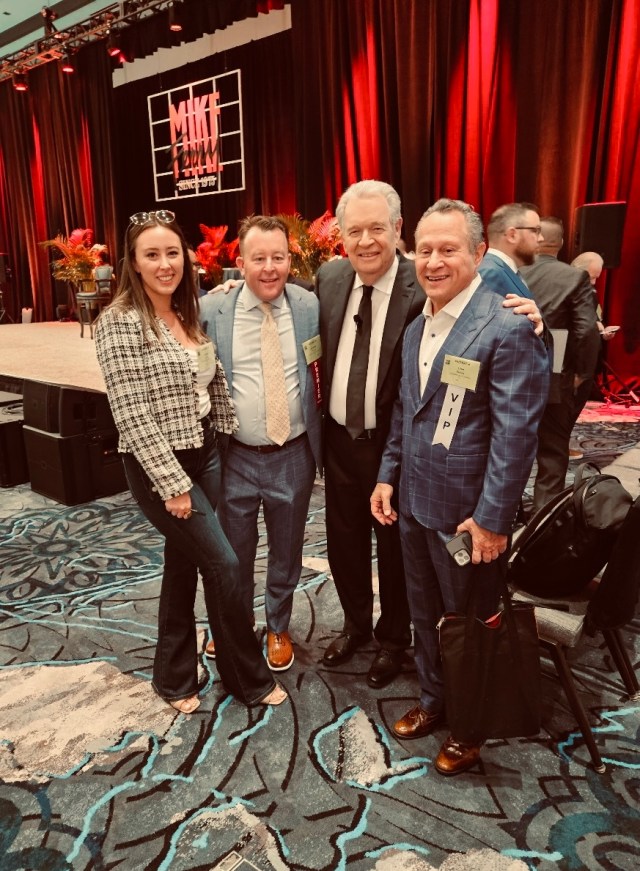
Thoughts on Leadership: Finishing October with Planning, Preparation and Promise

By Gino Blefari

This week my travels find me starting the work week on Sunday with a flight to Kansas City where I prepared to testify in a class action lawsuit. On Wednesday morning, I testified in court and on Thursday, I spent some time writing this post to you.

Our October theme has been preparation, planning, time management and routine, and in case you’d like to revisit some of the posts that fit this theme, here’s a list:

Read more: Thoughts on Leadership: Finishing October with Planning, Preparation and Promise

Now, you know I love my sports, and it’s a fun coincidence that this month of planning and prep coincides with a popular baseball term, Mr. October, (or Ms. October) one of the highest honors bestowed to the most outstanding player or team in the Major League Baseball postseason. The term was coined by Reggie Jackson. In the 1977 World Series, he hit three home runs on three pitches, earning the name “Mr. October.”

In real estate, October is also your time to shine. What you do now will help determine how your 2024 will play out, and why not make it your best year yet?

As a lifelong student on a mission to perpetually improve, I’ve been on my own journey of time management and self-improvement, especially when it comes to my on-the-road routine. I found it easy to make excuses while I traveled as to why I didn’t work out that day. No hotel gym. Too tired from time zone changes. On and on the excuses went until finally I said to myself, “Enough!” I made a commitment that every day while I was traveling, I’d do a minimum of 100 air squats and a minimum of 100 pushups, no matter what. It was an easy commitment to make because those exercises can be done from anywhere.

And in making this commitment I identified a crucial component to all positive habits and time-management strategies: environmental design. Atomic Habits author James Clear wrote: “Environment is the invisible hand that shapes human behavior. We tend to believe our habits are a product of our motivation, talent, and effort. Certainly, these things matter. But the surprising thing is, especially over a long period of time, your personal characteristics tend to get overpowered by your environment.”

In other words, the key to creating more positive habits is to design an environment conducive to your success. I eliminated the need to find a gym with my air squats and push-ups commitment. I could do that from anywhere and it was easy. Clear says whenever possible, design your habits so they fit within the flow of your current processes. This way, they won’t feel like such a stark contrast but more like a welcome addition to what you’re already doing.

Another way to add positive habits and manage your time well is to ask yourself: “What pleasure will I get by doing this thing?” And “What pain will I feel if I don’t do it?” Recognize exactly what you’re giving up and gaining through the activity and you’ll be more likely to complete it.

You can even write your answers down in a notebook, and having a notebook handy is one of my strategies for better time management. There’s a direct correlation between writing something down and getting it done, and the more detail you include, the more likely you are to finish the task. Leadership author Mark Murphy, in an article for Forbes, explained: “Vividly describing your goals in written form is strongly associated with goal success, and people who very vividly describe or picture their goals are anywhere from 1.2 to 1.4 times more likely to successfully accomplish their goals than people who don’t.”

I also like to complete short tasks first, as it gives a sense of accomplishment that motivates you for the rest of your to-do list. When scheduling your week, be sure to add in a “buffer day,” which is a time for catching up on emails, returning calls, having meetings, delegating tasks, and doing paperwork. For me, those buffer days are Friday and Sunday evening.

With October coming to a close, make sure you’ve planned out the remainder of the year, including days off like holidays, vacations, birthdays, date nights, exercise sessions, doctor appointments … everything that will give your life balance. Next, plan all the training you will do, personally and professionally. Finally, schedule all the activities from your business – planning time, prospecting, lead follow-up, office meetings, staff meetings and your appointments.

So, what’s the message? As the saying goes, if it’s important to you, you’ll find a way. If it’s not, you’ll find an excuse. Let’s all commit to avoiding excuses, planning our schedules, and committing to those goals that will make our personal and professional dreams come true. And as the 2023 World Series begins Friday, be on the lookout for the next Mr. October.

Thoughts on Leadership: Fourth Quarter Positive Habits and Time Management

By Gino Blefari

This week finds me traveling back on Saturday afternoon from AREAA and meetings in Chicago, then starting Monday conducting my typical WIG calls with CEOs. On Tuesday, I participated in the early morning Berkshire Hathaway Energy call and then the monthly HomeServices of America leadership meeting. Yesterday, I had two succession calls, and today, I sat down in the morning to write this post to you.

We’ve been talking a lot about business planning and scheduling, and how the best way to ensure a strong 2024 is to do those things now. As you’ve heard me say before, real estate operates on a 90-day cycle; so much of what you do in October and November will pay out at the beginning of next year. It’s also why I say this is the perfect time to reinforce positive habits and eliminate negative ones. The time to start changing for the new year isn’t when you make resolutions for January 1 … it’s now.

Read more: Thoughts on Leadership: Fourth Quarter Positive Habits and Time Management

My own morning routine has changed for the better lately. After walking my dog June, I go straight to doing cardio on a power plate that fits right in my office, then spend 30 minutes in an infrared dry sauna before moving to a steam sauna with eucalyptus and lavender, which clears out my sinuses.

And instilling new, positive habits goes hand-in-hand with time management. As Atomic Habits author James Clear said: “Good habits make time your ally. Bad habits make time your enemy.”

It’s true. While in Chicago last week, I had the honor of presenting my “76 Points On Time Management And Efficient Operations” to the Berkshire Hathaway HomeServices Chicago team, and here are 10 takeaways from that talk:

  1. Time management and forming habits is as much about discipline and daily practice as it is about identifying the routines that will give you an edge. Once you decide on the habits you’d like to implement, your next step is committing to the daily practice of those habits, so they become part of your subconscious and a natural element of your everyday life.
  2. Pick four positive time management strategies to focus on each month; once you’ve got those down, move onto the next four in the following month. As I told the team in Chicago, don’t try to do all 76 at one time. If you start this process now, by picking four each month, you should have about 16 new and positive time management strategies incorporated into your routine by the time the new year begins.
  3. Energy is paramount. The secret to time management is that productivity isn’t about time; it’s about energy and focus. There are 1,440 minutes in a day; invest your time wisely to make the most of every moment.
  4. The task that will have the single biggest impact on your time management is prioritization. Determine and prioritize your Most Important Task each day.
  5. Don’t be afraid to say “no” to things that don’t fit your goals or schedule. Research has found that people who say “no” in response to requests for their time tend to be happier and have more energy.
  6. One quick way to improve email management (and thus time management, because how much time do we spend on email?) is to implement a policy of descriptive subject lines. This way, you can know immediately what you’re addressing in that email. Also, when the subject of the email changes, the subject line of that email should change. I abide by the “touch it once rule” for email management: answer it, delete it, or file it.
  7. Each day, list the seven most important things you need to do, noting the time it’ll take to complete each task, and get those seven things done in the time allotted. Put the most important task first. This simple step will give you a tremendous sense of control and accomplishment. According to the Law of Single Handling, the ability to start and complete your most important task determines your productivity more than any other skill. And as for the timeline, the reason why you put timelines next to each of the seven things is Parkinson’s law, which says work expands or contracts to fit the time allotted; that’s why you always want to do everything in the time it should take. You can put buffers in your schedule, but don’t pad the time it takes to do any given task.
  8. Avoid Rocking Chair Syndrome, which is movement without going anywhere at all. Mental toughness is required for real progress, and it means doing what you’re supposed to do even on the days you don’t feel like doing it. Discipline is the ability to make and keep promises to yourself, and it’ll determine your success. Remember, the pain of discipline weighs ounces, the pain of regret weighs tons. Your destiny and professional growth are your responsibility, not anyone else’s.
  9. When it comes to time management and being effective, the most important thing you can do is to follow your schedule and never make a commitment of your time without checking your schedule first. This way you won’t miss any meetings, or anything you’re asked to do. You also won’t make a commitment of your time without checking your schedule first.
  10. Have a goal board in your office. List the goals you have set and the things you have accomplished. They keep you on track. A strong accountability partner will also keep you on track with your commitments and goals. Record your numbers daily, at the same time each day. Allow 15 minutes at the end of your day to complete this task. As the saying goes: When performance is measured, performance improves. When performance is measured and reported back, the rate of improvement accelerates.

In Og Mandino’s The Greatest Salesman in the World, he offers 10 scrolls that are designed to instruct you how to take bad habits and replace them with good habits. You may all recall the famous saying: When you keep your thoughts positive, your thoughts become your words, your words become your actions, your actions become your habits and your habits become your destiny.

If you’re looking for more inspiration to begin better habit-forming practices now, here’s a good reading list to get you started:

  • The Slight Edge by Jeff Olson
  • Atomic Habits by James Clear
  • The Greatest Salesman in the World by Og Mandino
  • The Year of Yes by Shonda Rhimes
  • The Richest Man in Babylon by George S. Clason
  • Think and Grow Rich by Napoleon Hill
  • The Score Takes Care of Itself by Bill Walsh

So, what’s the message? There’s no better time than today to take a bad habit and turn it into a good one, and I’ve been endlessly inspired by Og Mandino’s teachings, and was fortunate enough to have him as a friend and mentor. Thank you, Og Mandino, for always reminding me that my life goal should not be to win or be number 1; it’s to be the best version of myself. As another mentor of mine Bill Walsh says, if you do that “the score takes care of itself.”

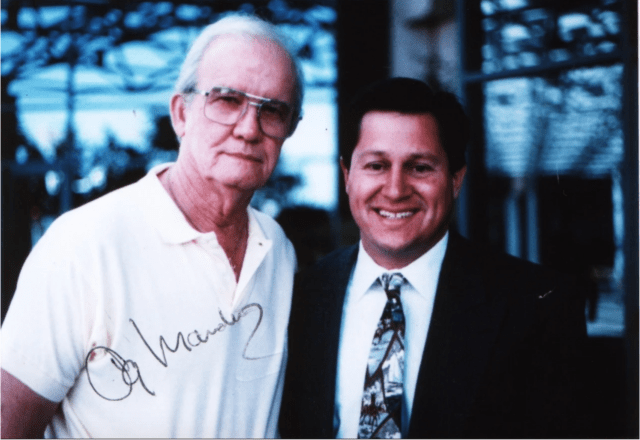
Pictured: Gino and Og Mandino circa 1986.

Thoughts on Leadership: Lessons from Mr. Irrelevant

By Gino Blefari

This week my travels find me heading to New Orleans on Monday for the Berkshire Hathaway HomeServices Marketing Forum, where the following day I delivered a presentation about the win-against-all-odds Kentucky Derby winner “Rich Strike.” On Wednesday, I traveled by car with Roberts Brothers President Teresa Williamson to Mobile, Alabama for a visit with the Roberts Brothers team. Today, I met with Roberts Brothers during their all-company sales meeting (with a Q&A led by Teresa) then hopped on a flight to Chicago for a visit with the Berkshire Hathaway HomeServices Chicago team. Tomorrow, after spending time with the Chicago team, I’ll attend an Asian Real Estate Association of America (AREAA) lunch followed by the AREAA Gala in the evening. Of course, in between meetings, I sat down to write this post to you.

Last week, I received an email from Eric Webster, general manager at Berkshire Hathaway HomeServices First Realty, in response to the weekly Thoughts on Leadership detailing lessons learned from the NFL. He wrote: “Good morning, Gino. You and I are cheering for the same guy for maybe slightly different reasons. I am a fan of [San Francisco 49ers Quarterback] Brock Purdy from his days at Iowa State.”

Read more: Thoughts on Leadership: Lessons from Mr. Irrelevant

Eric said he’d been thinking about Purdy lately as he’s been in the news for near-flawless performances during games this season, helping to lead the 49ers to a 5-0 start. (It’s certainly made my Sundays a lot more enjoyable!) In his email, Eric posed an interesting point to consider: “I’ve been wondering why he is so good today – but was only ‘good’ at Iowa State University.”

When Purdy played at Iowa State University, he was a solid player, but his team didn’t win a national championship. In the 2022 NFL Draft, he was chosen 262nd, the very last player selected, historically deemed “Mr. Irrelevant.” (He was even celebrated during “Irrelevant Week,” a charity event held each year in Newport Beach – just a few minutes’ drive away from the Berkshire Hathaway HomeServices headquarters – to celebrate the last-picked player in the NFL draft.)

Today, Purdy is the ultimate come-from-behind underdog story, very much like the story of Rich Strike I told days earlier at Marketing Forum in New Orleans. From beginning his NFL career as Mr. Irrelevant, Purdy is today starting quarterback for a so-far undefeated 49ers team. He threw four touchdown passes in Sunday’s game against the Cowboys. He has fourteen consecutive regular season wins under his belt, dating back to last season. And to echo our earlier question: Why? How did a player picked last in the NFL draft turn into such a standout?

Well, there are many reasons for Purdy’s productivity and high-performance, and each one proves a lesson in both leadership and the establishment of a mindset that embraces perpetual improvement:

  • Trust. Purdy is implicitly trusted by his teammates and 49ers Head Coach Kyle Shanahan; it’s a trust he’s earned through consistent results since taking over the starting quarterback position during Week 13 last NFL season. Shanahan says Purdy’s been “extremely consistent in practice since he’s been here, and he’s been the same in games. What you see is what we see and it’s what you feel.” Trust is earned, and trust is felt. Trust allows teams to take risks and push themselves harder on the path toward reaching their highest potential, knowing every member of the team supports the whole.
  • Progress. Some might say Purdy is the byproduct of an excellent team, a quarterback surrounded by a tough offense line that’s coached by some of the best offensive strategists in the nation. But while critics will tell you it’s only a matter of time before Purdy’s “great” turns to “not so good,” the stats are clear: Purdy keeps getting better. His time before passing improved from 2.84 seconds in 2022 to 2.56 seconds so far this season. He’s also bringing the ball farther down the field, with 7.2 air yards per attempt, up 0.2 yards from last year. Purdy’s 95.2% completion rate in Sunday’s game against the Cowboys is the best by any passer in 49ers history, and 48.2% of Purdy’s pass attempts gain a first down or touchdown, which is the highest percentage in the NFL right now. In leadership, a commitment to evolve and innovate is everything.
  • Dedication. As 49ers Left Guard Aaron Banks told ESPN: “[Purdy] is a dude who comes in and studies his film, studies his craft and makes sure he’s getting better week by week.” In leadership, a dedicated leader who is set on improvement is far more important than a leader who is complacent, even if they’re at the top of their game. Remember, once you think you know it all, your slide to mediocrity has already begun.
  • Chemistry. In Eric’s email, he said: “Something happened to Brock. He is on the right team at the right time, and they are really having fun together.” This is a true example of chemistry at play. In sports, chemistry is everything. You win or lose based on the chemistry of your leaders and your team. The same applies to business; a good leader not only understands their team’s chemistry but can also utilize it to effectively accomplish every Wildly Important Goal.

So, what’s the message? An underdog like Mr. Irrelevant has nothing to lose and everything to gain, which is the perfect recipe for success. 

Thoughts on Leadership: How’s That Business Plan Going?

By Gino Blefari

This week my travels find me starting Monday in my home office, conducting WIG calls throughout the day. On Tuesday, I participated in the early morning Berkshire Hathaway Energy call then presented a virtual leadership session for the Chalk Digital team. On Wednesday, I attended the HomeServices of America Diversity MEETS monthly meeting, and today, I sat down to write this post to you as I battle a strong cold that’s been lingering all week.

Last week, we rang in the real estate new year (read more about that here), and this week, I want to dive deeper into ways you can prepare and plan for a strong 2024. Ideally, you should complete your business plan in October; but if you haven’t started yet, you can download the Business Planning Essentials here.

Read more: Thoughts on Leadership: How’s That Business Plan Going?

Why plan in October? As I mentioned in last week’s post, real estate works on a 90-day cycle. What you do today will pay off three months from now, and concurrently, what you don’t do today will cause suffering and headache three months down the road.

Planning a full 90 days before the start of the New Year means that as soon as January 1 rolls around, you’ll already be running when you hit the ground. A business plan allows you to prepare for expected and unexpected challenges. It ensures the busy holiday season won’t stop your momentum in 2024. As the famous Ben Franklin quote goes: “A failure to plan is a plan to fail.” (Heard that one before, JT?)

A big part of business planning is planning your schedule. Once you plan your schedule, staying on your schedule is by far the most important thing you can do.

This weekend, aim to schedule out every day for the remainder of the year, including every single day off, and every day you’ll work for the rest of 2023. Make sure on those days you work, you work. On your workdays, follow your schedule, do your prospecting, and complete every task that will turn into business for you.

Then, from now to the end of the year and if you can carry it throughout the upcoming year, review your schedule for your upcoming day the night before. Every week, review your weekly schedule the Sunday before. And every month, review your monthly schedule the day before a new month begins. Having a schedule, and more importantly following your schedule, will have the biggest impact on your success.

Plus, part of business planning and scheduling naturally involves articulating your goals, and writing down goals has been proven to positively correlate to a person’s likelihood of achieving them.

In 1953, Harvard conducted a now-famous study on goal setting. Researchers asked Harvard MBA students about their goals. Here were their responses: 3% said they had clear, written goals; 13% said they had goals, but they were not written down; and 84% said they did not have goals at all. Ten years later, the study examined the success of its participants and found that the 13% who had non-written goals earned on average two times as much as the 84% of people who did not have goals. Most impressively, the study revealed that the 3% who had written goals outperformed everyone in the study by earning ten times as much as the other 97% of participants combined.

So, what’s the message? Scheduling helps you meet your goals, and goals are key to success.  Plan and schedule yourself out now, so when everyone else is working or scrambling to business-plan over the holidays, you’ll be ahead of the game and on your way to success.

Thoughts on Leadership: Happy Real Estate New Year!

By Gino Blefari

This week my travels find me starting Monday in my home office, conducting WIG calls with our CEOs. On Tuesday, I joined the early morning Berkshire Hathaway Energy call, then hopped on a flight to Houston, Texas. On Tuesday night, I co-hosted two receptions with HomeServices of America’s Chief Diversity, Equity and Inclusion Officer Teresa Palacios Smith for The Alliance LGBTQ+ Real Estate Alliance & Housing Industry Conference; then on Wednesday morning, I delivered a keynote, “Unlocking Triumph: Surpassing Limits Against All Odds” to an absolutely electric and appreciative crowd. From Houston, I traveled to Miami, Florida to attend the annual National Association of Hispanic Real Estate Professionals® (NAHREP) conference, NAHREP at L’ATTITUDE, where upon arrival, I joined the welcome reception trade show. My suitcase did not show up, so I was thinking I’d have to be in sweats, tennis shoes and sneakers for the reception but luckily, Hector Sepulveda from Long and Foster stopped by the booth. You’ve heard of giving someone the shirt off your back? Well, he gave me the jacket off his back! I felt very Miami Vice in the new, borrowed outfit. (Pictured below.) Also, at NAHREP, I co-hosted one evening reception and had a chance to connect with NAHREP members from around the world. Of course, I took some time in between meetings and sessions to write this post to you.

First things first: HAPPY NEW YEAR!

Read more: Thoughts on Leadership: Happy Real Estate New Year!

You might be thinking, “Gino, what? Happy New Year now?”

Yep! I’m commemorating the new year a few months early because the real estate new year begins Sunday, October 1. In a fantastic, new YouTube video, Joe Stacy, executive vice president, general growth manager and designated managing broker at Berkshire Hathaway HomeServices Chicago reiterated this statement, explaining: “What you do in the last three months of this year is going to have a direct impact on what you get done in your business in 2024.”

Here’s the gist: Your new year is about to start because when October 1 rolls around, it’ll signify the end of the third quarter and the start of the final 90 days of the year. Why is this so significant to us as a starting point for the new year? Because in real estate, we operate on a 90-day cycle. All the prospecting, lead generation, planning and marketing we do now is going to pay off three months from now. It’s why our new year doesn’t start when the clock strikes midnight and January 1 arrives. Our new year begins Sunday.

There’s something else to keep in mind as we ring in the Real Estate New Year: This is when your 2023 business planning must begin. (You can download the Business Planning Essentials here.)

Having a solid business plan will keep you from the dreaded Q1 slump. Each year, when Q4 – and the holidays – roll around, with all its sugar cookies and holiday-party reverie, people tend to get off schedule. But if you skip ahead 90 days from the holiday-themed celebrations, you’ll get to Q1, which is exactly where most real estate agents see the lag from a slower holiday season.

During my 30+ years in real estate – as an agent, manager, and owner of a company – I’ve found there’s typically a cash flow problem in January and February. This applies to agents as much as it applies to brokerage owners.

A business plan allows you to plan for what’s ahead and avoid that problem. It ensures the busy holiday season won’t stop your momentum in 2024. And considering October 1 as the start of the new year instills a hearty level of discipline into your business operations, so you kick off the (real) new year strong.

It reminds me a lot of football, and specifically Mike McDaniel, head coach of the Miami Dolphins, the team that defeated the Denver Broncos 70-20 on Sunday in their home opener, recording the second most points by a team in a regular season game in NFL history.

A performance like that doesn’t happen by accident. McDaniel’s leadership is the perfect example of what you can achieve when you’re focused, disciplined, and prepared earlier than anyone else. I’ve briefly mentioned this story before, however I want to go into more detail now, as it applies to preparation and planning: McDaniel’s October 1 New Year is 3 a.m. every day, the time when he arrives at the office. His 3 a.m. workday routine began in 2008, when as a 25-year-old Houston Texans assistant head coach under then head coach Gary Kubiak, McDaniel messed up. Kubiak would call his assistant head coach’s office phone at 6 a.m. on the dot each morning and two times, McDaniel didn’t pick up. Because he was late those two times, Kubiak fired McDaniel. The head coach thought McDaniel had to learn a life lesson, and as McDaniel explained in an ESPN special: “In my mind, I was late twice. What he was telling me is that you do whatever it takes to get things done.”

It would take a few years before McDaniel finally understood the message. After exactly 865 days out of the NFL, McDaniel returned to coaching and vowed he’d never, ever be late to the office again. He would instill a sense of unrelenting discipline into his life and never have to risk losing his dream job – or his dreams. Cut to Sunday night and McDaniel’s team is breaking records, and he’s still leaving his house at 2:24 a.m. to arrive at the stadium in Miami Gardens at exactly 2:51 a.m., settling into his desk just before 3 a.m. There’s another number he keeps on his desk: 2:46, which is the exact time Dolphins owner Mr. Stephen Ross called McDaniel and told him he was head coach. The two numbers displayed in McDaniel’s office, 865 and 2:46, represent opportunity lost and gained.

So, what’s the message? Like McDaniel, it’s discipline that will help us grow. It’s the reminder that if we just do things earlier than everyone else, if we celebrate our new year in October, if we plan for 2024 now, if we fully prepare for what’s ahead, then nothing is impossible, and everything is within our reach.

Thoughts on Leadership: Leadership Lessons from Coach Prime

By Gino Blefari

This week my travels find me working from home, completing my usual WIG calls with our CEOs and attending various business meetings. On Tuesday, I attended the monthly virtual leadership meeting, and on Wednesday, I had my early morning Berkshire Hathaway Energy call followed by breakfast with Ronnie Lott and The Golden Heart Fund, then stopped in to see Tom Ferry, who interviewed me onstage at the Tom Ferry Roadmap 23 tour. Today, I sat down between meetings to write this post to you as I prepare to attend the 49ers vs. Giants home game with Chris Sears and many other friends later tonight. Go Niners!

Excitement for the game – and chatting with Tom Ferry – has me thinking about leadership, football and coaching, which was already on my mind as I watched the latest “60 Minutes” episode featuring Deion Sanders, or “Coach Prime,” a former NFL player-turned- college-football coach. He won Super Bowl XXIX with the 49ers then Super Bowl XXX with the Dallas Cowboys, and played professional baseball during his epic athletic career. He’s typically known as a cornerback; however it must be noted that he sometimes came in on offense and played receiver.

Read more: Thoughts on Leadership: Leadership Lessons from Coach Prime

And if you’ve been following the sports news lately, it’s hard not to come across an attention-catching headline about Deion Sanders’ near-legendary turnaround of the Colorado Buffaloes.

The story begins in December 2022, when it was announced Sanders would leave his position as head coach of the Jackson State University Tigers to become the new head coach of the Colorado Buffaloes. Sanders had his work cut out for him. I Colorado Buffaloes are in the NCAA Division I Football Bowl Subdivision (previously known as Division I-A), the highest level of college football in the U.S., but at the time, they were infamously flailing. They’d just come off a disappointing 1-11 season, and it was now Coach Prime’s job to turn things around.

In a recent memo to his team, ReeceNichols Real Estate SVP of Brokerage Chad Dumas talked about Sanders’ leadership, writing: “There are so many things he has done and said in the last couple of years that I think we can learn from as leaders, but I want to hone in on what I believe is a masterclass on recruiting and attraction.”

At the first Buffaloes team meeting in December, Sanders didn’t mince words, encouraging players to enter the transfer portal and find other schools at which they could play. “I came to the conclusion that a multitude of [the players] couldn’t help us get to where we wanted to go,” he said during the “60 Minutes” interview.

Immediately, 41 scholarship players transferred out and when the 2023 season began, Sanders had just 20 of the 83 scholarship players from the 2022 season still on his roster. Yet he was able to replace them in a few short months with new talent. In fact, in Colorado’s opening game against the TCU Horned Frogs (a team that played in last year’s national championship), the Buffaloes defeated the Horned Frogs 45-42 in a dramatic and much-talked-about double-overtime victory.

How was he able to recruit top players so quickly?

Sanders’ mantra is “I ain’t hard to find,” and it’s a testament not only to his visibility in the media and accessibility to his team (he’s been on “60 Minutes,” ESPN, and conducted a host of other high-profile interviews) but also to his candor and honesty during those interviews. Coach Prime says it like it is – the good, the bad and all the confidence you’ll find in between. As Chad said in his memo: “There’s never been a time where [being visible] is easier to do than now, but it takes discipline and a plan and a belief in yourself that when you are easier to find and putting yourself out there more, people will be attracted to you.”

Of course, being transparent and visible requires a high level of self-belief, which naturally plays into Coach Prime’s tough-love coaching philosophy. “If you went for that, if you were able to let words run you off, you ain’t for us,” Sanders said of his now-famous speech to the Buffalo players about finding another school. “We’re an old-school staff. We coach hard. We coach tough. We’re disciplinarians. If you’re allowing verbiage to run you off because you don’t feel secure with your ability, you ain’t for us.”

And for those players who heard his words and wanted to remain on the team? “Stay,” Coach Prime said. “Prove it.”

Sanders’ tough-love mentality extends to his kids, including Shedeur Sanders, quarterback of the Buffaloes and Shilo Sanders, Colorado’s starting safety. Coach Prime said if his kids called him up and said their coach told them to get in the transfer portal, he’d tell them they must not be playing as well as they should. “You should be an asset and not a liability,” Sanders explained.

As an example of Sanders’ unwavering confidence,after “60 Minutes” asked him about the best coach in college football today, he replied: “Let me see a mirror.” He did go on to clarify how much he admires University of Alabama head coach Nick Saban, and how just sitting in his presence is a gift and a reminder to be a perpetual student of his craft. “He’s forgotten more things than I may ever accomplish, so I am a student looking up to this wonderful teacher saying, ‘Just throw me a crumb of what you know.’”

So, what’s the message? Coach Prime says being a coach means you have to understand that what your team wants from you is a leader who will be honest, fair, tough, disciplined, supportive, visible and there for them, always. “I ain’t hard to find,” he says, and every player on his now 3-0 Colorado Buffaloes team knows it’s true.

Thoughts on Leadership: Finding Gratitude from Asteroids

By Gino Blefari

This week my travels found me starting Monday with my usual WIG calls then flying to Minneapolis. On Tuesday morning, I threw out the first pitch at the 2023 North American Gay Amateur Athletic Alliance (NAGAAA) Softball World Series then spent the day with the Edina Realty team at the Minnesota State Fair for a multi-office sales meeting that took place at the picnic area within the State Fairgrounds. I also conducted an afternoon training session with the Edina Realty and Berkshire Hathaway HomeServices North Properties sales managers. On Wednesday, I traveled home, and this morning I sat down to write this post to you.

Every Thursday, I walk with a local real estate agent, and we start at 5:30 in the morning to get our steps in together. Today, it was 5 a.m. when I was driving to our meeting spot, completely dark, and there in the sky I saw the rare blue supermoon – a sight we won’t see again until 2037 – and it made me think of the universe, the stars, and asteroids. It reminded me of an interesting podcast episode I had listened to featuring Randall Carlson, a builder, architectural designer, teacher, geometrician, geomythologist, and geological explorer. So, I’d like to share some of what he said with you for today’s post.

Continue Reading

Thoughts on Leadership: Leadership Lessons from Hurricane Hilary

By Gino Blefari

This week my travels found me working from my home office, conducting WIG calls on Monday and attending the weekly Berkshire Hathaway Energy meeting on Tuesday morning.

On Sunday, my home state of California was hit with its first tropical storm in 84 years – Hurricane Hilary. Several important leadership lessons from the storm can be applied to various aspects of life and decision-making. Here are seven leadership lessons we can learn:

Continue Reading

Thoughts on Leadership: The Magic of Music Pt. 2

By Gino Blefari

This week finds me starting Monday with my typical WIG calls then hopping on a flight to Las Vegas for dinner with Troy Reierson, CEO of Berkshire Hathaway Arizona Properties, California Properties and Nevada Properties; and Doug Cannon, president and CEO of NV Energy. On Tuesday, I joined the early morning Berkshire Hathaway Energy call then attended the Mike Ferry Superstar Retreat for the rest of the day. Yesterday, I departed Las Vegas and touched down in Orange County, California to coach and spend time with the Berkshire Hathaway HomeServices California Properties team at their leadership meeting, led by California Properties President Martha Mosier. From there, I went to the Berkshire Hathaway HomeServices HQ in Irvine to film some videos and prepare for the debut broadcast of the Diversity Matters podcast, hosted by HomeServices of America’s Chief Diversity Equity & Inclusion Officer Teresa Palacios Smith. Today, I had a HomeServices of America 10-year plan working session with Berkshire Hathaway Energy, and of course, made some time between meetings to sit down and write this post to you.

Last week we talked about the magic of music and I promised you more to come … so here it is.

We ended our last “music is magic” discussion talking about how music can elicit certain feelings in others, and how Jim Kirk, CEO of Corporate Magic, uses that knowledge when putting together emotionally charged shows like the General Sessions at the annual Berkshire Hathaway HomeServices’ Sales Convention.

Jim says that this idea of music creating feelings within us is something we’ve been trained (whether we know it or not) to understand. There’s a historical connection, too. For instance, Jim explains that when we hear bagpipes, because we’ve often heard them at a funeral, they often have a calming or sorrowful effect on us. Similarly, the string section – cellos, violas, bass violas – are richer and soothing in their sounds, whereas banjos and electric guitars are more upbeat and fun. Trumpets are brighter, Jim explains, and flugelhorns and French horns imbue a sense of warmth. 

For me, the historical effect of music happens when I hear certain bands. I can’t hear REO Speedwagon without thinking of John Thompson and I working together at the Cherry Chase Public Golf Course in the 1980s. And beyond history, there are songs that remind us of relationships, not just moments in time. For my one daughter, Alex, it’s “Sister Golden Hair” by America that always reminds me of her. For my other daughter, Lauren, it’s “Butterfly Kisses.” And every time I hear “Unchained Melody” by the Righteous Brothers, I’m reminded of my wife Joanie and how we’d watch the movie “Ghost” together.

Research supports the idea that music and emotions are intertwined. Petr Janata, associate professor of psychology at the University of California, Davis, conducted research on the link between brain activity and music, ultimately concluding that “the region of the brain where memories of our past are supported and retrieved also serves as the hub that links familiar music, memories and emotion.”

As Professor Janata explained: “What seems to happen is that a piece of familiar music serves as a soundtrack for a mental movie that starts playing in our head. It calls back memories of a particular person or place, and you might suddenly see that person’s face in your mind’s eye. Now we can see the association between those two things – the music and the memories.”

Beyond creating a picture in our minds, listening to music can cause physical reactions, too. According to scientific studies, music can lower stress, heart rate and blood pressure, as well as our cortisol levels, while increasing serotonin and endorphins, eliciting a similar feeling to spending some rejuvenating time outdoors, exercising or getting a good night’s sleep. The American Music Therapy Association writes extensively on the pain-reducing effects of music therapy, which the association says can be used for patients of all ages, from young children to adults, to help lessen acute and procedural pain. NorthShore University HealthSystem reports that playing soft music (especially when coupled with dim lighting) can help you consume a meal at a slower rate, which aids with digestion.

And if you want a better workout, experts say try listening to music while you exercise. Not only will it boost your mood, but it will also increase your endurance by decreasing the perceived effort required for you to complete the physical task at hand. Professor Costas Karageorghis of Brunel University in London conducted research that showed people can run farther, bike longer and swim faster while listening to music – and they often don’t even realize it.

So, what’s the message? Like I said last week, music is magic.

Thoughts on Leadership: The Magic of Music

By Gino Blefari

This week my travels find me starting Monday with my typical WIG calls. On Tuesday, I joined the early morning Berkshire Hathaway Energy call then spent the rest of the week preparing for next week’s agenda and our upcoming Stronger Together top producers’ event.

Of course, between meetings and preparation, I sat down to write this post to you.

Read more: Thoughts on Leadership: The Magic of Music

Today, I want to talk about the magic of music.

There are some songs that from the minute I hear the opening notes, I’m transported to a very specific time in my life: “Changes in Latitudes, Changes in Attitudes,” “Fire and Rain,” “Dancing in the Moonlight,” “Lyin’ Eyes” …

If an old song from the ‘70s comes on, I’m not wherever I am when it’s playing. I’m in my Mustang convertible bringing Frank Horst home from football practice or Dave Smithson home from work at Cherry Chase Public Golf Course.

And the meaning of a song can change with the passage of time.

For instance, now when I hear “Leader of the Band,” I’m carried away to early September 2021, hand-feeding my dad ice cubes as he lay in bed, just an hour before he died.

The leader of the band is tired, and his eyes are growing old

But his blood runs through my instrument and his song is in my soul

My life has been a poor attempt to imitate the man

I’m just a living legacy to the leader of the band

Certain songs transport you back in time, to happy moments, to sad moments, to the moments you wish you could forget but never will. Music is like that. Music is magic.

And as leaders, we can take this magic and positively harness it to achieve our Wildly Important Goals. Athletes do it all the time. During the 2016 Olympics, Michael Phelps famously got into the zone by listening to Future’s “Stick Talk,” which he said motivated him for the races ahead.

While “Stick Talk” pumped Phelps up for the pool, another athlete in another sport might choose something to calm them down. Costas Karageorghis, a professor of sports and exercise psychology at Brunel University London, explained in an article for CBC.ca that athletes competing in high-octane sports like snowboarding or surfing “might choose a song with a tempo that is close to resting heart rate at a moment of high anxiety.”

Whenever possible, I’ve always tried to bring the magic of music to the leaders around me. At last year’s Stronger Together event, I asked the CEOs to select the song they wanted to play while they walked onto the stage. At Contempo Realty and Intero, I’d come up on stage to the theme song from “The Godfather.” In fact, just writing that line right now I’m already humming the music. Daa daaa daaa daaaaa …

Jim Kirk, CEO of Corporate Magic, the creative team behind the music and performances during General Sessions at the Berkshire Hathaway HomeServices Sales Convention, told me an old college friend of his who became a vocal teacher wrote a dissertation on the healing effects of singing and the positive benefits singing can have on the immune system.

It makes sense when you think about all the ways music can alter our mood and mindset.

Jim also said that from a young age, he taught himself to analyze the impact a particular song would have on people, then choose what style, instruments, choral progressions, tempos, voices or lyrics to use to elicit those feelings in others. It’s why if you’ve ever been to a General Session at Sales Convention, you’re taken on a rollercoaster of emotions as the music twists and turns with drama and excitement. Every choice Jim and his team make is strategic and purposeful. But more on that next week. Please (pun intended) stay tuned.

So, what’s the message? Music is magic.

No more posts.