Thoughts on Leadership: Lessons from Colonel Gregory Gadson

By Gino Blefari

This week my travels find me in Las Vegas, NV attending and participating in the annual Berkshire Hathaway Energy Executive Leadership Conference. The focus of the conference included cross-business panel discussions and presentations related to current and future business challenges and opportunities, along with small group discussions on leadership and employee engagement.

I wanted to talk this week about resilience—coming back from a difficulty, perhaps a place where you weren’t sure what was coming next—where you’re questioning your own economic or emotional survival.

Read more: Thoughts on Leadership: Lessons from Colonel Gregory Gadson

 What comes to mind is a story I recently heard, about a man, a grievous injury, and grit.

Colonel Gregory Gadson was a West Point football player, a small one, who often gazed across the line of scrimmage into the sweaty, smudged faces of bulkier men. Still, he would call out competitive taunts. “It’s gonna be a long day for you,” former West Point Coach Tim Kish recalls hearing Gadson mutter to the opposition, “I hope you packed a lunch.” Gadson was a standout. He’d hit a player hard, then help him get up. That was his magic.

Playing for West Point eliminates a lot of career drama; you’re not going pro—you’re going into the Army. And so, Gadson went, bringing along that same “can do” attitude. He served in every major war in which the US engaged. He became a beloved leader, taking the lessons of teamwork and resilience he learned on the gridiron onto the battlefield. In 2007 Gadson led a 3,500-member infantry unit that he’d built from scratch at Fort Riley, Kansas into Iraq. They were a well-oiled machine, having spent weeks training with a tough, charismatic commander.

Only a few weeks into their deployment, on the evening of May 7, the military vehicle that Colonel Gregory Gadson was traveling in was hit by an Improvised Explosive Device (IED). Colonel Gadson was injured, requiring a substantial amount of blood transfusions (129 units of blood) to sustain him; his heart would stop three times before he arrived three days later at Walter Reed Army Medical Center (WRAMC), but his team had saved his life.

When he arrived at WRAMC his legs had been surgically sewn together and set in metal cages. But in emergency surgery that could have, once again, cost him his life, he lost one leg. Later he and his family chose to give up the other, rather than risk ongoing infection.

This man, who’d been at the top of his game –  An up-and-coming lieutenant colonel, a respected leader who had a wife, and two pre-teen children—was now missing half of his body.

“There were no waypoints,” Gadson recalls. “I didn’t know how I was going to provide for my family. How could I take my son fishing? Who would walk my daughter up the aisle at her wedding?”

There were some very dark days. Gadson applied the lessons he had learned from life, drew strength from his family, and found support in his faith. He didn’t search for waypoints so much as he watched for glimmers.

One day a former Army football teammate, Mike Sullivan, came to visit him at WRAMC. He found Gadson’s spirit of recovery so inspiring he wanted to share it with his own team: the New York Giants. Sullivan was then a coach for the team, which had begun the season 0-2. Things were looking grim at the Meadowlands Sports Complex. Sullivan felt the team had talent, but they were playing as individuals, caught up in the hype. They too, needed a glimmer. Sullivan invited Greg to speak to the Giants on the evening before they took on the Washington Commanders.

“I wasn’t a public speaker at the time,” Gadson says. “What was I going to say to a room full of successful professional players? I’d never reached that level.”

But there was one thing Gadson could talk about: resilience in a time of darkness.

“Your life can change in an instant,” he told the room full of players, rapt and wrapped in silk suits and diamond stud earrings. “Everything could turn on one career-ending injury. That’s why you must embrace every opportunity. You can get caught up in the media, the numbers. But none of those matter. What matters is your team. I am alive today because of my team. My team trained. And my team saved my life. That’s how you must play tomorrow—no one on the field matters more than the guy next to you. No one.”

And so began the Giants’ winning streak. It took them all the way to the Super Bowl. Gadson spoke again to the transformed Giants the night before that championship game.

“Believing is better than knowing,” Greg told the Giants. They believed. And in the final two minutes of that game (who could forget David Tyree’s helmet catch?), they beat the undefeated New England Patriots and became world champions.

Gadson travels the country now, bringing his motivational message to corporations, sports teams, and non-profit organizations.

So, what’s the message, Colonel Gregory Gadson’s story is a testament to finding glimmers of hope in the darkest moments and the transformative impact of unwavering determination.

You can learn more about his story in a book co-authored by Gadson and Terese Schlachter (my colleague Jon Coile’s wife) titled, “Finding Waypoints: A Warrior’s Journey Towards Peace and Purpose.” by clicking the links below.

Amazon: Finding Waypoints: A Warrior’s Journey Towards Peace and Purpose  Ridgeback Communications: https://www.ridgebackcomms.com/books

Thoughts on Leadership: A December to Remember

By Gino Blefari

This week my travels find me starting Monday with my typical WIG calls. On Tuesday, I participated in the early morning Berkshire Hathaway Energy call followed by a HomeServices of America/Berkshire Hathaway Energy strategy and discussion meeting. (I also had three succession planning meetings this week.) On Wednesday I traveled to Orange County in the afternoon. Today, I had meetings in Orange County, and of course, took some time to sit down to write this post to you.

With just about three weeks left in December – and 2023, can you believe it? – it’s important to figure out how you’ll keep your productivity at its highest level, even as you attend holiday parties and spend time with family and friends. Remember, real estate operates on a 90-day cycle. What you do now will pay out at the beginning of next year.

Read more: Thoughts on Leadership: A December to Remember

If you’re wondering how to stay productive even as the holiday lights sparkle and festive bells chime, here are a few tips that will help you not only make the most of your time but also become a more effective leader:

Schedule yourself out every remaining day for the month of December. Take a few minutes right after you’re done reading this post to schedule out the remainder of the year. Why? Well, Tony Robbins said it best; “If you talk about it, it’s a dream, if you envision it, it’s possible, but if you schedule it, it’s real.” When you’re creating this December schedule, I’d recommend writing down your commitments in a day planner or printed calendar of your choice. You’re 42% more likely to accomplish goals you write down, according to Dominican University Psychology Professor Dr. Gail Matthews. Add in every meeting, work commitment, project and business appointment you have this month. Include your time off, like holiday parties, family vacation, birthdays, date nights, exercise sessions and doctor appointments. Then, clearly delineate the times when you’ll WORK and the times when you’re OFF. When you work, you work. No distractions, no moving things around. This is your time to get whatever task you’ve assigned to that time slot done. Similarly, when you’re off, you’re off. No checking emails, scheduling unplanned meetings or checking your laptop. Creating a distinct separation between work and play will vastly improve your focus. It will also enhance your ability to live in the moment and be present.

Get rid of any half-work. What’s half-work? It’s a concept articulated by Atomic Habits author James Clear, who defines it as that division of your time and energy when your attention is split between “what you should be doing and what society bombards you with.” Maybe you’re on a call with someone and suddenly hear the familiar *ding ding!* of an incoming email, so you read the email while you’re still on the phone. Half-work. Maybe you’re writing a report and see a notification that you’ve been tagged in a Facebook post, so you abandon the report to check it. Half-work. Maybe you started a new fitness routine – 100 air squats, a minimum of 100 push-ups every day – when you learn about a different ab workout, so you only do 50 air squats and try the other workout, making lackluster progress in both. Half-work. As Clear explains, it doesn’t really matter what kind of half-work is impacting your schedule; the result is always the same: you’re not fully engaged, you find it difficult to commit to a task for a long period of time and the task takes far longer than it should. When you eliminate the triggers creating this half-work you’ll be amazed at the subsequent increase in productivity. Do this by taking your calls in a room with no laptop, blocking out two hours of time to complete the report, putting your phone in another room, committing to just one exercise routine, and so forth.

Create a “top seven list” for the day. Each day you work in December, list the seven most important things you need to do, noting the time it will take to complete each task. Then, get those seven tasks done in the time allotted. Put the most important task first. This will give you a tremendous sense of control, empowerment and accomplishment. According to the Law of Single Handling (one of Brian Tracy’s 100 laws of success), the ability to start and complete your most important task determines your productivity more than any other skill. And why note the time for each of your seven tasks? That one can be attributed to Parkinson’s Law (published in 1955 by naval historian C. Northcote Parkinson), which says work expands or contracts to fit the time allotted; it’s why you always want to do everything in the time it should take. You can put buffers in your schedule, but don’t pad the time it takes to do any given task.

So, what’s the message? Sure, December is a time for togetherness and festive fun, but it’s also a time to maintain momentum for your business. This way, once the ball drops on New Year’s Eve, you’ll feel confident that your end-of-year productivity will create sustainable growth in the new year and far, far, beyond. As Zig Ziglar was known to say: “We cannot start over, but we can begin now and make a new ending.” To all those reading this who are figuring out how to tackle the chaos of December, let your beginning start today.

Thoughts on Leadership: Lessons from the late Charlie Munger

By Gino Blefari

This week my travels find me at home, starting Monday with my typical WIG calls. On Tuesday, I joined the early morning Berkshire Hathaway Energy call, then had a few meetings. On Wednesday and Thursday, I co-hosted six succession calls.

On Tuesday I learned of Charlie Munger’s passing at the age of 99. In tribute to this extraordinary individual, I’ve decided to dedicate today’s blog to Charlie Munger.

Read more: Thoughts on Leadership: Lessons from the late Charlie Munger

Reflecting on the experiences that have molded my leadership journey, I find myself drawn to the profound impact Charlie Munger has had on my approach to leadership and personal development. Several years ago, on a sunny afternoon, I stumbled upon a nugget of Munger’s wisdom, and it wasn’t just inspiring—it catalyzed a significant shift in how I perceive leadership.

Charlie Munger, the esteemed vice chairman of Berkshire Hathaway and Warren Buffett’s long-time partner, is renowned not only for his investment acumen but also for his insight into human nature. Munger encourages learning from others’ experiences, particularly through biographies.

He once asserted, “In my whole life, I have known no wise people who didn’t read all the time – none, zero.” This statement struck a chord, inspiring me to delve into the lives of great leaders and thinkers through their biographies. The impact of this seemingly simple habit on my leadership has been transformative.

Reading biographies feels like engaging in a conversation with history’s greatest minds. It allows me to stand on the shoulders of giants, gaining a broader perspective and learning from the triumphs and failures of those who came before us. From Alexander the Great’s strategic brilliance to Steve Jobs’ innovative mindset, each story adds a layer to my understanding of effective leadership.

Reading biographies has also significantly influenced my decision-making process. Munger, a staunch advocate for multidisciplinary learning, showed me how leaders across different eras and fields approach problem-solving. This enriched perspective enables me to draw from a diverse set of principles and experiences when facing complex challenges.

Munger’s wisdom also taught me the value of patience and long-term thinking. In a world that often prioritizes short-term gains, biographies of great leaders emphasize the power of having a visionary, long-term outlook. True leadership, I’ve come to realize, is about building a legacy that withstands the test of time, not just achieving immediate success.

As I navigate my own leadership journey, I’ve strived to emulate Munger’s approach. Whether making business decisions or mentoring my team, I aim to think beyond the immediate horizon. This shift in perspective hasn’t only made me a more effective leader but has also infused a sense of fulfillment and purpose into my work.

Charlie Munger’s influence on my leadership journey can’t be overstated. His emphasis on continuous learning, simplicity, ethical behavior, and long-term thinking has become my compass in both personal and professional spheres. The lessons I have learned from Munger, particularly through the habit of reading biographies, have shaped my leadership style and infused it with a blend of compassion and vision.

Now, let’s delve into the leadership lessons we can extract from Charlie Munger, a figure whose life and work offer a treasure trove of wisdom.

1. The Value of Lifelong Learning

Charlie Munger exemplifies the concept of lifelong learning. His insatiable intellectual curiosity and dedication to continuous education serve as a model for leaders. He shows us that a true leader never stops learning, underscoring the importance of being a voracious reader and keen observer of the world. This commitment to constant learning equips leaders to adapt to changing circumstances and make well-informed decisions.

2. Embracing Simplicity

One of Munger’s celebrated principles was his advocacy for simplicity and clarity. He firmly believed in avoiding unnecessary complexity—a lesson of utmost significance for effective leadership. By focusing on what truly matters and steering clear of unnecessary details, leaders can make more efficient and impactful decisions.

3. The Power of Mental Models

Munger’s reliance on mental models, a multidisciplinary approach to problem-solving, imparts a crucial lesson. Leaders should be adept at approaching challenges from various perspectives. A good leader should possess a diverse set of tools and frameworks, ensuring a well-rounded and thorough understanding before taking decisive action.

4. Understanding the Psychology of Human Misjudgment

Munger’s insight into human psychology, particularly the psychology of misjudgment, offer invaluable lessons for leaders. Grasping the reasons behind people’s decisions, often driven by irrational factors, enables leaders to anticipate challenges, manage teams more effectively, and navigate the intricate dynamics within an organization.

5. The Importance of Ethical Leadership

Above all, Munger exemplifies ethical leadership. His unwavering integrity and adherence to moral principles convey the message that true leadership goes beyond achieving goals and being successful—it also entails doing the right thing and setting a moral example for others to follow.

6. Patience and Long-Term Thinking

Munger’s investment strategies reflect a profound belief in patience and long-term thinking. This approach is equally applicable in leadership. Quick fixes seldom provide solutions to complex problems. Effective leaders need the patience to see through long-term plans and the foresight to plan for the future.

7. Collaboration and Seeking Diverse Opinions

Munger’s enduring partnership with Warren Buffett underscores the importance of collaboration and valuing diverse opinions. Great leaders acknowledge that they don’t possess all the answers and remain open to learning from others. This collaborative spirit contributes to better decision-making and the generation of innovative solutions.

Charlie Munger’s life and teachings offer invaluable lessons for anyone aspiring to be a better leader. His emphasis on continuous learning, simplicity, ethical behavior, and long-term thinking are principles that can guide us in our personal and professional lives. Inspired by the biographies of great leaders like Munger, I am reminded of the profound impact that their experiences and wisdom can have on shaping effective, compassionate, and visionary leadership.

In essence, leadership is not solely about actions but also about cultivating the right mindset and a commitment to ongoing learning. Charlie Munger’s influence has led me to the enriching world of biographies, profoundly shaping my leadership style. This journey serves as a reminder that impactful lessons often arise not just from personal experiences but from the shared wisdom of those who have traversed the path before us. As we progress on our leadership journeys, let’s remember to draw inspiration from the stories of those who have already made the journey, for within their narratives lie the secrets to great leadership.

So what’s the message? The message can be best summed up by something I heard Warren Buffet say about Charlie Munger: “Charlie has given me the ultimate gift that a person can give to someone else – he’s made me a better person than I would have otherwise been.”

Thoughts on Leadership: Compassion & Gratitude

By Gino Blefari

This week my travels find me starting Monday at my home office, conducting my usual WIG calls, and participating in the early morning Berkshire Hathaway Energy call. On Tuesday, I traveled to Orange County to attend the National Association of REALTORS® Annual Conference & Expo and that night, the RISMedia Power Broker Reception Dinner. On Wednesday, I had business meetings in Beverly Hills, California then traveled home in the evening. Today, I spent the morning presenting and participating in the virtual Intero Joint Leadership Meeting then sat down to write this post to you.

If you’re following along with Thoughts on Leadership this month, you’ll know that November is ‘Gratitude Month,’ when all posts explore various life-changing, business-building, leadership-enriching aspects of gratitude. In response to last week’s post about positive self-talk, I received an email from Micheline Vargas, REALTOR®/sales associate with Berkshire Hathaway HomeServices California Properties. In addition to being a real estate professional, Micheline is also a Doctor of Public Health – Preventative Care. As Micheline explained in her email, she recently gave a talk at the California Properties’ Pasadena office about the benefits of gratitude and compassion, where she used research findings to outline how gratitude and compassion “can improve emotional, physical and social well-being.” Her course description explained that “people [who] practice gratitude and compassion experience greater social connection and are more altruistic. They have increased hope, optimism, and happiness. Research shows happy people have greater productivity, improved work quality, and even make more money. Practicing gratitude and compassion is also associated with reduced stress, depression, chronic pain, and cardiovascular disease.”

Read more: Thoughts on Leadership: Compassion & Gratitude

Talk about serendipitous timing!

Because we’re focused on gratitude this month, I thought we too could take a stroll through the available research and resources on this topic as it relates to compassion and happiness, with due credit – and utmost gratitude – to Micheline for inspiring today’s post.

Before we dive into the research, let’s first draw a line between gratitude and happiness. In a 2021 article published by the Harvard Medical School, experts explained that psychological research consistently and strongly links gratitude with greater happiness: “Gratitude helps people feel more positive emotions, relish good experiences, improve their health, deal with adversity, and build strong relationships.”

Now that we see how gratitude is tied to increased happiness, let’s discuss what happens when you feel really happy.

William Shakespeare once wrote: “A merry heart goes all day. Your sad tires in a mile-a.”

In a 2005 study, “The Benefits of Frequent Positive Affect: Does Happiness Lead to Success?” published by the American Psychological Association, researchers found that those who experience positive emotions – or to use Shakespeare’s words, those who are merry – tend to not only be more successful than those who experience negative emotions but also are more accomplished across “multiple life domains.” Why? The study cited that a positive mood helps people to “think, feel and act in ways that promote both resource building and involvement with approach goals.”

In other words, positive, compassionate, and happy people believe they have the tools, skills, relationships, and knowledge necessary to achieve anything. They also believe, according to the study, that all these things can be expanded to further new goals and combat future challenges.

As for gratitude, a 2022 article published by Mayo Clinic Health System reported that the expression of gratitude doesn’t just have positive mental benefits; it has positive physical benefits, too. “Studies have shown that feeling thankful can improve sleep, mood, and immunity. Gratitude can decrease depression, anxiety, difficulties with chronic pain and risk of disease,” the authors explained, likening gratitude to a kind of happy pill that allows your brain to appreciate the good in your life rather than harp on the negative. (In Micheline’s presentation, she notes that keeping a gratitude journal has been shown to improve sleep duration by an impressive 10%.)

If you’re reading all this research and thinking, ‘Makes perfect sense, Gino, but how can I express more gratitude in my life to reap these kinds of psychological and physical rewards?’

Here are a few places to get you started:

  • Keep a gratitude journal and add the practice of writing in it to your everyday routine (you can even use my own Gratitude Journal by clicking here).
  • Write handwritten thank you notes to people in your life and mail them out or deliver them each week.
  • Thank someone mentally whenever you’re reminded of the joy and happiness they’ve brought to your life.
  • Meditate or start a practice of meditation, which puts your brain in the present moment and allows it to observe what’s happening without judgment.
  • Volunteer your time for a worthy cause dedicated to helping the lives of others (expect to experience the classic “helper’s high” feeling of elation when you do this).
  • Put your phone away on your next walk or outing, and observe the sights, sounds and smells all around you.

So, what’s the message? Joy may be the simplest form of gratitude but joy that’s shared becomes compassion, and a joyful, compassionate, grateful person is the most wonderful leader of all.

Thoughts on Leadership: In Gratitude for Positive Self-Talk

By Gino Blefari

“You are everything that is, your thoughts, your life, your dreams come true. You are everything you choose to be. You are as unlimited as the endless universe.” – Dr. Shad Helmstetter

This week my travels find me starting Monday from my home office, conducting my typical WIG calls. On Tuesday, I participated in the early morning Berkshire Hathaway Energy call then traveled to New Orleans for Wednesday’s creative presentation by Corporate Magic for the Berkshire Hathaway HomeServices Sales Convention 2024. Wednesday afternoon, I traveled home and this morning, I sat down to write this post to you.

Read more: Thoughts on Leadership: In Gratitude for Positive Self-Talk

If you read last week’s post, you’ll know we’ve officially declared November “Gratitude Month” here in Thoughts on Leadership land, a time to talk all about the ways gratitude can positively transform your business and life.

One important element of gratitude is remembering that the way you talk to yourself can have a huge impact on your mindset.

In fact, you can test the efficacy of your self-talk with a single question. Ask yourself this: “Is the way I use language programming me for success or failure?”

Your answer is your barometer for how positive or negative your self-talk is right now.

When it comes to self-talk, one of the preeminent authorities on the topic is Dr. Shad Helmstetter, founder of The Self-Talk Institute, the Self-Talk Plus App and author of more than 25 books about self-talk. (For a fantastic read, I suggest checking out Dr. Helmstetter’s best-seller, What to Say When You Talk to Yourself.) Prior to his work in the field of human behavior, Dr. Helmstetter was a foreign language interpreter for the U.S. government. It was during this time that he realized everyone thinks and speaks with their own “internal language of success or failure.” He says, “I developed a hypothesis that with the right self-talk, we could actually train our brain to think in the positive, just like learning a new language.”

After extensive research, Dr. Helmstetter’s studies found that the hypothesis was correct. One important way to retrain your self-talk is through gratitude. “Gratitude is the conscious recognition of someone else, or of the world itself, sharing its blessings with us,” Dr. Helmstetter described in an interview for Authority Magazine. “Gratitude is one of the few human emotions that can be experienced in the positive.”

Dr. Helmstetter says that one reason we don’t feel gratitude is because our negative self-talk “literally rewires gratitude out of our brains.”

In scientific terms, those who think in the negative wire their brain’s right prefrontal cortex to be stronger, he explained. Why is that so bad? Dr. Helmstetter says that the right prefrontal cortex is the area of the brain that causes us to feel afraid, to hide or to flee, and he says that people who think negatively all the time grow more neural networks and connections in the part of the brain that turns off gratitude. Conversely, those who feel gratitude and think positively build up the neural connections in the left prefrontal cortex, which is the area that helps find solutions and brings about a sense of peacefulness. If gratitude had a home in our minds, it would be in this left prefrontal cortex, according to Dr. Helmstetter, and when you think positive thoughts, this part of the brain is subsequently strengthened.

You might be reading all this and thinking, ‘OK, I want to strengthen my left prefrontal cortex, feel more gratitude and think more positively but how do I change the language of the self-talk in my brain?’

Well, you could stop yourself from what many call “doomscrolling,” or the act of picking up your phone and taking in a torrent of negative news and content. Psychologist Dr. Susan Albers says the reason many people with negative mindsets doomscroll is because for them, it’s comforting to seek out information that confirms any negative feelings they might be experiencing.

So, you could stop opening your phone and doomscrolling the internet at night. You could also repeat a list of positive affirmations in the morning. Remember, great leaders believe anything is possible because they have repeated that idea over and over again in their heads. It’s a simple idea but one that is often overlooked.

There is real strength to be found in repetition. Legendary sales trainer and my first real estate mentor Tom Hopkins once said, “Repeat anything often enough and it will start to become you.”

When I teach my course on mindset routine, I talk about the nonconscious mind being servile, which means it sets no goals of its own. It doesn’t judge the merit or the value of the request; it just tries to carry out the given order.

Denis Waitley, author of “The Psychology of Winning,” said: “When you talk to yourself, you should be your best coach and not your worst critic.” Waitley studied the effect of psycholinguistics on Olympic athletes and their coaches, and how autogenic training allowed their bodies to respond to what they said in their minds. Self-talk like: “My heart rate is slow and regular … my breathing is relaxed and effortless …”

When these athletes said these things in their minds, their bodies responded. Through repetition and the way you speak to yourself, Waitley explained, the body reacts to what you’re saying and does just that.

So, what’s the message? Brian Tracy (quoting the legendary Earl Nightingale from The Greatest Secret) says the greatest discovery in human history is that you become what you think about most of the time, which is one of the reasons why the more you study leaders, the more likely you are to become an effective leader. Self-talk, at its very essence, is what we say to ourselves all day long and how we say it. I’ll end with this anecdote from Johnny Bench, fourteen-time MLB All-Star and a two-time National League Most Valuable Player: “In the second grade, they asked us what we wanted to be. I said I wanted to be a ball player and they laughed. In the eighth grade, they asked the same question, and I said a ball player and they laughed a little more. By the eleventh grade, no one was laughing.”

Thoughts on Leadership: Gratitude Is An Attitude

By Gino Blefari

This week my travels find me working from my home office on Monday, conducting my usual WIG calls and meetings. On Tuesday, I participated in the early morning Berkshire Hathaway Energy call, and then traveled to Maui for a friend’s wedding.

The happy times we’re celebrating at my friend’s wedding remind me that gratitude is important through the good and the bad. Often, it’s even more important to find gratitude when challenges occur, causing you to adjust your strategy and find new ways to succeed. It reminds me a little of what happened when COVID first hit; there were things we did as an organization during that time – communicate more, develop more strategies for transformational change – that we should’ve been doing all along. Implementing those initiatives during the difficulties presented by the pandemic was a reminder that it’s the hard that makes you great. It’s the hard that separates you from the competition. You can have gratitude when something goes right, but you can also have gratitude when something doesn’t go exactly as it should, which in the race of life, makes you run even faster and find your stride in ways you wouldn’t have done before.

Read more: Thoughts on Leadership: Gratitude Is An Attitude

I’ve always said, “gratitude is an attitude,” and in November – National Gratitude Month – that sentiment takes center stage. To celebrate, I’ve decided all Thoughts on Leadership blog posts for the month will be about an aspect of gratitude, and how you can use it to enrich your business and life. (Also, if you have a gratitude story, please share it so we can inspire each other!)

Here are some ways gratitude can have tremendous benefits:

Mindset. Embracing gratitude helps you embrace a positive mindset, deal with adversity, build strong relationships and perpetually improve. Gratitude naturally allows you to look toward the positive and see the potential rather than the obstacles holding you back. 

No downsides. There are no downsides to bringing more gratitude into your daily routine. Oprah Winfrey once said: “Be thankful for what you have; you’ll end up having more. If you concentrate on what you don’t have, you will never have enough.” Tommy Camp, president and CEO of Berkshire Hathaway HomeServices Carolinas Realty, is always quoting Caltech Professor Dr. Roger Sperry, who said: “What you focus on expands.”

Health. Gratitude is a powerful way to improve your mental health and well-being. Zig Ziglar once said: “Gratitude is the healthiest of all human emotions. The more you express gratitude for what you have, the more likely you will have even more to express gratitude for.”

Perseverance. When you express gratitude, you’re more likely to persevere through any kind of adversity. Have you ever thought about why people quit? Or why people break the promises or commitments they make to themselves or others? Often times, it’s directly related to the excuses and justifications they make for avoiding that task or action. They’re OK with living life at half-potential because they can easily excuse away what they didn’t have the mental toughness to achieve. (By the way, on the topic of excuses, an update on my commitment to you from the last blog post: I haven’t missed a day of my 100 push-ups and air squats routine.) With gratitude, excuses become unnecessary. Gratitude allows you the opportunity to reflect on your “why” and then, when you find gratitude in your life, you do the things you need to do to become the person – and leader – you want to be.

Accountability. Do you have a gratitude partner? I know many of us have accountability partners but gratitude partners are people you text every day to let them know the three things you’re grateful for. It could be a person, an achievement, or even a good breakfast! Whatever it is, having a gratitude partner you contact regularly can keep you accountable and allow you to add more gratitude to your everyday routine.

Productivity. In a 2022 study, Harvard Business Review found that the more power leaders have within a given organization, the less likely they are to feel and express gratitude toward others. Conversely, “high-gratitude leaders” generated higher levels of performance and productivity among their teams. Theresearch revealed that“team members [prompted] to reflect on why they were grateful for their team members subsequently engaged in more deliberate and thorough integration of others’ ideas which, in turn, led to enhanced team creativity.”

So, what’s the message? Gratitude is not something to achieve, it is something to generate during the good times and the hard times. The most exciting thing about gratitude is that we all have the potential to achieve it, no matter what circumstances come our way. Everything we need to show gratitude is already within us. That incredible feeling of being grateful for the life you’re living doesn’t come from more wealth, more talent, more connections – it always and forever comes from you. And let me tell you, I’m grateful for you reading this blog week after week as we continue to become the best versions of ourselves.

Thoughts on Leadership: Finishing October with Planning, Preparation and Promise

By Gino Blefari

This week my travels find me starting the work week on Sunday with a flight to Kansas City where I prepared to testify in a class action lawsuit. On Wednesday morning, I testified in court and on Thursday, I spent some time writing this post to you.

Our October theme has been preparation, planning, time management and routine, and in case you’d like to revisit some of the posts that fit this theme, here’s a list:

Read more: Thoughts on Leadership: Finishing October with Planning, Preparation and Promise

Now, you know I love my sports, and it’s a fun coincidence that this month of planning and prep coincides with a popular baseball term, Mr. October, (or Ms. October) one of the highest honors bestowed to the most outstanding player or team in the Major League Baseball postseason. The term was coined by Reggie Jackson. In the 1977 World Series, he hit three home runs on three pitches, earning the name “Mr. October.”

In real estate, October is also your time to shine. What you do now will help determine how your 2024 will play out, and why not make it your best year yet?

As a lifelong student on a mission to perpetually improve, I’ve been on my own journey of time management and self-improvement, especially when it comes to my on-the-road routine. I found it easy to make excuses while I traveled as to why I didn’t work out that day. No hotel gym. Too tired from time zone changes. On and on the excuses went until finally I said to myself, “Enough!” I made a commitment that every day while I was traveling, I’d do a minimum of 100 air squats and a minimum of 100 pushups, no matter what. It was an easy commitment to make because those exercises can be done from anywhere.

And in making this commitment I identified a crucial component to all positive habits and time-management strategies: environmental design. Atomic Habits author James Clear wrote: “Environment is the invisible hand that shapes human behavior. We tend to believe our habits are a product of our motivation, talent, and effort. Certainly, these things matter. But the surprising thing is, especially over a long period of time, your personal characteristics tend to get overpowered by your environment.”

In other words, the key to creating more positive habits is to design an environment conducive to your success. I eliminated the need to find a gym with my air squats and push-ups commitment. I could do that from anywhere and it was easy. Clear says whenever possible, design your habits so they fit within the flow of your current processes. This way, they won’t feel like such a stark contrast but more like a welcome addition to what you’re already doing.

Another way to add positive habits and manage your time well is to ask yourself: “What pleasure will I get by doing this thing?” And “What pain will I feel if I don’t do it?” Recognize exactly what you’re giving up and gaining through the activity and you’ll be more likely to complete it.

You can even write your answers down in a notebook, and having a notebook handy is one of my strategies for better time management. There’s a direct correlation between writing something down and getting it done, and the more detail you include, the more likely you are to finish the task. Leadership author Mark Murphy, in an article for Forbes, explained: “Vividly describing your goals in written form is strongly associated with goal success, and people who very vividly describe or picture their goals are anywhere from 1.2 to 1.4 times more likely to successfully accomplish their goals than people who don’t.”

I also like to complete short tasks first, as it gives a sense of accomplishment that motivates you for the rest of your to-do list. When scheduling your week, be sure to add in a “buffer day,” which is a time for catching up on emails, returning calls, having meetings, delegating tasks, and doing paperwork. For me, those buffer days are Friday and Sunday evening.

With October coming to a close, make sure you’ve planned out the remainder of the year, including days off like holidays, vacations, birthdays, date nights, exercise sessions, doctor appointments … everything that will give your life balance. Next, plan all the training you will do, personally and professionally. Finally, schedule all the activities from your business – planning time, prospecting, lead follow-up, office meetings, staff meetings and your appointments.

So, what’s the message? As the saying goes, if it’s important to you, you’ll find a way. If it’s not, you’ll find an excuse. Let’s all commit to avoiding excuses, planning our schedules, and committing to those goals that will make our personal and professional dreams come true. And as the 2023 World Series begins Friday, be on the lookout for the next Mr. October.

Thoughts on Leadership: Fourth Quarter Positive Habits and Time Management

By Gino Blefari

This week finds me traveling back on Saturday afternoon from AREAA and meetings in Chicago, then starting Monday conducting my typical WIG calls with CEOs. On Tuesday, I participated in the early morning Berkshire Hathaway Energy call and then the monthly HomeServices of America leadership meeting. Yesterday, I had two succession calls, and today, I sat down in the morning to write this post to you.

We’ve been talking a lot about business planning and scheduling, and how the best way to ensure a strong 2024 is to do those things now. As you’ve heard me say before, real estate operates on a 90-day cycle; so much of what you do in October and November will pay out at the beginning of next year. It’s also why I say this is the perfect time to reinforce positive habits and eliminate negative ones. The time to start changing for the new year isn’t when you make resolutions for January 1 … it’s now.

Read more: Thoughts on Leadership: Fourth Quarter Positive Habits and Time Management

My own morning routine has changed for the better lately. After walking my dog June, I go straight to doing cardio on a power plate that fits right in my office, then spend 30 minutes in an infrared dry sauna before moving to a steam sauna with eucalyptus and lavender, which clears out my sinuses.

And instilling new, positive habits goes hand-in-hand with time management. As Atomic Habits author James Clear said: “Good habits make time your ally. Bad habits make time your enemy.”

It’s true. While in Chicago last week, I had the honor of presenting my “76 Points On Time Management And Efficient Operations” to the Berkshire Hathaway HomeServices Chicago team, and here are 10 takeaways from that talk:

  1. Time management and forming habits is as much about discipline and daily practice as it is about identifying the routines that will give you an edge. Once you decide on the habits you’d like to implement, your next step is committing to the daily practice of those habits, so they become part of your subconscious and a natural element of your everyday life.
  2. Pick four positive time management strategies to focus on each month; once you’ve got those down, move onto the next four in the following month. As I told the team in Chicago, don’t try to do all 76 at one time. If you start this process now, by picking four each month, you should have about 16 new and positive time management strategies incorporated into your routine by the time the new year begins.
  3. Energy is paramount. The secret to time management is that productivity isn’t about time; it’s about energy and focus. There are 1,440 minutes in a day; invest your time wisely to make the most of every moment.
  4. The task that will have the single biggest impact on your time management is prioritization. Determine and prioritize your Most Important Task each day.
  5. Don’t be afraid to say “no” to things that don’t fit your goals or schedule. Research has found that people who say “no” in response to requests for their time tend to be happier and have more energy.
  6. One quick way to improve email management (and thus time management, because how much time do we spend on email?) is to implement a policy of descriptive subject lines. This way, you can know immediately what you’re addressing in that email. Also, when the subject of the email changes, the subject line of that email should change. I abide by the “touch it once rule” for email management: answer it, delete it, or file it.
  7. Each day, list the seven most important things you need to do, noting the time it’ll take to complete each task, and get those seven things done in the time allotted. Put the most important task first. This simple step will give you a tremendous sense of control and accomplishment. According to the Law of Single Handling, the ability to start and complete your most important task determines your productivity more than any other skill. And as for the timeline, the reason why you put timelines next to each of the seven things is Parkinson’s law, which says work expands or contracts to fit the time allotted; that’s why you always want to do everything in the time it should take. You can put buffers in your schedule, but don’t pad the time it takes to do any given task.
  8. Avoid Rocking Chair Syndrome, which is movement without going anywhere at all. Mental toughness is required for real progress, and it means doing what you’re supposed to do even on the days you don’t feel like doing it. Discipline is the ability to make and keep promises to yourself, and it’ll determine your success. Remember, the pain of discipline weighs ounces, the pain of regret weighs tons. Your destiny and professional growth are your responsibility, not anyone else’s.
  9. When it comes to time management and being effective, the most important thing you can do is to follow your schedule and never make a commitment of your time without checking your schedule first. This way you won’t miss any meetings, or anything you’re asked to do. You also won’t make a commitment of your time without checking your schedule first.
  10. Have a goal board in your office. List the goals you have set and the things you have accomplished. They keep you on track. A strong accountability partner will also keep you on track with your commitments and goals. Record your numbers daily, at the same time each day. Allow 15 minutes at the end of your day to complete this task. As the saying goes: When performance is measured, performance improves. When performance is measured and reported back, the rate of improvement accelerates.

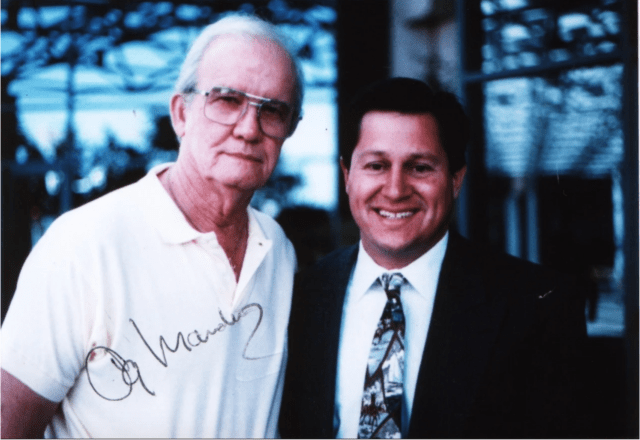
In Og Mandino’s The Greatest Salesman in the World, he offers 10 scrolls that are designed to instruct you how to take bad habits and replace them with good habits. You may all recall the famous saying: When you keep your thoughts positive, your thoughts become your words, your words become your actions, your actions become your habits and your habits become your destiny.

If you’re looking for more inspiration to begin better habit-forming practices now, here’s a good reading list to get you started:

  • The Slight Edge by Jeff Olson
  • Atomic Habits by James Clear
  • The Greatest Salesman in the World by Og Mandino
  • The Year of Yes by Shonda Rhimes
  • The Richest Man in Babylon by George S. Clason
  • Think and Grow Rich by Napoleon Hill
  • The Score Takes Care of Itself by Bill Walsh

So, what’s the message? There’s no better time than today to take a bad habit and turn it into a good one, and I’ve been endlessly inspired by Og Mandino’s teachings, and was fortunate enough to have him as a friend and mentor. Thank you, Og Mandino, for always reminding me that my life goal should not be to win or be number 1; it’s to be the best version of myself. As another mentor of mine Bill Walsh says, if you do that “the score takes care of itself.”

Pictured: Gino and Og Mandino circa 1986.

Thoughts on Leadership: Lessons from Mr. Irrelevant

By Gino Blefari

This week my travels find me heading to New Orleans on Monday for the Berkshire Hathaway HomeServices Marketing Forum, where the following day I delivered a presentation about the win-against-all-odds Kentucky Derby winner “Rich Strike.” On Wednesday, I traveled by car with Roberts Brothers President Teresa Williamson to Mobile, Alabama for a visit with the Roberts Brothers team. Today, I met with Roberts Brothers during their all-company sales meeting (with a Q&A led by Teresa) then hopped on a flight to Chicago for a visit with the Berkshire Hathaway HomeServices Chicago team. Tomorrow, after spending time with the Chicago team, I’ll attend an Asian Real Estate Association of America (AREAA) lunch followed by the AREAA Gala in the evening. Of course, in between meetings, I sat down to write this post to you.

Last week, I received an email from Eric Webster, general manager at Berkshire Hathaway HomeServices First Realty, in response to the weekly Thoughts on Leadership detailing lessons learned from the NFL. He wrote: “Good morning, Gino. You and I are cheering for the same guy for maybe slightly different reasons. I am a fan of [San Francisco 49ers Quarterback] Brock Purdy from his days at Iowa State.”

Read more: Thoughts on Leadership: Lessons from Mr. Irrelevant

Eric said he’d been thinking about Purdy lately as he’s been in the news for near-flawless performances during games this season, helping to lead the 49ers to a 5-0 start. (It’s certainly made my Sundays a lot more enjoyable!) In his email, Eric posed an interesting point to consider: “I’ve been wondering why he is so good today – but was only ‘good’ at Iowa State University.”

When Purdy played at Iowa State University, he was a solid player, but his team didn’t win a national championship. In the 2022 NFL Draft, he was chosen 262nd, the very last player selected, historically deemed “Mr. Irrelevant.” (He was even celebrated during “Irrelevant Week,” a charity event held each year in Newport Beach – just a few minutes’ drive away from the Berkshire Hathaway HomeServices headquarters – to celebrate the last-picked player in the NFL draft.)

Today, Purdy is the ultimate come-from-behind underdog story, very much like the story of Rich Strike I told days earlier at Marketing Forum in New Orleans. From beginning his NFL career as Mr. Irrelevant, Purdy is today starting quarterback for a so-far undefeated 49ers team. He threw four touchdown passes in Sunday’s game against the Cowboys. He has fourteen consecutive regular season wins under his belt, dating back to last season. And to echo our earlier question: Why? How did a player picked last in the NFL draft turn into such a standout?

Well, there are many reasons for Purdy’s productivity and high-performance, and each one proves a lesson in both leadership and the establishment of a mindset that embraces perpetual improvement:

  • Trust. Purdy is implicitly trusted by his teammates and 49ers Head Coach Kyle Shanahan; it’s a trust he’s earned through consistent results since taking over the starting quarterback position during Week 13 last NFL season. Shanahan says Purdy’s been “extremely consistent in practice since he’s been here, and he’s been the same in games. What you see is what we see and it’s what you feel.” Trust is earned, and trust is felt. Trust allows teams to take risks and push themselves harder on the path toward reaching their highest potential, knowing every member of the team supports the whole.
  • Progress. Some might say Purdy is the byproduct of an excellent team, a quarterback surrounded by a tough offense line that’s coached by some of the best offensive strategists in the nation. But while critics will tell you it’s only a matter of time before Purdy’s “great” turns to “not so good,” the stats are clear: Purdy keeps getting better. His time before passing improved from 2.84 seconds in 2022 to 2.56 seconds so far this season. He’s also bringing the ball farther down the field, with 7.2 air yards per attempt, up 0.2 yards from last year. Purdy’s 95.2% completion rate in Sunday’s game against the Cowboys is the best by any passer in 49ers history, and 48.2% of Purdy’s pass attempts gain a first down or touchdown, which is the highest percentage in the NFL right now. In leadership, a commitment to evolve and innovate is everything.
  • Dedication. As 49ers Left Guard Aaron Banks told ESPN: “[Purdy] is a dude who comes in and studies his film, studies his craft and makes sure he’s getting better week by week.” In leadership, a dedicated leader who is set on improvement is far more important than a leader who is complacent, even if they’re at the top of their game. Remember, once you think you know it all, your slide to mediocrity has already begun.
  • Chemistry. In Eric’s email, he said: “Something happened to Brock. He is on the right team at the right time, and they are really having fun together.” This is a true example of chemistry at play. In sports, chemistry is everything. You win or lose based on the chemistry of your leaders and your team. The same applies to business; a good leader not only understands their team’s chemistry but can also utilize it to effectively accomplish every Wildly Important Goal.

So, what’s the message? An underdog like Mr. Irrelevant has nothing to lose and everything to gain, which is the perfect recipe for success. 

Thoughts on Leadership: How’s That Business Plan Going?

By Gino Blefari

This week my travels find me starting Monday in my home office, conducting WIG calls throughout the day. On Tuesday, I participated in the early morning Berkshire Hathaway Energy call then presented a virtual leadership session for the Chalk Digital team. On Wednesday, I attended the HomeServices of America Diversity MEETS monthly meeting, and today, I sat down to write this post to you as I battle a strong cold that’s been lingering all week.

Last week, we rang in the real estate new year (read more about that here), and this week, I want to dive deeper into ways you can prepare and plan for a strong 2024. Ideally, you should complete your business plan in October; but if you haven’t started yet, you can download the Business Planning Essentials here.

Read more: Thoughts on Leadership: How’s That Business Plan Going?

Why plan in October? As I mentioned in last week’s post, real estate works on a 90-day cycle. What you do today will pay off three months from now, and concurrently, what you don’t do today will cause suffering and headache three months down the road.

Planning a full 90 days before the start of the New Year means that as soon as January 1 rolls around, you’ll already be running when you hit the ground. A business plan allows you to prepare for expected and unexpected challenges. It ensures the busy holiday season won’t stop your momentum in 2024. As the famous Ben Franklin quote goes: “A failure to plan is a plan to fail.” (Heard that one before, JT?)

A big part of business planning is planning your schedule. Once you plan your schedule, staying on your schedule is by far the most important thing you can do.

This weekend, aim to schedule out every day for the remainder of the year, including every single day off, and every day you’ll work for the rest of 2023. Make sure on those days you work, you work. On your workdays, follow your schedule, do your prospecting, and complete every task that will turn into business for you.

Then, from now to the end of the year and if you can carry it throughout the upcoming year, review your schedule for your upcoming day the night before. Every week, review your weekly schedule the Sunday before. And every month, review your monthly schedule the day before a new month begins. Having a schedule, and more importantly following your schedule, will have the biggest impact on your success.

Plus, part of business planning and scheduling naturally involves articulating your goals, and writing down goals has been proven to positively correlate to a person’s likelihood of achieving them.

In 1953, Harvard conducted a now-famous study on goal setting. Researchers asked Harvard MBA students about their goals. Here were their responses: 3% said they had clear, written goals; 13% said they had goals, but they were not written down; and 84% said they did not have goals at all. Ten years later, the study examined the success of its participants and found that the 13% who had non-written goals earned on average two times as much as the 84% of people who did not have goals. Most impressively, the study revealed that the 3% who had written goals outperformed everyone in the study by earning ten times as much as the other 97% of participants combined.

So, what’s the message? Scheduling helps you meet your goals, and goals are key to success.  Plan and schedule yourself out now, so when everyone else is working or scrambling to business-plan over the holidays, you’ll be ahead of the game and on your way to success.

No more posts.