
Thoughts on Leadership: Leadership Lessons from Martha Mosier

By Gino Blefari

This week, my travels find me at home.

With a quieter moment to reflect, I find myself thinking about one of the standout leaders at HomeServices of America—someone I’ve had the privilege of knowing for over two decades: Martha Mosier, Esq.

Read more: Thoughts on Leadership: Leadership Lessons from Martha Mosier

I first met Martha in 1998 when we both worked at National Realty Trust (NRT), now known as Anywhere. At the time, Martha managed the legal aspects of residential real estate transactions and handled due diligence on local acquisitions for Coldwell Banker in the Southern California market. Even then, her professionalism and sharp intellect were impossible to miss.

In 2014, our paths crossed again—this time as colleagues within the HomeServices of America family. I had just become CEO of Berkshire Hathaway HomeServices, and Martha was serving as Escrow President and General Counsel for Berkshire Hathaway HomeServices California Properties. From that point on, our professional connection only grew stronger. Over the last four years, since Martha became President of Berkshire Hathaway HomeServices California Properties, I’ve had the opportunity to work closely with her—speaking weekly and visiting often during my trips to Orange County, CA.

I consider Martha both a friend and a colleague. She’s a standout in everything she does and in everything she leads. Her thoughtful, inclusive, and wise leadership style has left an indelible impact—not just on her company, but on our entire organization.

Martha leads with a rare combination of strength and humility. She listens deeply, acts wisely, and creates space for others to grow—always reminding us that leadership is about service, not spotlight.

And perhaps no one has captured the essence of Martha’s leadership better than her successor, Brent Consedine, who shared this powerful reflection:

“Martha’s leadership has always been rooted in integrity, empathy, and unwavering support for both our people and our purpose. Working alongside her these past years has been the greatest leadership education I could’ve asked for. Her example has shaped not only the way I lead, but the way I think about service, resilience, and team. I step into this role with deep gratitude and full confidence—because I’ve had the best mentor.”

As she steps into a new chapter, it’s the perfect time to reflect on the leadership lessons Martha has imparted to all of us.:

  1. Some of the best advice from my predecessor: As leaders, we often have a tendency to control conversations, which can cause us to miss out on others’ ideas. Remember: We have two ears and one mouth—use them proportionately. Not only does this show respect for your team’s ideas, but it forces you to slow down and truly listen.
  2. Hire good people—they’ll make great employees. Trust your team and live by the adage: None of us is smarter than all of us together. At HomeServices of America, we live the belief that we are stronger together. Everyone has something of value to contribute and a right to belong.
  3. You cannot improve what you do not measure. Gino Blefari’s Four Disciplines of Execution reminds us that accountability works.
  4. Being kind is not a sign of weakness—it’s a sign of strength. Always lead with grace and kindness.
  5. Hurt people hurt people. Everyone has a story. Don’t react to words—strive to understand your team members’ needs. That said, all communication must be respectful in the workplace, with no exceptions.
  6. You won’t be an effective leader if you have an emotional reaction to every word. Sit back and listen with logic, not emotion.
  7. From Mike Hull, NFL veteran and former General Counsel at Coldwell Banker Residential Brokerage: Adversity doesn’t destroy you—let it define you. Use trauma, adversity, and crisis as defining moments.
  8. “You may not control everything that happens to you, but you can control how you respond.” – Maya Angelou
  9. And finally—don’t forget where you came from. Be grateful to those who mentored you and believed in you. “When you reach the top floor, send the elevator back down.” It’s a powerful metaphor for mentorship and giving back.

One final pearl of wisdom Martha shares as a leader:

Listen to the next generations. Let go of the stereotypes about Millennials, Zillennials, and Gen Z. These generations often blend success-oriented values with a deep commitment to life-work balance. They tend to align with organizations that share their values around social equality, environmental stewardship, economic opportunity, and ethical business practices. As Martha beautifully puts it—she’s been blessed with four children who have opened her eyes, her heart, and her mind to these pillars.

Martha’s greatest lesson may be this: leadership isn’t just about who you are today—it’s about who you inspire tomorrow. She honors the future by honoring the voices of the next generation.

So, what’s the message?
Martha Mosier is more than just a leader—she’s a mentor, a trailblazer, and a builder of culture. Her legacy will carry on in the leaders she’s shaped, the values she’s championed, and the many lives she’s touched. We are all better for having learned from her example.

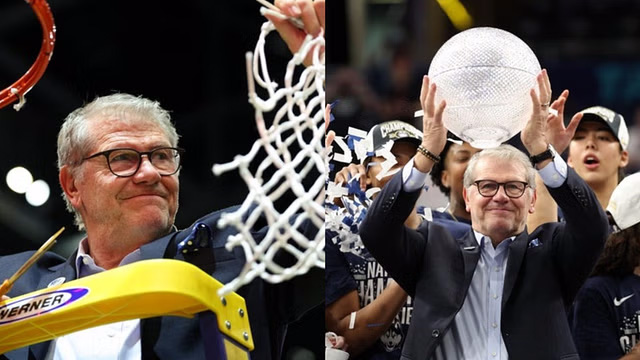
Thoughts on Leadership: Show Up Like a Champion

This week, my travels took me to Fort Worth, TX, where I had the honor of serving as the keynote speaker at the Berkshire Hathaway HomeServices Premier Properties “Get Ready to Thrive in 2025” Spring Conference, hosted by the dynamic duo—Stacy and Tracy Mathews.
From the moment I landed, the energy was magnetic. The hospitality? Impeccable. But what truly stood out was the spirit of the people—warm, driven, and genuinely invested in lifting one another higher. It was the kind of environment that reminds you what’s possible when passionate professionals come together with purpose.

That same spirit of excellence and growth leads me to this week’s leadership spotlight: Coach Geno Auriemma and the powerhouse University of Connecticut women’s basketball team, fresh off their latest national championship win. In his 39 seasons as head coach, Geno has led the Huskies to 11 NCAA championships, over 1,200 wins, and countless undefeated seasons. He’s not just one of the most successful coaches in college basketball history—he’s one of the most respected leaders in sports. Geno hasn’t just built a winning team—he’s built a legacy rooted in discipline, belief, and an unwavering commitment to greatness.

And at the heart of this year’s run? Paige Bueckers. Coming back from injury, Paige led with grace, grit, and undeniable presence. She didn’t just return to the court—she owned it. Every assist, every moment of hustle, every lift she gave her team under pressure showed us what leadership looks like in action. Paige is the kind of leader who meets adversity head-on and turns it into fuel. She’s proof that champions aren’t defined by circumstance—they’re defined by how they rise.

Read more: Thoughts on Leadership: Show Up Like a Champion

Here are five powerful takeaways from Geno’s leadership playbook—each one a reminder of what it takes to build something lasting, whether on the court or in our industry:

1. Set the Standard—and Stick to It.
Geno doesn’t waver on expectations. He sets the bar high and makes no apologies for it. In real estate, clarity in expectations creates consistency, trust, and results.

2. Build People, Not Just Players.
It’s not just about winning games—it’s about developing strong, confident individuals. The best leaders invest in people, not just performance.

3. Create a Culture of Belief.
The University of Connecticut wins because every player believes—in themselves, in the system, and in each other. Belief is the fuel that powers every championship season… and every standout year in business.

4. Coach the Details.
The little things matter. Geno is known for coaching the fundamentals relentlessly. In our world, it’s the follow-up email, the well-run meeting, the extra call—it all adds up.

5. Embrace the Pressure.
Championships are won under pressure. Geno teaches his players to welcome it, not fear it. As real estate professionals, we know pressure well—and learning to thrive in it separates the good from the great.

As Geno once said, “You have to want to be great, but you also have to be willing to do the things necessary to be great.”

So, what’s the message?

Success isn’t about one big moment—it’s about a thousand little ones, stacked with purpose, grit, and unwavering belief. Whether you’re leading a team, growing your business, or navigating the unknown, know this: with the right mindset, the right people, and the right preparation, anything is possible.

Believe in the vision. Trust the process. And when your moment comes, don’t just show up—show up like a champion.

Thoughts on Leadership: The Myth of Multitasking

By Gino Blefari

This week, my travels took me to Irvine, California, where I spent time filming a series of videos highlighting our top-performing agents and showcasing our network’s Global Open House. One promo in particular was especially meaningful—it featured the upcoming Charity Golf Tournament, hosted this month by Berkshire Hathaway HomeServices Arizona, California, and Nevada Properties, in support of the Sunshine Kids Foundation. This incredible organization brings joy, activities, and unforgettable experiences to children battling cancer. I’m truly looking forward to being there in person and supporting such a powerful cause.

Read more: Thoughts on Leadership: The Myth of Multitasking

Being on camera and fully immersed in the moment reminded me of something important—something I want to talk about this week: the inefficiency of multitasking.

I’ve shared before that our HomeServices of America leadership team practices a monthly accountability partnership. Every month, we’re paired with someone new. Last month, I had the privilege of being partnered with Rei Mesa, CEO of Berkshire Hathaway HomeServices Florida Realty. Rei and I spoke daily—usually around 5 a.m. PT—and during our conversations, the topic of multitasking came up often. These daily check-ins are meant to foster daily discipline and camaraderie, and they also spark meaningful leadership dialogue. Over and over again, we found ourselves circling back to the same realization: multitasking doesn’t work.

To show up fully for the Wednesday morning production of these videos—and to give both our team and the content the energy and presence they deserved—I had to be all-in. No checking emails between takes. No half-listening to calls while prepping for the next shoot. Just focus. And you know what? It worked. That’s when we do our best work—when we’re present.

In our fast-paced industry, multitasking can feel like a survival skill, even a badge of honor. But it’s not helping us move faster—it’s holding us back. Multitasking divides our attention and diminishes the quality of everything we’re trying to juggle. True leadership—and true impact—comes when we focus on one thing at a time, with intention.

So, how do we make the shift from multitasking to meaningful single-tasking? Here are three simple but effective ways:

  1. Schedule your focus: Time-block 30–60 minutes for deep work—whether it’s prospecting, writing, or problem-solving. Turn off notifications, close extra tabs, and set a timer. Protect that time like a meeting with your most important client.
  2. Practice active listening: The next time someone speaks to you—a client, a colleague, a loved one—put your phone down, make eye contact, and be fully engaged. Listening is leadership, and presence builds trust faster than any sales pitch.
  3. Separate planning from doing: If you start your day planning while replying to emails and while checking social media, you’re already multitasking. Instead, start with 10 calm minutes to prioritize your top 3 tasks, then tackle them one by one.

It’s not about doing less—it’s about doing what matters most, better.

So, what’s the message?
In a world that praises busyness, the real secret to success is presence. When we eliminate distractions and focus on one thing at a time, we lead with more clarity, create deeper connections, and deliver higher-quality results. Whether it’s filming for a cause, negotiating a deal, or simply listening—be all there. That’s how we move from good to great, one intentional task at a time.

Thoughts on Leadership: The Gift of Appreciation

This week, my travels found me at home—and what a gift it was to be right here in the heart of our Intero community. On Wednesday afternoon, I had the privilege of attending the Intero Honors 2024 Achievement Awards Celebration, where I had the honor of presenting three meaningful awards. Eddie Oberoi and Joe Velasco were both inducted into the Hall of Fame, and Mia Park received the Leadership Award.

The most prestigious recognition of the afternoon—the one that truly captured the essence of our shared values—was the Value Award, presented to Roger Malech. That moment, like so many throughout the event, was a powerful reminder of the gift of appreciation—how meaningful it is to pause, reflect, and honor those who lead with heart, character, and purpose.

Read more: Thoughts on Leadership: The Gift of Appreciation

Let’s talk about appreciation—and the beautiful friendships and connections that grow when we choose to express it with intention and sincerity.

My suggestion to you is simple but impactful: create an appreciation account.

Leadership isn’t just about strategy, decisions, or influence—it’s about people. And one of the most meaningful ways to lead in life, in business, and in our communities is through consistent, heartfelt appreciation. When we lead with kindness, when we take time to acknowledge the people around us, we strengthen the trust, loyalty, and love that allow us to thrive together.

So, how can you start?

Think of each day as an opportunity to make a small deposit into your appreciation account—a smile, a kind word, a thoughtful gesture. These tiny, consistent acts compound over time, deepening bonds and elevating the people around you. You could…

  • Buy your partner their favorite snack for no reason at all.
  • Send a friend a book on a subject you know they’d love.
  • Take a moment to tell your children, parents, or colleagues how much they mean to you—directly and sincerely.

These gestures might seem small, but their impact is immeasurable.

For me, hugging my daughters every time we greet and part ways has become a ritual. It’s a reminder that each moment matters, and tomorrow is never promised. These moments—these deposits into the appreciation account—will bring you more joy than any safe full of hundred-dollar bills. They ensure that your self-worth always remains greater than your net worth.

Ralph Waldo Emerson said it best: “Wealth is an ugly beggar.” True richness comes from connection, compassion, and the friendships we cherish.

So, what’s the message?

Great leaders understand that appreciation is not just a nicety—it’s a necessity. It fuels connection, builds trust, and fosters loyalty. Creating an appreciation account isn’t just a practice in kindness; it’s a daily commitment to leading with love. In a world that often measures success in dollars and deals, choose to measure yours in the depth of your relationships and the gratitude you freely give.

Make your deposits daily. You’ll be amazed at the return.

Thoughts on Leadership: The Power of Optimism

By Gino Blefari

This week let’s talk about optimism—why it’s a game-changer in leadership, performance, and life itself.

“Do you think you can, or do you think you can’t? Either way, you’re right.” – Henry Ford

To live an extraordinary life, you need a strong psychological foundation—one that can withstand adversity while remaining adaptable to change.

Read more: Thoughts on Leadership: The Power of Optimism

I often think of this as similar to the towering redwood trees that I grow by the hundreds from seedlings. These giants stretch skyward, supported by an interwoven root system that allows them to bend with the wind but never break. A resilient mindset works the same way. It’s deeply rooted in who you are, yet flexible enough to adapt when needed. You don’t just inherit this mindset—you build and nurture it. And if there’s one essential element to strengthening it, it’s optimism.

The Lens We Choose:

If you study elite athletes, world-class performers, or highly successful individuals, you’ll find that no single trait defines them all. But one thing they have in common? A belief that things will work out in their favor.

Think about it—can you imagine an Olympian waking up each day convinced they have no shot at winning? That mindset doesn’t exist at the highest levels of success. It’s not that top performers never face doubt or setbacks, but they refuse to let negativity take root. Instead, they move forward with an unwavering belief that something good is always ahead.

A Parable on Perspective:

A traveler was walking from one village to another when he saw a monk working in a field. He stopped and asked, “I’m on my way to the village in the valley. Can you tell me what it’s like?”

The monk looked up and asked, “Where are you coming from?”

“The village in the mountains,” the traveler replied.

“What was it like?” the monk asked.

“Awful,” the traveler said. “Nobody spoke my language, I had to sleep in a barn, and the food was terrible.”

The monk nodded and said, “I think you’ll find the village in the valley much the same.”

A few hours later, another traveler passed by, heading in the same direction. He, too, asked the monk about the village in the valley.

Again, the monk asked, “Where are you coming from?”

“The village in the mountains,” the traveler replied.

“And what was it like?”

“Incredible,” the traveler said. “No one spoke my language, so we communicated with gestures, which was amazing. I slept on a straw floor under a tarp, something I’d never done before. They fed me stew with spices I’d never tasted, and it was one of the best experiences of my life.”

The monk smiled and said, “I think you’ll find the village in the valley much the same.”

The way we perceive the world shapes our experience of it. Optimism isn’t just about positive thinking—it’s a learned skill and a crucial component of mental toughness.

For years, scientists believed optimism was something you were either born with or without. Now, research shows it’s developed over time, influenced by our surroundings, the people in our lives, and the narratives we absorb from a young age.

Many people lean toward pessimism as a defense mechanism, thinking it protects them from disappointment. Maybe they were raised in environments where risk-taking felt unsafe, or they were surrounded by others who didn’t even realize optimism was an option.

But here’s what’s important: optimism fuels performance, resilience, and overall well-being. The most successful individuals don’t just hope things will work out—they take deliberate action, aligning their thoughts, behaviors, and preparation with their goals.

Now, let’s be clear—optimism isn’t about ignoring reality or assuming success will fall into your lap. That’s blind optimism.

True optimism is grounded in preparation, effort, and persistence. It means facing difficulties with resilience and recognizing that even failure offers opportunities for growth. If you believe something good is ahead, you’ll keep pushing through challenges, remain focused when obstacles arise, and see opportunities where others see roadblocks.

So, what’s the message?

Your mindset is your framework—it determines whether you bend with the winds of life or break under pressure. Like a redwood tree, a strong foundation of optimism keeps you grounded while allowing for flexibility and growth.

Life is not about avoiding hardship but about believing in possibilities. The greatest performers don’t just hope things will work out—they train their minds to see the good, to find opportunities where others see obstacles, and to persist even when the path gets tough.

Train your mindset like an elite athlete, and soon enough, you’ll find that something good is always just around the corner.

Thoughts on Leadership: The Lion Mentality

By Gino Blefari

This week, my travels took me to Irvine, California, where I spent time filming a series of videos recognizing top-performing agents and our network’s Global Open House. In moments like these—when we celebrate success, resilience, and the pursuit of excellence—I’m reminded of what it truly takes to thrive in this business.

Today’s blog was inspired by Renee Gonzales, CEO of Long Companies, a HomeServices of America company headquartered in Tucson, AZ. At her recent annual company recognition event, Renee delivered a powerful keynote on the lion mentality—a mindset rooted in courage, resilience, focus, dominance, and strategic thinking.

Read more: Thoughts on Leadership: The Lion Mentality

In real estate, courage is non-negotiable. This industry is not for the weak. Deals fall apart. Markets shift. Clients hesitate. Competition is fierce. And yet, the ones who rise, the ones who endure, the ones who lead—they operate with the mindset of a lion.

Why is the Lion the King of the Jungle?

It’s not the biggest—that’s the elephant.
It’s not the fastest—that’s the cheetah.
It’s not the smartest—many animals outthink the lion.

So why does the lion reign? Mentality.

When a lion sees an elephant, it doesn’t see an obstacle—it sees lunch.
When a lion is outnumbered by hyenas, it doesn’t retreat—it dominates.
When a lion is hungry, it doesn’t wait to be fed—it hunts.

A courageous lion doesn’t stop hunting when it’s tired. It doesn’t operate in “gazelle mode”—reacting, running, retreating when things get tough. A courageous lion keeps going until the goal is reached. It thrives in the hunt, not just in the victory.

The Lion Mindset in Real Estate

Too often, we focus only on the prize—the commission check, the ranking, the achievement. But courageous lions love the process as much as the result. They understand that persistence, discipline, and the willingness to pursue relentlessly is what separates the good from the great.

This business will test you. Deals will fall through. Clients will ghost you. The market will shift. If you operate in “gazelle mode”—fearful, reactive, hesitant—you will always fall behind. But when you step into lion mode—relentless, strategic, confident—you become unstoppable.

So, what’s the message?

If you want to lead, if you want to thrive, if you want to dominate in this industry—you must think like a courageous lion.
Be bold. Be resilient. Be relentless.

Courageous lions don’t wait for opportunities. They create them.

Thoughts on Leadership: Embracing Japanese Principles for Effective Leadership

By Gino Blefari

This week, my travels kept me at home after celebrating my daughter’s wedding over the weekend—a milestone filled with joy, reflection, and gratitude. In the midst of catching up and resetting for the week ahead, a dear friend shared an article with me on Japanese techniques for well-being. I was immediately intrigued, not just by the wisdom of these principles but by how seamlessly they apply to leadership—especially in a fast-moving, high-pressure industry like real estate. Inspired by this, I wanted to explore how these concepts can help us lead with greater clarity, balance, and long-term success.

Read more: Thoughts on Leadership: Embracing Japanese Principles for Effective Leadership

1. Ikigai: Discovering Purpose in Leadership

Ikigai, meaning “reason for being,” encourages leaders to align their passions, talents, societal needs, and financial sustainability. By understanding what we love, what we excel at, what the world needs, and what we can be compensated for, we create a foundation of purpose-driven leadership. When leaders embrace their ikigai, they cultivate environments where teams feel motivated and inspired to pursue meaningful work.

2. Kaizen: Committing to Continuous Improvement

Kaizen, or “continuous improvement,” is about making small, steady progress every day. Strong leaders foster a culture where learning and refining are not only encouraged but expected. This approach builds resilience, adaptability, and long-term success, reinforcing that leadership is not about perfection but about evolution.

Last year, I wrote about Kaizen and how it revolutionizes the approach to change. The key is in taking small steps, asking thoughtful questions, and appreciating incremental progress. Instead of seeing improvement as a daunting, overwhelming task, shift your perspective: counter negative thoughts with positive, solution-oriented questions. Too often, we hesitate to make changes because they seem too big or too difficult—but change doesn’t have to be dramatic. Small steps, taken consistently, lead to profound transformations. I encourage you to embrace this mindset and see how it reshapes not only your leadership approach but your daily life.

3. Pomodoro Technique: Enhancing Focus and Productivity

The Pomodoro Technique suggests working in focused time blocks (typically 25 minutes), followed by short breaks. This method enhances efficiency while preventing burnout. Leaders who encourage structured focus among their teams create workplaces that are both productive and sustainable, ensuring high performance without sacrificing well-being.

4. Hara Hachi Bu: Practicing Moderation

The principle of Hara Hachi Bu teaches us to eat until we are 80% full, promoting moderation and balance. Applied to leadership, it serves as a reminder to set healthy boundaries—whether in workloads, commitments, or expectations. Sustainable success comes from knowing when to push forward and when to step back, ensuring long-term energy and effectiveness. This is something I’m personally working on, as I tend to eat until I’m completely stuffed—sometimes to the point of a food coma. Embracing this principle is a challenge, but one that reinforces the importance of mindfulness and restraint in all areas of life.

5. Shoshin: Cultivating a Beginner’s Mind

Shoshin, or “beginner’s mind,” reminds us to approach leadership with curiosity and openness. The best leaders never assume they have all the answers. Instead, they embrace learning, ask thoughtful questions, and remain receptive to new perspectives. A fresh, inquisitive mindset fosters innovation and keeps leaders adaptable in an ever-changing world.

It reminds me of a saying that has always resonated with me: “Smugness leads to arrogance, and arrogance is the precursor to disaster.” The moment you believe you’ve mastered everything, your slide to mediocrity has already begun. Growth-minded leaders recognize that expertise isn’t a final destination—it’s a continuous journey. The ability to stay curious, challenge assumptions, and remain open to learning is what differentiates truly exceptional leaders from those who simply manage.

6. Wabi-Sabi: Embracing Imperfection

Wabi-Sabi is the appreciation of imperfection and the beauty found in life’s natural, fleeting moments. Leadership is not about flawless execution but about learning from challenges, embracing change, and finding strength in authenticity. When leaders let go of the pursuit of perfection and instead focus on progress, they build teams that thrive in resilience and creativity.

So, what’s the message?

This week, as I reflected on the wisdom of these Japanese philosophies, I found deep connections to leadership and personal growth. By embracing purpose, continuous improvement, focused work, moderation, curiosity, and the beauty of imperfection, we can lead with greater clarity, balance, and effectiveness.

Leadership isn’t just about achieving goals—it’s about fostering a culture of well-being, inspiration, and sustainable success for ourselves and those around us. Sometimes, the best lessons come from unexpected places, and my hope is that these insights inspire you to make improvements where needed in your own leadership journey.

Great Leadership Recognizes Greatness

By Gino Blefari

This week, my travels took me to Irvine, California, where I spent the day filming a series of videos recognizing top-performing agents. As I stood in front of the camera, acknowledging their achievements, I was reminded of a fundamental truth in leadership: recognition fuels success.

In sales—whether in real estate, finance, technology, or any competitive industry—success is often measured by numbers, but the driving force behind those numbers is people. And people thrive when they feel valued. Taking the time to celebrate accomplishments isn’t just a nice gesture; it’s a critical leadership tool that fuels motivation, retention, and a culture of excellence.

Read more: Great Leadership Recognizes Greatness

Why Recognition Matters

Sales, whether in real estate, finance, tech, or any other industry, demands energy, resilience, and determination. Yet, success in sales is often relentless and competitive. Leaders who understand the value of acknowledgment create environments where professionals feel motivated, inspired, and driven to excel.

Key Leadership Lessons on Recognition

Recognition Fuels Performance
Studies consistently show that employees who feel recognized perform at higher levels. When leaders take the time to acknowledge achievements, it strengthens motivation and reinforces the behaviors that drive success.

One way I personally integrate recognition into my leadership style is through direct, personal shout-outs. I offer my leadership team the opportunity to send me details about an employee or agent they want to recognize—including a brief background, a suggested message, and even a photo so I can familiarize myself with them. Then, I personally call the individual to deliver the shout-out, ensuring they hear firsthand how much their contributions are valued.

A great example of this in action is Maria Kazakos, President of Berkshire Hathaway HomeServices Carolinas Realty. Maria has fully embraced this initiative, sending me a shout-out every single week without fail. Her consistency in recognizing her team members has created an incredible ripple effect—boosting morale, strengthening engagement, and reinforcing a culture where people feel valued. The feedback we receive from these calls is a testament to the power of recognition in action.

Recognition Builds a Culture of Excellence: When recognition is embedded in an organization’s culture, it elevates the entire team. Celebrating individual successes fosters a collective mindset of striving for greatness, where excellence is not just encouraged—it becomes the expectation.

Recognition is Retention: Talented professionals don’t just work for a paycheck—they work for purpose and appreciation. Salespeople who feel valued are far more likely to stay with an organization, commit to its vision, and continue delivering exceptional results.

Recognition Reinforces the Right Habits: It’s not just about acknowledging the end result—leaders should celebrate the effort, discipline, and daily habits that lead to success. Recognizing the journey, not just the destination, fosters long-term, sustainable performance.

Recognition is Leadership: Great leaders don’t wait for big wins to acknowledge their people. They look for every opportunity to highlight progress, effort, and contribution. Whether it’s a public award, a personal note, or a simple “thank you,” consistent recognition strengthens trust, loyalty, and morale.

So, what’s the message?

Whether in real estate, sales, or any industry, recognition is a powerful leadership tool. The best leaders don’t just set high standards—they take the time to celebrate those who meet and exceed them.

Success isn’t just about closing deals or hitting numbers—it’s about creating a culture where people feel seen, valued, and inspired to keep striving for more. Because when leaders recognize and appreciate their people, they don’t just fuel individual achievement—they build organizations that thrive.

Thoughts on Leadership: Lessons from Tom Brady on Leading Teammates

By Gino Blefari

This week, my travels find me at home, providing the perfect opportunity to reflect on leadership in its purest form. Throughout my real estate career, I have studied those I call “10xers”—individuals and companies that consistently outperform expectations and redefine excellence in their respective fields. Companies like Southwest Airlines and Apple, Inc., athletes like Michael Phelps, and visionary leaders such as Jack Welch, Bill Belichick, Bill Walsh, and John Wooden have all demonstrated what it takes to elevate teams and organizations to the next level. However, one leader who has always stood out to me is Tom Brady.

Read more: Thoughts on Leadership: Lessons from Tom Brady on Leading Teammates

Growing up and building my career in the San Francisco Bay Area—Brady’s backyard, so to speak— I’ve studied him for his entire career. His leadership extends far beyond his statistics, records, and Super Bowl rings. What truly sets him apart is his ability to inspire, challenge, and elevate those around him. Whether in sports, business, or life, the principles that guided his success are universal. Over the years, I’ve gleaned invaluable leadership lessons from observing his journey, and here are 25 leadership lessons I’ve observed from Tom Brady on leading teammates:

Team-First Mentality & Leadership Mindset

  1. Put the team first, always—even in personal adversity. True leadership means prioritizing the success of the team, even when your own role or position is uncertain.
  2. Great leaders don’t accomplish anything alone. The best teams thrive on collaboration, and every leader must recognize their dependence on others.
  3. Winning is about the team, not personal stats. Leaders who obsess over individual accolades create a toxic environment that hinders team success.
  4. Do you want to be a star, or do you want to be a champion? Leaders must decide whether they seek personal fame or collective greatness.
  5. Success comes from making others better. The best leaders elevate their teammates, ensuring that everyone performs at their highest level.

Building a High-Performance Culture

  1. Recognize and appreciate the unsung heroes. Acknowledge the contributions of those who don’t always get credit—whether in sports or business.
  2. Set the standard for 100% effort. Leaders must push beyond perceived limits, inspiring teammates to give their absolute best.
  3. Accountability starts with teammates—not just coaches or bosses. The most effective teams hold each other accountable without relying solely on authority figures.
  4. Challenge teammates to push harder, but do it with trust. Criticism is easier to accept when it comes from someone invested in your success.
  5. The best teams push one another beyond the minimum expectations. If you only do what’s required, you’ll never rise above average.

Understanding and Motivating People

  1. Know what drives each teammate individually. People respond to different motivations—some need praise, some need tough love, and leaders must tailor their approach.
  2. Some players need criticism to fuel them, while others need encouragement. Leadership isn’t one-size-fits-all; it’s about reading personalities and adapting.
  3. 90% of leadership time is spent managing the 10% of challenging teammates. The difficult personalities often need the most guidance, and their impact can make or break a team.
  4. A leader’s job is to keep challenging teammates from dragging down the rest of the group. Leadership is about ensuring that one bad attitude doesn’t spread.
  5. Every leader should have a ‘teammate for life’ mentality. Strong relationships built on trust extend beyond the workplace or playing field.

Balancing Leadership Styles with Authority Figures

  1. Complement the leadership style of the boss or coach. If a leader is tough and disciplined, balance that with warmth and emotional connection.
  2. Great teams need diverse leadership styles. Some leaders inspire through intensity, others through relationships—both are necessary.
  3. Encourage ownership among team members. When leaders empower individuals, they create a culture of self-driven excellence.
  4. Recognize the external pressures teammates face. Leaders must help counteract the outside forces—like money, contracts, or promotions—that pull people away from the team-first mentality.
  5. Understand that people have insecurities and emotional baggage. A great leader sees beyond performance and helps teammates overcome personal struggles.

Strengthening Relationships & Team Bonds

  1. The best teams connect outside of work. Shared experiences—whether at offsites, retreats, or casual gatherings—build trust and chemistry.
  2. A simple act of recognition can transform someone’s confidence. Even the smallest acknowledgment of effort can have an immense impact on motivation.
  3. Leaders should continuously learn and evolve their style. Leadership at 22 is different than at 40—great leaders refine their approach over time.
  4. Leadership can start at any level. You don’t need a title to be a leader—anyone who inspires others can lead from within.
  5. The best teams are built on emotional investment. When teammates genuinely care about each other, they fight harder to succeed together.

So, what’s the message?

True leadership isn’t just about titles, strategies, or performance metrics—it’s about how you inspire, support, and elevate those around you. Tom Brady’s leadership teaches us that the greatest success isn’t measured in personal accolades but in the success of the team. Whether in business, sports, or any collaborative effort, leaders who prioritize team growth, recognize the value of every contributor, and continuously push for excellence will always come out ahead.

Great teams are built on trust, effort, and shared vision. The best leaders don’t stand above their team—they stand with them. That’s the key to sustainable success.

Thoughts on Leadership: The Courage to Lead

By Gino Blefari

This week, my travels find me at home, reflecting on an inspiring moment from Tuesday afternoon’s HomeServices of America Leadership Meeting. Among the many topics we covered, one of the most impactful was our discussion of best practices—strategies and initiatives that moved the needle in 2024, driving results and creating lasting change.

We had the privilege of hearing from some of our most outstanding leaders, individuals whose dedication and vision led to remarkable achievements in key areas of our business. Because of their extraordinary performance, they were invited to share their insights with our entire leadership team—offering not just numbers, but the strategies, mindsets, and decisions that propelled them forward.

Read more: Thoughts on Leadership: The Courage to Lead

As I listened to each leader, one word kept coming to mind: courage.

  • It took courage for Martha Mosier, Keith Conlon, and Vince Leisey to focus on strategic growth, proving that smart, intentional moves can drive both financial success and team expansion.
  • It took courage for Ann King to achieve unparalleled results, demonstrating the power of commitment in capturing market share.
  • It took courage for Larry Flick V to lead the charge in optimizing opportunities in mortgage and insurance, embracing innovation and efficiency in a complex landscape.
  • It took courage for Greg Mason to rethink space and operations, ensuring we remain agile and efficient in a changing market.
  • It took courage for Diane Glass to refine expenses without sacrificing excellence, making strategic decisions to position her team for long-term success.
  • It took courage for Gretchen Rosenberg to protect financial strength while balancing growth, demonstrating the importance of financial stewardship in leadership.
  • It took courage for Dan Mlnarik to drive unit and volume growth, proving that bold leadership can yield extraordinary results even in uncertain times.

Each of these leaders faced unique challenges, yet their response was the same: they stepped forward with determination, clarity, and courage.

The ability to lead with courage is what separates great leaders from good ones. True courage isn’t about being fearless—it’s about taking action despite fear. It’s about standing firm in your convictions when the easier choice might be to waver. And as I reflect on the essence of courageous leadership, a few key lessons stand out:

1. The Courage to Take Risks

Success never happens in the comfort zone. The leaders we celebrated this week understood that in order to achieve extraordinary results, they had to embrace risk. Whether it was pioneering new strategies, investing in people, or making tough business calls, they demonstrated the bravery to push beyond the status quo.

2. The Courage to Lead Through Uncertainty

If there’s one thing we can count on in business and life, it’s uncertainty. Markets fluctuate, consumer behavior shifts, and unforeseen challenges arise. But courageous leaders don’t let unpredictability paralyze them. Instead, they navigate uncertainty with calm confidence, knowing that adaptability and decisiveness are key to success.

3. The Courage to Uphold Values

Leadership isn’t just about hitting numbers; it’s about leading with integrity, authenticity, and a commitment to doing what’s right. In moments where ethical dilemmas arise or when decisions become difficult, courageous leaders stay true to their values—even when it’s not the easiest path.

4. The Courage to Inspire Others

Perhaps the most profound act of leadership is empowering and uplifting others. The leaders we honored this week didn’t just achieve personal success—they lifted their teams, encouraged innovation, and created cultures where others felt safe to take risks and grow.

So, What’s the Message?

Courage in leadership isn’t just about bold moves or fearless decisions—it’s about showing up every single day, even when things are tough, uncertain, or uncomfortable. It’s about staying true to your mission, embracing challenges as opportunities, and leading with a steady heart and a clear vision.

As we look ahead, I challenge each of us to reflect on our own leadership journeys. Where can we be more courageous? What bold steps are waiting to be taken? And most importantly—how can we inspire courage in those around us?

Because at the end of the day, success favors the bold—and in leadership, as in life, courage is the ultimate game-changer.

Credits:

  • Martha Mosier, President, Berkshire Hathaway HomeServices California Properties
  • Keith Conlon, President & CEO, Allie Beth Allman & Associates
  • Vince Leisey, CEO, Berkshire Hathaway HomeServices Ambassador Real Estate
  • Ann King, President, Berkshire Hathaway HomeServices Florida Network Realty
  • Larry Flick V, CEO, Berkshire Hathaway HomeServices Fox & Roach Realtors
  • Greg Mason, President & CEO, Edina Realty
  • Diane Glass, CEO, Berkshire Hathaway HomeServices Chicago
  • Gretchen Rosenberg, President & CEO, Kentwood Real Estate
  • Dan Mlnarik, President, Home Services of Nebraska
No more posts.