Thoughts on Leadership: Lessons from Steph Curry

By Gino Blefari

This week my travels find me starting Monday at my home office, conducting my regular WIG calls with CEOs, then flying to Orange County for meetings and events. On Tuesday, I had the early morning Berkshire Hathaway Energy call, then a breakfast meeting with Greg Abel, vice chair of non-insurance operations at Berkshire Hathaway Inc. and chairman of Berkshire Hathaway Energy. On Wednesday morning, I presented a training class at Intero’s headquarters, then joined HomeServices of America’s Chief Diversity, Equity and Inclusion Officer Teresa Palacios Smith on the debut broadcast of the new “Diversity Matters” podcast. The rest of the week was about preparing for the HomeServices of America leadership meeting and Stronger Together, both taking place next week in Palm Desert, California. Of course, between meetings, I sat down to write this post to you.

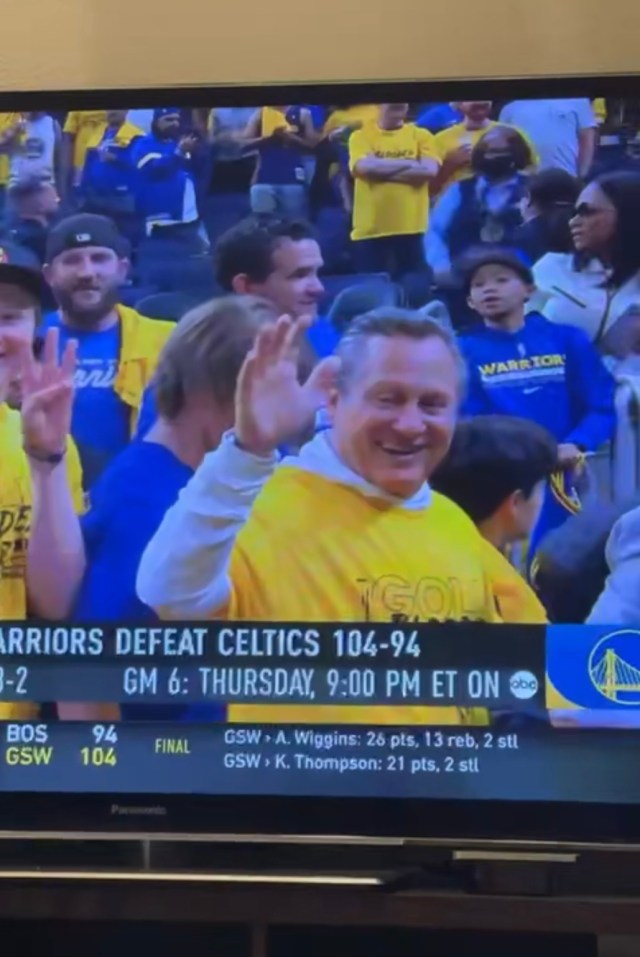
When I was on the “Diversity Matters” podcast yesterday, Teresa asked me about this blog and, for the first time ever, I announced the topic of the next “Thoughts on Leadership” before it was published. So, for those who tuned in, you’d know today I’m going to talk about Steph Curry, not only because his new documentary, “Stephen Curry: Underrated” was recently released on Apple TV+, but also because on July 16, he won the American Century Championship (ACC) celebrity golf tournament in spectacular fashion. The day before, Curry made a hole-in-one on the seventh hole, and on the last day of the tournament, he made a clutch 20-foot eagle putt on the 18th hole to win the title. As I told Teresa, there are so many lessons we can learn from the basketball superstar.

His documentary is inspiring: a tale of against-the-odds achievement on a grand scale. It begins with basketball legend Reggie Miller reading Curry’s pre-draft scouting report. The critics did not mince their words:

“Far below NBA standard in regard to explosiveness and athleticism …”

“Can overshoot and rush his shots …”

“Doesn’t like when defenses are too physical with him …”

And the best one by far:

“Do not rely on him to run your team …”

Juxtapose those comments with Curry’s four championship rings and you will laugh at how history proved these sentiments wrong. And that, perhaps, is one of the most magical things about Steph Curry and his leadership story. He constantly fought (and won) against those who second-guessed his abilities. The result? In addition to being a four-time NBA champion, Curry is also a two-time NBA Most Valuable Player, NBA Finals MVP, NBA All-Star Game MVP and a nine-time NBA All-Star. He also holds the record for all-time leader in total-3 pointers.

Underrated no more. But in the beginning, even Curry’s mom, Sonya, worried about whether her son could become an NBA player. (Notably, his father, Dell Curry, was an NBA player who retired as the all-time leading scorer of the Charlotte Hornets.) Virginia Tech, where Curry’s parents went to school, turned him down. Duke, where Curry attended a basketball camp, didn’t accept him on the team. Curry signed with Davidson College, where he played an integral role in taking the Davidson Wildcats’ basketball team to the 2008 Elite Eight in the NCAA championship. It was called “a Cinderella story for the ages,” with Curry leading the charge, and it set him on a path to greatness.

In addition to being a basketball superstar, Curry is also an avid – and scratch – golfer, who began playing at the age of 10. His commitment to the sport showed last Sunday at the Edgewood Tahoe South golf course in Stateline, Nevada for the ACC tournament. During the practice rounds, Curry walked the course with coaches, asking questions about the greens. Before the tournament, Curry spent time with legendary golf coach Butch Harmon, who has helped PGA greats Tiger Woods, Dustin Johnson and Rickie Fowler. Curry admitted to Golf Week after the coaching that what Harmon taught him would help him “build a little confidence.”

Maybe it was added confidence that propelled Curry’s tournament win, but it may have also been his desire to provide himself yet again, focusing intently on the shot in front of him. “The next shot mentality is huge,” Curry said during the tournament, according to NBA.com. “Basketball’s a little more reactive so you don’t have too much time to dwell on what’s going on. In golf, you have a long walk from shot to shot to deal with the thoughts going on between the ears. You have to have a bit of amnesia out there.”

A focus on the future informs more than Curry’s golf game. He’s also a champion for diversity, equity and inclusion, and that advocacy has intertwined with his love for golf. Curry committed to funding the Howard University golf program for six years, and he started the Underrated Golf Tour, established “to provide a positive, competitive, safe space environment for culturally diverse” junior golfers. For his tremendous efforts, the PGA honored Curry earlier this month with the 2023 Ambassador of Golf Award.

So, what’s the message? Curry’s success story proves that no matter what others say, passion will always fuel progress on and off the court.

Thoughts on Leadership: The Magic of Music Pt. 2

By Gino Blefari

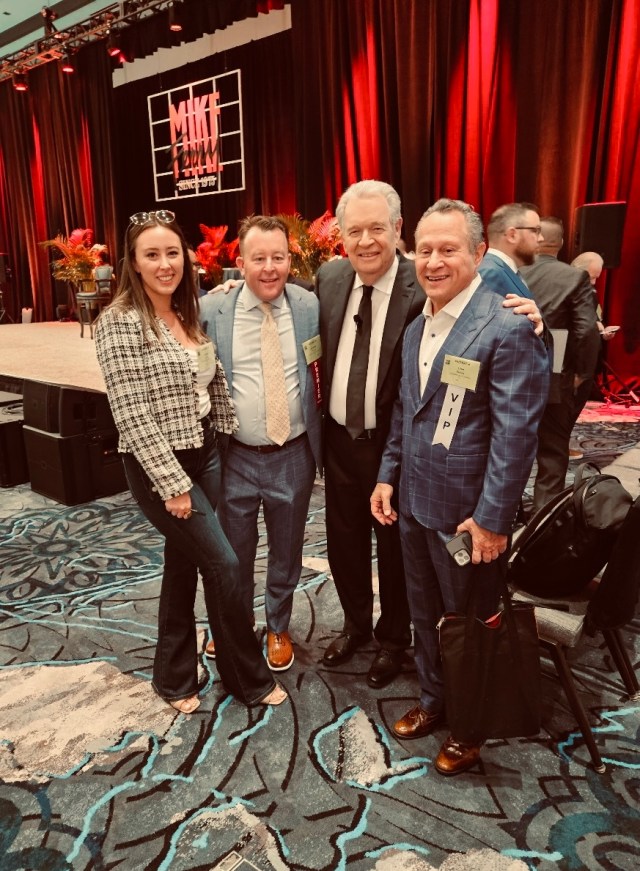
This week finds me starting Monday with my typical WIG calls then hopping on a flight to Las Vegas for dinner with Troy Reierson, CEO of Berkshire Hathaway Arizona Properties, California Properties and Nevada Properties; and Doug Cannon, president and CEO of NV Energy. On Tuesday, I joined the early morning Berkshire Hathaway Energy call then attended the Mike Ferry Superstar Retreat for the rest of the day. Yesterday, I departed Las Vegas and touched down in Orange County, California to coach and spend time with the Berkshire Hathaway HomeServices California Properties team at their leadership meeting, led by California Properties President Martha Mosier. From there, I went to the Berkshire Hathaway HomeServices HQ in Irvine to film some videos and prepare for the debut broadcast of the Diversity Matters podcast, hosted by HomeServices of America’s Chief Diversity Equity & Inclusion Officer Teresa Palacios Smith. Today, I had a HomeServices of America 10-year plan working session with Berkshire Hathaway Energy, and of course, made some time between meetings to sit down and write this post to you.

Last week we talked about the magic of music and I promised you more to come … so here it is.

We ended our last “music is magic” discussion talking about how music can elicit certain feelings in others, and how Jim Kirk, CEO of Corporate Magic, uses that knowledge when putting together emotionally charged shows like the General Sessions at the annual Berkshire Hathaway HomeServices’ Sales Convention.

Jim says that this idea of music creating feelings within us is something we’ve been trained (whether we know it or not) to understand. There’s a historical connection, too. For instance, Jim explains that when we hear bagpipes, because we’ve often heard them at a funeral, they often have a calming or sorrowful effect on us. Similarly, the string section – cellos, violas, bass violas – are richer and soothing in their sounds, whereas banjos and electric guitars are more upbeat and fun. Trumpets are brighter, Jim explains, and flugelhorns and French horns imbue a sense of warmth. 

For me, the historical effect of music happens when I hear certain bands. I can’t hear REO Speedwagon without thinking of John Thompson and I working together at the Cherry Chase Public Golf Course in the 1980s. And beyond history, there are songs that remind us of relationships, not just moments in time. For my one daughter, Alex, it’s “Sister Golden Hair” by America that always reminds me of her. For my other daughter, Lauren, it’s “Butterfly Kisses.” And every time I hear “Unchained Melody” by the Righteous Brothers, I’m reminded of my wife Joanie and how we’d watch the movie “Ghost” together.

Research supports the idea that music and emotions are intertwined. Petr Janata, associate professor of psychology at the University of California, Davis, conducted research on the link between brain activity and music, ultimately concluding that “the region of the brain where memories of our past are supported and retrieved also serves as the hub that links familiar music, memories and emotion.”

As Professor Janata explained: “What seems to happen is that a piece of familiar music serves as a soundtrack for a mental movie that starts playing in our head. It calls back memories of a particular person or place, and you might suddenly see that person’s face in your mind’s eye. Now we can see the association between those two things – the music and the memories.”

Beyond creating a picture in our minds, listening to music can cause physical reactions, too. According to scientific studies, music can lower stress, heart rate and blood pressure, as well as our cortisol levels, while increasing serotonin and endorphins, eliciting a similar feeling to spending some rejuvenating time outdoors, exercising or getting a good night’s sleep. The American Music Therapy Association writes extensively on the pain-reducing effects of music therapy, which the association says can be used for patients of all ages, from young children to adults, to help lessen acute and procedural pain. NorthShore University HealthSystem reports that playing soft music (especially when coupled with dim lighting) can help you consume a meal at a slower rate, which aids with digestion.

And if you want a better workout, experts say try listening to music while you exercise. Not only will it boost your mood, but it will also increase your endurance by decreasing the perceived effort required for you to complete the physical task at hand. Professor Costas Karageorghis of Brunel University in London conducted research that showed people can run farther, bike longer and swim faster while listening to music – and they often don’t even realize it.

So, what’s the message? Like I said last week, music is magic.

Thoughts on Leadership: The Magic of Music

By Gino Blefari

This week my travels find me starting Monday with my typical WIG calls. On Tuesday, I joined the early morning Berkshire Hathaway Energy call then spent the rest of the week preparing for next week’s agenda and our upcoming Stronger Together top producers’ event.

Of course, between meetings and preparation, I sat down to write this post to you.

Read more: Thoughts on Leadership: The Magic of Music

Today, I want to talk about the magic of music.

There are some songs that from the minute I hear the opening notes, I’m transported to a very specific time in my life: “Changes in Latitudes, Changes in Attitudes,” “Fire and Rain,” “Dancing in the Moonlight,” “Lyin’ Eyes” …

If an old song from the ‘70s comes on, I’m not wherever I am when it’s playing. I’m in my Mustang convertible bringing Frank Horst home from football practice or Dave Smithson home from work at Cherry Chase Public Golf Course.

And the meaning of a song can change with the passage of time.

For instance, now when I hear “Leader of the Band,” I’m carried away to early September 2021, hand-feeding my dad ice cubes as he lay in bed, just an hour before he died.

The leader of the band is tired, and his eyes are growing old

But his blood runs through my instrument and his song is in my soul

My life has been a poor attempt to imitate the man

I’m just a living legacy to the leader of the band

Certain songs transport you back in time, to happy moments, to sad moments, to the moments you wish you could forget but never will. Music is like that. Music is magic.

And as leaders, we can take this magic and positively harness it to achieve our Wildly Important Goals. Athletes do it all the time. During the 2016 Olympics, Michael Phelps famously got into the zone by listening to Future’s “Stick Talk,” which he said motivated him for the races ahead.

While “Stick Talk” pumped Phelps up for the pool, another athlete in another sport might choose something to calm them down. Costas Karageorghis, a professor of sports and exercise psychology at Brunel University London, explained in an article for CBC.ca that athletes competing in high-octane sports like snowboarding or surfing “might choose a song with a tempo that is close to resting heart rate at a moment of high anxiety.”

Whenever possible, I’ve always tried to bring the magic of music to the leaders around me. At last year’s Stronger Together event, I asked the CEOs to select the song they wanted to play while they walked onto the stage. At Contempo Realty and Intero, I’d come up on stage to the theme song from “The Godfather.” In fact, just writing that line right now I’m already humming the music. Daa daaa daaa daaaaa …

Jim Kirk, CEO of Corporate Magic, the creative team behind the music and performances during General Sessions at the Berkshire Hathaway HomeServices Sales Convention, told me an old college friend of his who became a vocal teacher wrote a dissertation on the healing effects of singing and the positive benefits singing can have on the immune system.

It makes sense when you think about all the ways music can alter our mood and mindset.

Jim also said that from a young age, he taught himself to analyze the impact a particular song would have on people, then choose what style, instruments, choral progressions, tempos, voices or lyrics to use to elicit those feelings in others. It’s why if you’ve ever been to a General Session at Sales Convention, you’re taken on a rollercoaster of emotions as the music twists and turns with drama and excitement. Every choice Jim and his team make is strategic and purposeful. But more on that next week. Please (pun intended) stay tuned.

So, what’s the message? Music is magic.

Thoughts on Leadership: The Power of Recharging

By Gino Blefari

This week my travels find me at home, starting the week on Wednesday with my early morning Berkshire Hathaway Energy call and WIG calls, followed by reviewing the initial rounds of budgeting for 2024. And of course, between meetings, I sat down to write this post to you.

Today I want to talk about something you probably experienced this past weekend, as you celebrated our country’s freedom with friends, family, food, and fireworks for the Fourth of July. Because believe it or not, while you were floating in that backyard pool, making sandcastles in the summer sunshine or dodging July raindrops, you were practicing a powerful yet often-overlooked leadership skill: recharging.

Continue Reading

No more posts.