Thoughts on Leadership: The Transformative Power of Conferences

By Gino Blefari

This week my travels find me at home in northern California. As I sit in my office this week, reflecting on the past conferences I’ve attended throughout my career and the upcoming Berkshire Hathaway HomeServices Sales Convention in March, I’m struck by the profound impact that conferences have had on my professional journey. These gatherings, spanning diverse industries, have been instrumental in shaping my perspective on business and leadership. Today, I’m eager to share with you the tremendous value that attending conferences holds—a practice that has not only enriched my career but also broadened my understanding of the dynamic business world.

1. Networking Opportunities: Building Bridges Beyond Borders

Conferences are dynamic hubs where professionals from varied backgrounds converge. Attending these events opens doors to new connections—with potential mentors, industry leaders, or fellow enthusiasts. The relationships forged at conferences can blossom into collaborations, referrals, and even lifelong friendships, all of which play a pivotal role in fostering a thriving career.

2. Learning from Experts: Unveiling the Wisdom of Seasoned Minds

One of the golden aspects of conferences is the wealth of knowledge shared by seasoned experts and thought leaders. These sessions serve as treasure troves of insights into the latest trends, innovative strategies, and future predictions in your industry. Learning from these experts not only enriches your understanding but keeps you ahead of the curve in your professional field.

3. Inspiration and Motivation: Fueled by Shared Success Stories

There’s an undeniable energy in being surrounded by driven, like-minded professionals. The stories of success and perseverance shared at conferences can be profoundly inspiring, acting as a powerful fuel for your passion and motivation to achieve new goals in your career.

4. Staying Updated with Industry Trends: Navigating the Waves of Change

Success in any industry demands staying abreast of the latest developments. Conferences provide a platform to discuss current dynamics, future predictions, and strategies to navigate through changing landscapes. This knowledge is invaluable, aiding you in making informed decisions and staying competitive in the ever-evolving business landscape.

5. Personal Brand Building: Crafting Your Professional Identity

Active participation in conferences is a potent tool for building your personal brand. It showcases your commitment to your career, establishing you as a knowledgeable and reliable professional in the eyes of peers and clients alike.

6. Access to New Tools and Technologies: Exploring the Frontiers of Innovation

Conferences often feature exhibitions showcasing the latest tools and technologies in your field. Exploring these innovations can open your eyes to new ways of enhancing your business operations, from cutting-edge methodologies to advanced software solutions.

7. Continuing Education: Nurturing Professional Growth

Many conferences offer sessions contributing to continuing education. This not only helps you stay compliant with professional requirements but also enhances your skills and knowledge, ensuring you maintain a competitive edge in your field.

8. Rejuvenation and New Perspectives: A Breath of Fresh Insight

Stepping away from the daily grind and immersing yourself in a different environment provides a fresh perspective. Conferences offer a chance to rejuvenate, rethink strategies, and return to your work with renewed energy and ideas.

So, what’s the message? If you’re a part of Berkshire Hathaway HomeServices I encourage you to please sign up for Sales Convention today here: Register Now. Attending conferences is more than just an opportunity to travel and meet new people. It’s a catalyst for personal and professional growth—a chance to learn from the best, stay ahead in your industry, and continuously evolve as a professional. Reflecting on my own experiences, I’m filled with gratitude for the knowledge, connections, and inspiration these conferences have provided. They are, without a doubt, an investment worth making in your journey to success.

Thoughts on Leadership: Leading with Love

By Gino Blefari

This week my travels find me at home as well as Jacksonville, FL. Monday started with my typical WIG calls and on Tuesday, I had an early morning Berkshire Hathaway Energy weekly executive meeting.

On Wednesday morning I traveled to Jacksonville, FL. I spent this morning with Berkshire Hathaway HomeServices Florida Network Realty and I will spend tomorrow morning with HomeTeam Inspection Services at their annual Summit. Among other topics I am sharing 6 philosophies on life and business so you can make 2024 your best year yet!

Read more: Thoughts on Leadership: Leading with Love

Earlier this year my mom passed away at the age of 93. I wanted to dedicate this week’s blog to her and the leadership lessons we’ve learned from all mothers.

If you’re interested in reading my mom’s eulogy I’ve included a link below to the words I shared last week at her services.

  1. Lead by Example: Mothers often lead by demonstrating the values and behaviors they want to instill in their children, showing the importance of leading through actions rather than just words.
  2. Effective Communication: Mothers excel in communication, conveying their expectations, providing guidance, and offering support in a clear and empathetic manner, highlighting the importance of effective communication in leadership.
  3. Empathy and Compassion: Mothers are known for their empathy and compassion, understanding the needs and feelings of others. This teaches us the significance of considering the well-being of team members and fostering a supportive environment.
  4. Resilience and Adaptability: Mothers frequently exhibit resilience and adaptability in handling various challenges and juggling multiple responsibilities. This emphasizes the importance of flexibility and perseverance in leadership roles.
  5. Nurturing Growth: Mothers nurture the growth and development of their children, providing encouragement, feedback, and opportunities for learning. This teaches us the value of supporting the growth and development of our team members, empowering them to reach their full potential.

The eulogy of Dory Blefari

Thoughts on Leadership: Building a Winning Team with the Three Bars Framework

By Gino Blefari

This week my travels find me at home after a very long week of travel with -9 temps in Denver, CO and 82 degrees in Key West, FL and coming off a 4th quarter comeback 49ers win!

I started Monday with my typical WIG calls. On Tuesday, I had an early morning Berkshire Hathaway Energy weekly executive meeting followed by our monthly leadership meeting. 

Read more: Thoughts on Leadership: Building a Winning Team with the Three Bars Framework

In the dynamic world of leadership, the strength of a team hinges on the collective commitment to excellence. I firmly believe that each team member plays a crucial role in shaping the overall success.

However, what happens when a standout player, once a beacon of success, starts veering off course?

In the intricate landscape of business, where decisions sculpt the future, top leaders swear by a fundamental principle: safeguard your company’s culture with every staffing decision. It’s a testament to the profound belief that a robust company culture is the backbone of any triumphant enterprise.

In this delicate equilibrium, even the most skilled individuals are subject to evaluation if their actions or attitudes pose a threat to the core values of your company’s culture.

Have you ever pondered the impact of a lone “bad apple” within a team? Research paints a stark picture: a single individual has the potential to lead the entire team astray, tarnishing collective behavior and spirit.

So, faced with such a predicament, the solution, though daunting, is crystal clear: they need to be let go.

Now, the challenge lies in distinguishing who is uplifting your team and who is dragging it down. Enter the ingenious three bars framework – a simple yet potent tool. Pose this question: if every team member emulated the values and attitude of a specific employee, would they elevate, sustain, or lower your company’s average performance and morale?

Those who raise the bar, the true champions of your culture, not only deserve recognition but promotion. Their positive influence should permeate throughout your organization. Conversely, those who lower the bar, regardless of past triumphs, must be let go. Their presence poses a threat to your company’s culture – a cost too steep for any business. The three bars framework isn’t confined to evaluations; it extends to recruitment. Every hiring decision is an opportunity to elevate our team’s standards.

So, what’s the message? As a leader, prepare yourself for these decisive moments. They aren’t merely administrative actions; they are declarations of your unwavering commitment to fostering a thriving, positive, and resilient company culture.

Thoughts on Leadership: Kaizen – Unveiling the Power of Small Steps for Lasting Change

By Gino Blefari

This week my travels find me in Denver, Colorado and Key West, Florida. My first stop was to be with the team at Berkshire Hathaway HomeServices Colorado Real Estate for their all-company kick-off meeting and tomorrow morning I will be with the team at Berkshire Hathaway HomeServices Keys Real Estate for their all company meeting as well.  Among other topics I am sharing 6 philosophies on life and business so you can make 2024 your best year yet!

Today we’re going to explore the Japanese word, Kaizen. Discovering the potential of making small, gradual changes to transform one’s life. Inspired by this approach, I aim to share insights on how incorporating small steps into your journey can lead to remarkable improvements. Join me as we delve into the principles of Kaizen, unlocking the secrets to positive change in various aspects of your life.

Read more: Thoughts on Leadership: Kaizen – Unveiling the Power of Small Steps for Lasting Change

#1 Taking Small Steps for Lasting Change – Harnessing the Power of Small Wins: Embarking on a journey of change is often met with challenges, and the frustration of failed resolutions is a common experience. However, the concept of Kaizen encourages the art of making small, incremental changes. By embracing Kaizen, you can skillfully navigate past the brain’s resistance to change and make the process more manageable. Whether your goal is adopting healthier habits, saving money, or breaking a bad habit, initiating change through small steps can pave the way for significant improvements.

Moreover, incorporating the concept of small wins amplifies the transformative potential of your journey. Small wins are akin to the steady application of a small advantage. Once a small win is accomplished, it sets in motion forces that favor another small win. These cumulative victories leverage tiny advantages into patterns that convince individuals that more significant achievements are within reach.

Celebrating small wins can be as simple as crossing off a task on your to-do list. This seemingly minor action, when acknowledged, elevates self-confidence and self-image. The acknowledgement of small wins not only propels you forward but also reinforces the belief that positive changes are not only possible but also attainable through a series of manageable steps.

#2 The Power of Small Questions: To initiate change, start by asking yourself small questions. Much like acclaimed authors who begin their novels with simple inquiries, asking yourself small questions can lay the groundwork for transformation. By focusing on achievable tasks, you engage your brain, stimulate creativity, and pave the way for gradual solutions. Choose questions carefully to avoid triggering resistance and turn them into habits for sustained progress.

#3 Mind Sculpture: Crafting Victory through Imagination and Routine: Delve into the transformative “mind sculpture” technique, a potent tool unlocking the potential of your imagination. Visualize yourself skillfully navigating future challenges, intricately detailing a mental rehearsal for success. Much like Olympic athletes mentally preparing for races, this technique cleverly tricks the brain into feeling experienced, thus making the process of change feel less daunting. Integrate mind sculpture into your routine to cultivate a positive mindset, fostering the ability to overcome obstacles.

In the realm of real estate, success hinges not only on professional skills but also on the development of the right routines. Drawing inspiration from Michael Phelps’s coach, Bob Bowman, who believed in the power of creating effective routines for swimmers, I’ve applied a similar principle to my journey in the real estate business. Having invested a significant portion of my adult life studying from some of the best trainers, I’ve learned that to thrive in real estate, I must prioritize personal growth.

The key revelation is that success in real estate necessitates working harder on oneself than on the job. Shifting my mindset from fear and merely getting through the day to fearlessness and confidence has been paramount. I crafted a series of behaviors aimed at changing my state, differentiating myself from other REALTORS®. These specific habits, unrelated to real estate but focused on cultivating the right mindset, positioned me as the most mentally resilient REALTOR® in any situation. This routine became the linchpin, enabling me to identify tiny advantages in a competitive business where victory is synonymous with securing the deal.

#4 Make Your First Step Incredibly Small: Emphasize making your initial step as small as possible. Through a compelling example, we learn that starting with just one minute of exercise per day can lead to sustainable progress. Counterintuitively, small steps often result in faster change, allowing habits to form gradually and become a natural part of your routine.

#5 Focus on Small Problems First: Addressing small problems can be an effective strategy when faced with overwhelming challenges. Tackling minor issues can lead to significant improvements. By dealing with small problems early on, you may uncover underlying issues and prevent larger complications. Pay attention to warning signs in various aspects of your life for smoother, proactive problem-solving.

#6 Small Rewards for Big Motivation: Contrary to common belief, small rewards often outperform large ones. Learn from the success of modest rewards in fostering motivation and creativity. Implement small rewards in your life, as exemplified by individuals who motivated themselves through moment-by-moment rewards. Discover how these small incentives can keep you motivated on your journey of continuous improvement. I still have the Cross pen that was given to me in 1986 for being in the Top 1% at Fox and Carskadon. Small reward .. Huge impact. I can still picture Emmett Cashin handing me the pen and congratulating me.

#7 Appreciate the Little Things in Life: Extend the Kaizen mindset to all areas of your life, especially relationships. Recognize the significance of small, day-to-day moments in strengthening connections. Understand the power of small gestures in predicting relationship success. Practice mindfulness in appreciating and acknowledging the little things, fostering a culture of continuous improvement.

So, what’s the message? Implementing the principles of Kaizen can revolutionize your approach to change. By taking small steps, asking small questions, and appreciating the little things, you can achieve lasting transformations. I encourage you to embrace the Kaizen mindset, counter negative thoughts with positive questions, and remember … change doesn’t have to be difficult. Start your journey with small steps and witness the profound impact they can have on your life.

Thoughts on Leadership: Building Your Life’s Blueprint – Leadership Lessons from MLK

By Gino Blefari

This week my travels find me in Nashville, TN involved in preparations and filming for the upcoming Berkshire Hathaway HomeServices Sales Convention. As I reflect on this vibrant city, my thoughts gravitate towards one of history’s greatest leaders—Martin Luther King Jr. With Martin Luther King Jr. Day just around the corner, it’s a fitting moment to celebrate his enduring achievements and the timeless lessons he left us.

Perseverance and Passion: Did you know that Martin Luther King Jr., the iconic public speaker, received a C in public speaking during college? His journey from a struggling student to a Nobel Peace Prize recipient is a testament to the power of persistence and passion. Over 11 years of civil activism, he covered 6 million miles and delivered 2,500 speeches, becoming one of the greatest orators in history.

Read more: Thoughts on Leadership: Building Your Life’s Blueprint – Leadership Lessons from MLK

The Blueprint of Life: King’s transformative speech at Barratt Junior High School, Philadelphia, PA in 1967 holds wisdom that resonates even today. He posed a fundamental question to the students: “What is your life’s blueprint?” This blueprint, he explained, should include two key elements.

  1. Belief in Your Own Worth: King urged the students to engrain a deep belief in their own dignity and worth. In a world that may attempt to diminish your significance, always remember that you count, you have worth, and your life holds ultimate significance.
  2. Determination for Excellence: Quoting Ralph Waldo Emerson, King emphasized the importance of striving for excellence in one’s life’s work. Whether you become a renowned figure or a street sweeper, approach your work with the determination to do it so well that the world recognizes your excellence.

Striving for Excellence: For King, the essence was not in the pursuit of fame or wealth but in excelling at whatever path life took. Whether sweeping streets or composing music, he encouraged individuals to approach their endeavors with the same dedication and passion as the great masters.

Architect of Your Greatness: In the final months of his life, King’s philosophy centered on becoming the best at whatever you do. By striving for excellence, you become the architect of your own greatness. In his parting words to the students in Philadelphia, he emphasized, “Be the best of whatever you are.”

So, what’s the message? As we honor Martin Luther King Jr.’s legacy, let’s carry forward the profound leadership lessons embedded in his life’s blueprint. Whether in the workplace, our industry, or our lives, let us champion diversity, equity, and inclusion. In becoming the architects of our own greatness, we not only pay homage to King’s legacy but also contribute to a more just and compassionate world. As King said to end his plea to the students in Philadelphia, “Be a bush if you can’t be a tree. If you can’t be a highway, just be a trail. If you can’t be a sun, be a star. For it isn’t by size that you win or fail. Be the best of whatever you are.”

Thoughts on Leadership: Running with Mismatched Shoes

By Gino Blefari

As I kick off this new year, I participated in my regular Berkshire Hathaway Energy call. On Wednesday morning, I participated in the HomeServices of America Diversity MEETS monthly meeting superbly orchestrated by Teresa Palacios Smith, Chief Diversity, Equity & Inclusion Officer, where I had the honor to announce the recipient of the 2023 HomeServices Diversity Champion Award. This award was presented to Berkshire Hathaway HomeServices Georgia Properties – we celebrated and applauded their remarkable achievements and contributions toward advancing diversity and inclusion.  Heartfelt congratulations to them for being exemplary Diversity Champions! On Thursday morning, I also had the opportunity to speak to Intero’s Academy. During my talk, I shared the “6 Philosophies on Life and Business” to help make 2024 the best year yet.

Read more: Thoughts on Leadership: Running with Mismatched Shoes
  1. There will always be somebody who’s better.
  2. Fueling Growth: Discontent Drives Inspiration.
  3. Find mentors.
  4. Commit to do the work.
  5. Struggle is Necessary for Human Growth.
  6. Our season of change.

I’d like to offer this to all of our great companies – I’ll be in touch with our leadership teams to schedule in this new year.

As I gear up for a busy January, I couldn’t help but reminisce about an inspiring story that I’ve shared before and wanted to share again as a reminder.

A while back, a friend sent me a text asking, “Have you ever studied Jim Thorpe?” Intrigued, I revisited Thorpe’s remarkable journey, a story that has fascinated me since my childhood when I first read Bob Wheeler’s iconic book, “Jim Thorpe: The World’s Greatest Athlete.”

Jim Thorpe, a track and field star hailing from Oklahoma, is widely regarded as one of the greatest American athletes of the twentieth century. Born as Jacobus Franciscus Thorpe with the name Wa-Tho-Huk (“Bright Path”), he carried the heritage of Sac, Fox, and Potawatomi Indian bloodlines along with French and Irish ancestry.

There’s an iconic photo of Thorpe during the 1912 Olympics, standing on the track field with two different sneakers. This caught the attention of Wheeler, who embarked on a quest to uncover the truth behind the image.

As the 1912 Olympics commenced in Stockholm, Thorpe dominated the pentathlon, leading the 1,500-meter run by almost five seconds. The weather was relentless during the three-day decathlon. On the opening day, Thorpe raced down the track, completing the 100-meter dash in a record-breaking 11.2 seconds, a feat unmatched until 1948.

However, the story took an unexpected turn. On the second day of the decathlon, just minutes before the 1,500-meter race, Thorpe’s sneakers went missing (rumored to be stolen). Facing the challenge of being shoeless, Thorpe frantically sought help from his teammates. With one teammate offering an extra shoe that was too small and another shoe found in the garbage bin that was too large, Thorpe improvised.

Wearing one too-small shoe and another too-large, the odds were stacked against Thorpe. Yet, with unmatched resilience, he stood on the Olympic starting line, facing the world’s best decathletes. And what did he do? He won, completing the 1,500-meter run in 4 minutes, 40.1 seconds.

So what’s the message? Never give up. Despite the odds, despite the challenges, never give up. Take the shoes you’re given and run as fast as you can, just like Thorpe did at the Olympics.

As we step into 2024, let’s embrace the spirit of Jim Thorpe—facing challenges head-on, adapting to what comes our way, and running towards success with unwavering determination.

Here’s to a remarkable and resilient 2024!

Thoughts on Leadership: Leadership Lessons from Santa Claus

By Gino Blefari

This week my travels find me starting Monday with my typical WIG calls. On Tuesday, I had an early morning Berkshire Hathaway Energy weekly executive meeting followed by our monthly leadership meeting. On Wednesday, I participated in HomeServices of America’s December corporate team gathering followed by succession planning calls which continued into today.

Today, as I sit in my cozy home office, sipping on a hot cup of coffee, my thoughts wander to a leader who, though mythical, embodies timeless lessons in leadership – Santa Claus. Yes, you read that right. Santa, the jolly old man from the North Pole, has much to teach us about effective leadership.

Read more: Thoughts on Leadership: Leadership Lessons from Santa Claus

Santa Claus, a figure synonymous with generosity and cheer, may not be the first name that comes to mind when thinking about leadership. However, delve a little deeper, and you’ll find his approach holds valuable insights for leaders in any field.

1. Team Building and Delegation Santa’s workshop, bustling with elves, is a prime example of effective team building and delegation. Each elf has a specific role, playing to their strengths, whether it’s toy-making, reindeer care, or navigation planning. As leaders, recognizing the unique talents of each team member and delegating tasks accordingly is crucial. It’s about creating an environment where everyone can thrive and contribute their best.

2. Consistency and Reliability Year after year, without fail, Santa delivers. His reliability is legendary. In leadership, consistency in your actions and decisions builds trust and reliability within your team. It’s about being someone your team can depend on, come rain, snow, or shine.

3. Adaptability and Innovation Consider Santa’s evolution over the years. From reindeer-powered sleighs to embracing the digital age for his naughty and nice list, Santa shows adaptability and innovation. In our rapidly changing world, leaders must be flexible and open to new ideas to stay ahead.

4. Global Perspective Santa’s one-night journey around the globe symbolizes a global perspective, understanding different cultures and traditions. Effective leaders embrace diversity and inclusivity, recognizing that a broad range of perspectives enriches decision-making and problem-solving.

5. The Spirit of Giving At the heart of Santa’s ethos is the spirit of giving. Leadership isn’t just about guiding a team to success; it’s about what you give back – your time, knowledge, and support. It’s about lifting others as you climb.

6. Maintaining a Positive Attitude Santa’s trademark “Ho, Ho, Ho” reflects a positive attitude, crucial in leadership. Positivity in the face of challenges is infectious and can motivate your team to push through tough times.

7. Mystery and Intrigue Santa maintains an air of mystery, a trait that can be beneficial in leadership. It’s not about being secretive but about keeping a sense of intrigue and excitement around your vision and plans, which can drive engagement and interest.

8. Time Management Finally, Santa’s ability to deliver gifts to children around the world in one night is nothing short of miraculous time management. Effective leaders know how to manage their time wisely, prioritize tasks, and meet deadlines.

So, what’s the message? Santa Claus, a symbol of joy and generosity, also embodies key leadership qualities – team building, reliability, adaptability, a global perspective, the spirit of giving, positivity, mystery, and exceptional time management. As we enjoy this festive season, let’s take a leaf out of Santa’s book and strive to be better leaders, not just in our workplaces but in every aspect of our lives.

Happy Holidays!

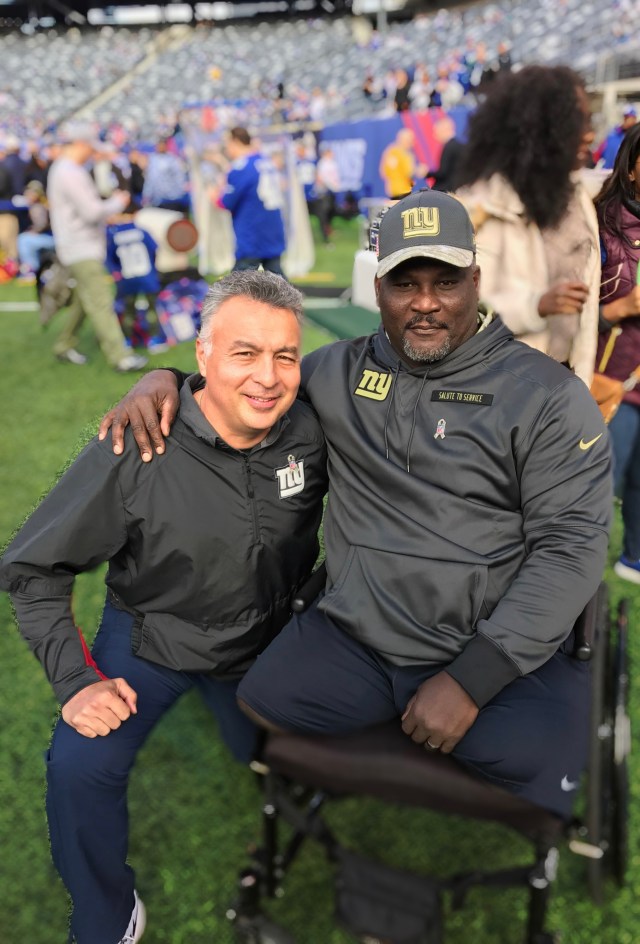
Thoughts on Leadership: Lessons from Colonel Gregory Gadson

By Gino Blefari

This week my travels find me in Las Vegas, NV attending and participating in the annual Berkshire Hathaway Energy Executive Leadership Conference. The focus of the conference included cross-business panel discussions and presentations related to current and future business challenges and opportunities, along with small group discussions on leadership and employee engagement.

I wanted to talk this week about resilience—coming back from a difficulty, perhaps a place where you weren’t sure what was coming next—where you’re questioning your own economic or emotional survival.

Read more: Thoughts on Leadership: Lessons from Colonel Gregory Gadson

 What comes to mind is a story I recently heard, about a man, a grievous injury, and grit.

Colonel Gregory Gadson was a West Point football player, a small one, who often gazed across the line of scrimmage into the sweaty, smudged faces of bulkier men. Still, he would call out competitive taunts. “It’s gonna be a long day for you,” former West Point Coach Tim Kish recalls hearing Gadson mutter to the opposition, “I hope you packed a lunch.” Gadson was a standout. He’d hit a player hard, then help him get up. That was his magic.

Playing for West Point eliminates a lot of career drama; you’re not going pro—you’re going into the Army. And so, Gadson went, bringing along that same “can do” attitude. He served in every major war in which the US engaged. He became a beloved leader, taking the lessons of teamwork and resilience he learned on the gridiron onto the battlefield. In 2007 Gadson led a 3,500-member infantry unit that he’d built from scratch at Fort Riley, Kansas into Iraq. They were a well-oiled machine, having spent weeks training with a tough, charismatic commander.

Only a few weeks into their deployment, on the evening of May 7, the military vehicle that Colonel Gregory Gadson was traveling in was hit by an Improvised Explosive Device (IED). Colonel Gadson was injured, requiring a substantial amount of blood transfusions (129 units of blood) to sustain him; his heart would stop three times before he arrived three days later at Walter Reed Army Medical Center (WRAMC), but his team had saved his life.

When he arrived at WRAMC his legs had been surgically sewn together and set in metal cages. But in emergency surgery that could have, once again, cost him his life, he lost one leg. Later he and his family chose to give up the other, rather than risk ongoing infection.

This man, who’d been at the top of his game –  An up-and-coming lieutenant colonel, a respected leader who had a wife, and two pre-teen children—was now missing half of his body.

“There were no waypoints,” Gadson recalls. “I didn’t know how I was going to provide for my family. How could I take my son fishing? Who would walk my daughter up the aisle at her wedding?”

There were some very dark days. Gadson applied the lessons he had learned from life, drew strength from his family, and found support in his faith. He didn’t search for waypoints so much as he watched for glimmers.

One day a former Army football teammate, Mike Sullivan, came to visit him at WRAMC. He found Gadson’s spirit of recovery so inspiring he wanted to share it with his own team: the New York Giants. Sullivan was then a coach for the team, which had begun the season 0-2. Things were looking grim at the Meadowlands Sports Complex. Sullivan felt the team had talent, but they were playing as individuals, caught up in the hype. They too, needed a glimmer. Sullivan invited Greg to speak to the Giants on the evening before they took on the Washington Commanders.

“I wasn’t a public speaker at the time,” Gadson says. “What was I going to say to a room full of successful professional players? I’d never reached that level.”

But there was one thing Gadson could talk about: resilience in a time of darkness.

“Your life can change in an instant,” he told the room full of players, rapt and wrapped in silk suits and diamond stud earrings. “Everything could turn on one career-ending injury. That’s why you must embrace every opportunity. You can get caught up in the media, the numbers. But none of those matter. What matters is your team. I am alive today because of my team. My team trained. And my team saved my life. That’s how you must play tomorrow—no one on the field matters more than the guy next to you. No one.”

And so began the Giants’ winning streak. It took them all the way to the Super Bowl. Gadson spoke again to the transformed Giants the night before that championship game.

“Believing is better than knowing,” Greg told the Giants. They believed. And in the final two minutes of that game (who could forget David Tyree’s helmet catch?), they beat the undefeated New England Patriots and became world champions.

Gadson travels the country now, bringing his motivational message to corporations, sports teams, and non-profit organizations.

So, what’s the message, Colonel Gregory Gadson’s story is a testament to finding glimmers of hope in the darkest moments and the transformative impact of unwavering determination.

You can learn more about his story in a book co-authored by Gadson and Terese Schlachter (my colleague Jon Coile’s wife) titled, “Finding Waypoints: A Warrior’s Journey Towards Peace and Purpose.” by clicking the links below.

Amazon: Finding Waypoints: A Warrior’s Journey Towards Peace and Purpose  Ridgeback Communications: https://www.ridgebackcomms.com/books

Thoughts on Leadership: A December to Remember

By Gino Blefari

This week my travels find me starting Monday with my typical WIG calls. On Tuesday, I participated in the early morning Berkshire Hathaway Energy call followed by a HomeServices of America/Berkshire Hathaway Energy strategy and discussion meeting. (I also had three succession planning meetings this week.) On Wednesday I traveled to Orange County in the afternoon. Today, I had meetings in Orange County, and of course, took some time to sit down to write this post to you.

With just about three weeks left in December – and 2023, can you believe it? – it’s important to figure out how you’ll keep your productivity at its highest level, even as you attend holiday parties and spend time with family and friends. Remember, real estate operates on a 90-day cycle. What you do now will pay out at the beginning of next year.

Read more: Thoughts on Leadership: A December to Remember

If you’re wondering how to stay productive even as the holiday lights sparkle and festive bells chime, here are a few tips that will help you not only make the most of your time but also become a more effective leader:

Schedule yourself out every remaining day for the month of December. Take a few minutes right after you’re done reading this post to schedule out the remainder of the year. Why? Well, Tony Robbins said it best; “If you talk about it, it’s a dream, if you envision it, it’s possible, but if you schedule it, it’s real.” When you’re creating this December schedule, I’d recommend writing down your commitments in a day planner or printed calendar of your choice. You’re 42% more likely to accomplish goals you write down, according to Dominican University Psychology Professor Dr. Gail Matthews. Add in every meeting, work commitment, project and business appointment you have this month. Include your time off, like holiday parties, family vacation, birthdays, date nights, exercise sessions and doctor appointments. Then, clearly delineate the times when you’ll WORK and the times when you’re OFF. When you work, you work. No distractions, no moving things around. This is your time to get whatever task you’ve assigned to that time slot done. Similarly, when you’re off, you’re off. No checking emails, scheduling unplanned meetings or checking your laptop. Creating a distinct separation between work and play will vastly improve your focus. It will also enhance your ability to live in the moment and be present.

Get rid of any half-work. What’s half-work? It’s a concept articulated by Atomic Habits author James Clear, who defines it as that division of your time and energy when your attention is split between “what you should be doing and what society bombards you with.” Maybe you’re on a call with someone and suddenly hear the familiar *ding ding!* of an incoming email, so you read the email while you’re still on the phone. Half-work. Maybe you’re writing a report and see a notification that you’ve been tagged in a Facebook post, so you abandon the report to check it. Half-work. Maybe you started a new fitness routine – 100 air squats, a minimum of 100 push-ups every day – when you learn about a different ab workout, so you only do 50 air squats and try the other workout, making lackluster progress in both. Half-work. As Clear explains, it doesn’t really matter what kind of half-work is impacting your schedule; the result is always the same: you’re not fully engaged, you find it difficult to commit to a task for a long period of time and the task takes far longer than it should. When you eliminate the triggers creating this half-work you’ll be amazed at the subsequent increase in productivity. Do this by taking your calls in a room with no laptop, blocking out two hours of time to complete the report, putting your phone in another room, committing to just one exercise routine, and so forth.

Create a “top seven list” for the day. Each day you work in December, list the seven most important things you need to do, noting the time it will take to complete each task. Then, get those seven tasks done in the time allotted. Put the most important task first. This will give you a tremendous sense of control, empowerment and accomplishment. According to the Law of Single Handling (one of Brian Tracy’s 100 laws of success), the ability to start and complete your most important task determines your productivity more than any other skill. And why note the time for each of your seven tasks? That one can be attributed to Parkinson’s Law (published in 1955 by naval historian C. Northcote Parkinson), which says work expands or contracts to fit the time allotted; it’s why you always want to do everything in the time it should take. You can put buffers in your schedule, but don’t pad the time it takes to do any given task.

So, what’s the message? Sure, December is a time for togetherness and festive fun, but it’s also a time to maintain momentum for your business. This way, once the ball drops on New Year’s Eve, you’ll feel confident that your end-of-year productivity will create sustainable growth in the new year and far, far, beyond. As Zig Ziglar was known to say: “We cannot start over, but we can begin now and make a new ending.” To all those reading this who are figuring out how to tackle the chaos of December, let your beginning start today.

Thoughts on Leadership: Lessons from the late Charlie Munger

By Gino Blefari

This week my travels find me at home, starting Monday with my typical WIG calls. On Tuesday, I joined the early morning Berkshire Hathaway Energy call, then had a few meetings. On Wednesday and Thursday, I co-hosted six succession calls.

On Tuesday I learned of Charlie Munger’s passing at the age of 99. In tribute to this extraordinary individual, I’ve decided to dedicate today’s blog to Charlie Munger.

Read more: Thoughts on Leadership: Lessons from the late Charlie Munger

Reflecting on the experiences that have molded my leadership journey, I find myself drawn to the profound impact Charlie Munger has had on my approach to leadership and personal development. Several years ago, on a sunny afternoon, I stumbled upon a nugget of Munger’s wisdom, and it wasn’t just inspiring—it catalyzed a significant shift in how I perceive leadership.

Charlie Munger, the esteemed vice chairman of Berkshire Hathaway and Warren Buffett’s long-time partner, is renowned not only for his investment acumen but also for his insight into human nature. Munger encourages learning from others’ experiences, particularly through biographies.

He once asserted, “In my whole life, I have known no wise people who didn’t read all the time – none, zero.” This statement struck a chord, inspiring me to delve into the lives of great leaders and thinkers through their biographies. The impact of this seemingly simple habit on my leadership has been transformative.

Reading biographies feels like engaging in a conversation with history’s greatest minds. It allows me to stand on the shoulders of giants, gaining a broader perspective and learning from the triumphs and failures of those who came before us. From Alexander the Great’s strategic brilliance to Steve Jobs’ innovative mindset, each story adds a layer to my understanding of effective leadership.

Reading biographies has also significantly influenced my decision-making process. Munger, a staunch advocate for multidisciplinary learning, showed me how leaders across different eras and fields approach problem-solving. This enriched perspective enables me to draw from a diverse set of principles and experiences when facing complex challenges.

Munger’s wisdom also taught me the value of patience and long-term thinking. In a world that often prioritizes short-term gains, biographies of great leaders emphasize the power of having a visionary, long-term outlook. True leadership, I’ve come to realize, is about building a legacy that withstands the test of time, not just achieving immediate success.

As I navigate my own leadership journey, I’ve strived to emulate Munger’s approach. Whether making business decisions or mentoring my team, I aim to think beyond the immediate horizon. This shift in perspective hasn’t only made me a more effective leader but has also infused a sense of fulfillment and purpose into my work.

Charlie Munger’s influence on my leadership journey can’t be overstated. His emphasis on continuous learning, simplicity, ethical behavior, and long-term thinking has become my compass in both personal and professional spheres. The lessons I have learned from Munger, particularly through the habit of reading biographies, have shaped my leadership style and infused it with a blend of compassion and vision.

Now, let’s delve into the leadership lessons we can extract from Charlie Munger, a figure whose life and work offer a treasure trove of wisdom.

1. The Value of Lifelong Learning

Charlie Munger exemplifies the concept of lifelong learning. His insatiable intellectual curiosity and dedication to continuous education serve as a model for leaders. He shows us that a true leader never stops learning, underscoring the importance of being a voracious reader and keen observer of the world. This commitment to constant learning equips leaders to adapt to changing circumstances and make well-informed decisions.

2. Embracing Simplicity

One of Munger’s celebrated principles was his advocacy for simplicity and clarity. He firmly believed in avoiding unnecessary complexity—a lesson of utmost significance for effective leadership. By focusing on what truly matters and steering clear of unnecessary details, leaders can make more efficient and impactful decisions.

3. The Power of Mental Models

Munger’s reliance on mental models, a multidisciplinary approach to problem-solving, imparts a crucial lesson. Leaders should be adept at approaching challenges from various perspectives. A good leader should possess a diverse set of tools and frameworks, ensuring a well-rounded and thorough understanding before taking decisive action.

4. Understanding the Psychology of Human Misjudgment

Munger’s insight into human psychology, particularly the psychology of misjudgment, offer invaluable lessons for leaders. Grasping the reasons behind people’s decisions, often driven by irrational factors, enables leaders to anticipate challenges, manage teams more effectively, and navigate the intricate dynamics within an organization.

5. The Importance of Ethical Leadership

Above all, Munger exemplifies ethical leadership. His unwavering integrity and adherence to moral principles convey the message that true leadership goes beyond achieving goals and being successful—it also entails doing the right thing and setting a moral example for others to follow.

6. Patience and Long-Term Thinking

Munger’s investment strategies reflect a profound belief in patience and long-term thinking. This approach is equally applicable in leadership. Quick fixes seldom provide solutions to complex problems. Effective leaders need the patience to see through long-term plans and the foresight to plan for the future.

7. Collaboration and Seeking Diverse Opinions

Munger’s enduring partnership with Warren Buffett underscores the importance of collaboration and valuing diverse opinions. Great leaders acknowledge that they don’t possess all the answers and remain open to learning from others. This collaborative spirit contributes to better decision-making and the generation of innovative solutions.

Charlie Munger’s life and teachings offer invaluable lessons for anyone aspiring to be a better leader. His emphasis on continuous learning, simplicity, ethical behavior, and long-term thinking are principles that can guide us in our personal and professional lives. Inspired by the biographies of great leaders like Munger, I am reminded of the profound impact that their experiences and wisdom can have on shaping effective, compassionate, and visionary leadership.

In essence, leadership is not solely about actions but also about cultivating the right mindset and a commitment to ongoing learning. Charlie Munger’s influence has led me to the enriching world of biographies, profoundly shaping my leadership style. This journey serves as a reminder that impactful lessons often arise not just from personal experiences but from the shared wisdom of those who have traversed the path before us. As we progress on our leadership journeys, let’s remember to draw inspiration from the stories of those who have already made the journey, for within their narratives lie the secrets to great leadership.

So what’s the message? The message can be best summed up by something I heard Warren Buffet say about Charlie Munger: “Charlie has given me the ultimate gift that a person can give to someone else – he’s made me a better person than I would have otherwise been.”

No more posts.