Thoughts on Leadership: The Power of Recharging

By Gino Blefari

This week my travels find me at home, starting the week on Wednesday with my early morning Berkshire Hathaway Energy call and WIG calls, followed by reviewing the initial rounds of budgeting for 2024. And of course, between meetings, I sat down to write this post to you.

Today I want to talk about something you probably experienced this past weekend, as you celebrated our country’s freedom with friends, family, food, and fireworks for the Fourth of July. Because believe it or not, while you were floating in that backyard pool, making sandcastles in the summer sunshine or dodging July raindrops, you were practicing a powerful yet often-overlooked leadership skill: recharging.

Continue Reading

Thoughts on Leadership: Hamilton, July Fourth and a $4 Frame

By Gino Blefari

This week my travels find me starting Monday at home, conducting my typical WIG calls. On Tuesday, I participated in the early morning Berkshire Hathaway Energy call and on Wednesday, I presented virtually to a global franchise prospect in Puerto Rico for Berkshire Hathaway HomeServices. This morning, I was a virtual guest speaker for the Silicon Valley Association of REALTORS® and spoke on The Leadership Factory Podcast with Greg Taylor, before sitting down to write this post to you.

Last week, while in Nevis for the Berkshire Elite Circle conference, we were treated during the awards dinner to performances by Greg Treco and Meecah. Treco, an artist originally from Nassau, Bahamas, played Aaron Burr in Lin-Manuel Miranda’s Tony-award winning Broadway musical “Hamilton” more than 500 times. Meecah – a singer, actress and producer from West Palm Beach, Florida – played all three Schuyler sisters in Broadway’s “Hamilton.”

Read more: Thoughts on Leadership: Hamilton, July Fourth and a $4 Frame

Did you know Alexander Hamilton was born in Nevis? Hamilton grew up in poverty, was abandoned by his father and around the age of 13, his mother died, leaving him to fend for himself as an orphan. Despite these hardships, he persevered, and through a penchant for learning and an ambitious spirit, eventually moved to the American colonies and attended King’s College in New York City (now Columbia University). Through incredible song and dance, the show tells Hamilton’s story and impact on American history. Famously, Hamilton was our country’s first Secretary of the Treasury and a Founding Father who promoted the new Constitution throughout the United States.

But today, I want to tell a different story – and I think it’s one Alexander Hamilton himself would’ve enjoyed. This story is also about untapped potential hidden in plain sight, and it happened in 1989.

But first, let’s travel back to 1776 and to a Philadelphia print shop on the night of July 4. The Declaration of Independence had just been triumphantly signed. Earlier in the day, a committee member brought over the manuscript document (possibly, according to the Library of Congress, Thomas Jefferson’s copy of his rough draft) to John Dunlap, the official printer at the time for the Continental Congress. Dunlap completed the task that night and the next day, distributed an estimated 200 printed copies. These “Dunlap broadsides” as they’re now called were thus the first published version of the Declaration of Independence. They were like modern-day press releases, but for the history of our nation. And for a long time, historians believed only 24 copies of the Dunlap broadsides had survived.

Then, one day in 1989, a financial analyst from Philadelphia was visiting a flea market in Adamstown, Pennsylvania when a small painting for sale caught his eye. It was an old, torn depiction of a charming country scene, according to the L.A. Times, and the analyst purchased it for $4 simply because he liked the frame. After he got home, the analyst carefully removed the painting, so he could use the frame and that’s when saw it: a folded-up document stuck between the canvas and the wood backing of the frame. He asked a friend who collected Civil War memorabilia what he thought about the piece of paper, and the friend said he should get it appraised, which is exactly what he did.

And guess what?

That paper stuck behind the ripped-up painting, in the broken, $4 picture frame from the flea market in Adamstown was the 25th copy of the Dunlap broadside version of the Declaration of Independence. In 1991 the document was auctioned off for $2.4 million and then in 2000, it was auctioned off again, this time for $8.14 million from TV producer Norman Lear. It was the highest sale at the time for an American historical document.

So, what’s the message? The story about the Philadelphia analyst and his Declaration of Independence flea market find speaks to the endless opportunities that make the United States of America such an extraordinary place to call home. In America, anything is possible – an orphaned child living in poverty can go on to influence the hearts and minds of our nation, or a financial analyst from Philadelphia can make an unexpected discovery that changes the history of the world. July Fourth is a celebration of freedom, and it’s freedom that allows the impossible to become possible. Freedom lets us make our story whatever we want it to be. As Philip Hamilton says in “Hamilton” the musical: “You can write rhymes but you can’t write mine.”

Happy Fourth of July!

Thoughts on Leadership: A Belated Father’s Day Message

By Gino Blefari

This week my travels find me starting Monday in Nevis for the 2023 Berkshire Elite Circle Conference. I flew back on Wednesday, and this morning, sat down to write this post to you.

With all the traveling happening this week, I didn’t have a chance to recognize one leader who has been a source of endless inspiration to me: my father. Pappy.

Read more: Thoughts on Leadership: A Belated Father’s Day Message

Paul Frank Blefari (1925-2021) not only taught me how to be a better leader but also how to be a better brother, son, father and human being.

Whenever I’m asked the question: “Who had the biggest impact on you growing up?” I always say my dad. He was – and still is – my hero.

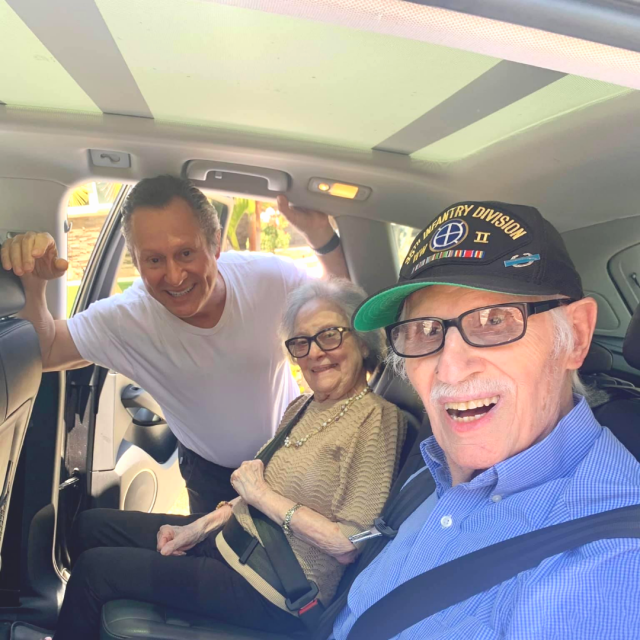
My dad fought in Patton’s Third Army and received two purple hearts for his service, the second of which was handed to him personally by Generals Eisenhower and Patton when they were visiting the wounded. How awesome of a selfie would that have been?

During Sales Convention this year, I dedicated my keynote speech to my father, sharing lessons he taught me about leadership – lessons in humility, accountability, bravery, positivity, kindness – with a crowd of several thousand attendees. I hope those messages inspire them as much as they’ve inspired me.

Before my dad passed away, I would always make time in my schedule each week for my parents. Every Sunday, we’d get in the car and drive for three hours, we called it the “three hour tour” (Gilligan’s Island). We never had a plan; we’d just drive. My parents would be in a hurry for most of the week, and the only place they really hurried to was the doctor’s office. Sunday was our time to have no agenda except to drive.

Before  it became too difficult for him, I would take my dad golfing with JT and his dad in the morning and then we’d have a barbecue and watch the U.S. Open. I’d also get my dad and my father-in-law U.S. Open shirts every year. I really wish I could have gotten him one this year from the tournament in L.A. He would’ve loved that.

Another recent news event he would’ve really connected with is the true story of the four Indigenous children who spent 40 harrowing days lost in the Amazon rainforest after a plane crashed. As NPR reported, the children – ages 13, 9, 4 and 11 months – are members of the Huitoto Indigenous group. They’d been flying in a single-engine Cessna with their mother, fleeing turmoil in their village and on the way to visit their father.

NPR reports that on May 1, the Cessna had engine trouble and disappeared. When the children were eventually rescued, the landscape of their location was so treacherous, a helicopter had to hover overhead while the children were hoisted aboard.

After the rescue, NPR says, the children explained that they stayed alive by eating fruit and a box of food they’d found. The baby was fed a mix of water and yucca flower from a bag they discovered on the plane. According to MSN, the children’s mother actually survived the crash, living for four days before she ultimately succumbed to her injuries. Before she passed, she told them that they must get out of there. And they did.

This story of extraordinary survival reminds me of another story from my dad’s time serving in the Third Army, fighting valiantly across France. My dad and a radio operator were moving in the woods through deep snow when they came across a German unit with a machine gun nest. The machine gun was an MG 22, arguably the most deadly and effective machine gun the Germans had. Dad and the radio operator returned fire and got close to the nest. As dad told me and my friend Pat Cardwell over lunch one day, “We lobbed a few grenades up there and that was that.”

Well yes, but there’s more to the story. While they were running through the snow, trudging through this frozen river bed with the radio operator carrying his big, heavy radio, the operator kept falling because of the weight of the radio on his back and because the Germans were shooting at them.

My dad kept pulling up the radio operator as he stumbled while taking fire as they ran in a serpentine pattern through a snowy riverbed.

He’d fall, my dad would lift him up. He’d fall, my dad would lift him up. But the Germans were relentless in their chase.

The radio operator was shot in the back. But the bullet hit his radio and saved his life. My dad and the radio operator took the radio and destroyed it so the Germans couldn’t use it, and then made it back to their unit.

So, what’s the message? Of course, children courageously fighting to stay alive deep in the Amazon rainforest and two Army soldiers fighting Germans in France during WWII are completely different things, but at heart, these stories are both about survival. They’re both about embracing that now-famous phrase, “No person left behind.”

It’s a lesson my dad taught me and a lesson that I now carry on my leadership journey. It’s also a lesson to be learned from those incredibly brave children who kept each other alive through extraordinary circumstances to honor their family and save their brothers’ and sisters’ lives. I really do think Pappy would’ve loved to hear about that – humans helping one another with kindness, compassion and love.

Thoughts on Leadership: Commemorating Juneteenth

By Gino Blefari

This week my travels find me starting Monday with an early morning Berkshire Hathaway Energy call followed by my typical WIG calls. On Tuesday, I participated in the monthly HomeServices of America leadership meeting. Today, I’m en route to Nevis to co-host the Berkshire Elite Circle Conference, writing this to you now as I look out my airplane window and (unbelievably) see snow on the Sierras in June.

For today’s Thoughts on Leadership, I want to talk about how we can commemorate Juneteenth, the federal holiday that occurs on Monday, June 19.

Read more: Thoughts on Leadership: Commemorating Juneteenth

Juneteenth marks the historic day (June 19, 1865) in Galveston, Texas when the last remaining enslaved people in the U.S. received the long-awaited news that the Civil War was over. Under President Abraham Lincoln’s Emancipation Proclamation, they were finally set free.

Today, Juneteenth – called “the longest running African-American holiday,” Freedom Day, Emancipation Day and Liberation Day – is a celebration of African American freedom, achievement and progress, and the resiliency of African American leaders who took on the greatest hardships and ultimately prevailed.

How can the world continue to honor this legacy and encourage further unity? How can we do what must be done, as leaders, as advocates, as human beings and come together to rid any traces of intolerance that seek to divide?

My friend Johnnie Johnson, former All-Pro defensive back for the Los Angeles Rams, president and CEO of World Class Coaches, and author of From Athletics to Engineering: 8 Ways to Support Diversity, Equity and Inclusion, says the first step to a more diverse, inclusive, and accepting world is deciding that you want it to be that way. The change starts with each of us, Johnnie explains.

Juneteenth reminds us of the endurance and bravery of the African American community and the ability we all possess to support it in so many important ways. If you’re looking for exactly how to celebrate and show your support, here are a few helpful resources to get you started:

So, what’s the message? At HomeServices, Monday, June 19th – Juneteenth – is observed as an official company holiday and everyone within our organization is encouraged to take the day to reflect on what Juneteenth means to them. But reflection is not enough. We, as leaders, must also do, achieve, and act. We must seek out the Black-owned businesses in our marketplaces and support them. Participate in local Juneteenth activities. Put in the work necessary to create a more positive, inclusive, and diverse future. Celebrate Black history and Black culture. Visit museums and cultural spaces that are sharing Black stories new and old. Have those difficult conversations about our past, and our future. We must do it on Monday, and we must do it forever. Because as Johnnie Johnson wisely says, change starts with each of us, and that is the beautiful, enduring message Juneteenth brings to us all.

Thoughts on Leadership: 10 Lessons from Charlie Munger

By Gino Blefari

This week my travels find me starting Monday at home, participating in an early morning Berkshire Hathaway Energy call followed by WIG calls. On Wednesday, I attended the monthly HomeServices Diversity MEETS virtual meeting with diversity leaders from across our family of companies. In between meetings, I worked on speech preparation for the upcoming Stronger Together and Berkshire Hathaway HomeServices Summit conferences.

Last week, I wrote about my biography-a-week plan, inspired by Charlie Munger, so this week, I want to focus on Mr. Munger and his endlessly inspirational leadership. Charlie Munger, vice chairman of Berkshire Hathaway Inc., was born on January 1, 1924, in Omaha, Nebraska. Munger worked for Warren Buffett’s grandmother but didn’t meet Mr. Buffett until he was 35 years old. He has served the Berkshire Hathaway organization since 1978, and at the age of 99, still helps Mr. Buffett manage the company’s legendary stock portfolio. Another fact about Mr. Munger and his extraordinary intellect? He entered Harvard Law School without an undergraduate degree (he dropped out of college to serve in the military during WWII) and still graduated magna cum laude.

Here are 10 lessons from the incredible Charlie Munger:

  1. Keep learning your whole life. Munger believes learning must be an ongoing, perpetual activity that lasts a lifetime – not one that ends at the completion of formal education. Munger once said: “You’d be amazed at how much Warren reads—at how much I read. My children laugh at me. They think I’m a book with a couple of legs sticking out.”
  2. Study the models of science. Munger says science, and especially the science of evolution, plays a key role in understanding humans – what motivates them, what inspires them, what makes them who they are.
  3. Don’t be afraid to destroy some of your best-loved ideas. Munger once said: “If Berkshire has made modest progress, a good deal of it is because Warren and I are very good at destroying our best-loved ideas. Any year that you don’t destroy one of your best-loved ideas is probably a wasted year.”
  4. Understand the power of incentives. Munger has spoken at length about the power of incentives and how they can influence your success in business, life and investing. For instance, if you’re considering investing in a stock, he says it’s important to consider whether the managers have an ownership stake in the company. The decisions these managers make will impact the long-term success of the business, and if they have stock ownership, as an investor, your incentives and their incentives will align.
  5. Forever seek “worldly wisdom.” According toMunger: “I constantly see people rise in life who are not the smartest–sometimes not even the most diligent–but they are learning machines. They go to bed every night a little wiser than when they got up and wake up every morning able to attack the problems they faced the day before.” To achieve what Munger calls “worldly wisdom,” we must acquire information from new perspectives and different angles. Munger didn’t just study investing and finance. He also studied psychology, biology, and historical leaders like Benjamin Franklin, John D. Rockefeller, and Andrew Carnegie.
  6. Never be overly confident. “To a man with a hammer, everything looks like a nail,” Munger said. Overconfidence increases the probability of mistakes because you tend to only see your way of looking at the situation, rather than being open to new ideas. It’s like that time-honored saying: Smugness leads to arrogance, and arrogance is the precursor to disaster. Once you think you know it all, your slide to mediocrity has already begun.
  7. Embrace humility. It’s not enough to simply avoid overconfidence. Munger says we must also embrace humility. “It is astonishing how much long-term advantage people like us have gotten by trying consistently not to be arrogant,” he explained. For leaders, Munger believes humility is one of the best character traits to possess. Humility keeps the mind nimble, and it creates leaders who ask questions – not just of their team but also of themselves. A humble leader is open to transformative change and thoughtful, flexible decision-making.
  8. Know the importance of patience. “The big money is not in the buying or the selling, but in the waiting,” Munger said. Patience, he believes, helps leaders avoid impulsive decisions and lead with rationality and calm. It helps avoid the temptation of quick, short-term gains for the sustainable, lasting prospect of long-term success.
  9. Don’t worry about what everyone else is doing. Munger says at Berkshire Hathaway, leaders don’t really worry about what anyone else is doing and focus on investing their way. If you watch everyone else and what they’re doing, he says you lose the inner roadmap that brought about your success in the first place. You’ll be mired down in the unproductive game of comparison, and in the end, you won’t win. Instead, Munger says focus on the principles and values that matter to you most, then lead with those as your guide.
  10. Don’t hire consultants. Berkshire Hathaway doesn’t have one, single system of operation. Instead, it has many systems that work in different ways but are all based on the guiding principle of simplicity. When Berkshire Hathaway purchased See’s Candies, Buffett and Munger wrote a one-page deal with former See’s Candies CEO Chuck Higgins, and it’s never been touched since.The simplicity of that deal is also a reminder to stay true to the business and stay away from outside consultants. With consultants trying to tell leaders how to lead, Buffett and Munger say the intensity on both sides is rarely equal. Consultants deal in “play money,” they say, while a CEO is dealing with something close to their heart – the business. The executive team will find it difficult to get much done if they’re working with a consultant who is disconnected from the soul of the organization, the very thing that makes it special.

So, what’s the message? Here’s what Munger told CNBC’s Becky Quick during an interview in 2019. Quick asked Munger for the secret to a long and happy life. The secret, he said, is “easy, because it’s so simple.” He told her people often ask him, ‘How can I become like you, except faster?’” His answer? “Spend each day trying to be a little wiser than you were when you woke up. Discharge your duties faithfully and well. Step by step you get ahead, but not necessarily in fast spurts. But you build discipline by preparing for fast spurts… Slug it out one inch at a time, day by day. At the end of the day, if you live long enough, most people get what they deserve.”

Thoughts on Leadership: Lessons from Chuck Yeager

By Gino Blefari

This week my travels find me starting Monday commemorating Memorial Day (thank you Pappy and many others for your service) then Tuesday, participating in an early morning Berkshire Hathaway Energy call followed by WIG calls. Yesterday, I traveled to Atlanta to meet with the team at Harry Norman Realtors and then joined Berkshire Hathaway HomeServices Georgia Properties’ 60th anniversary celebration. Today, I sat down to write this post to you.

Charlie Munger, vice chairman of Berkshire Hathaway, once said: “There is no better teacher than history in determining the future. There are answers worth billions of dollars in a $30 history book.”

Because of that I decided one of my ways to improve so I’m better this week than I was last week is by listening to a biography every week. In honor of Memorial Day, I listened to “Yeager,” an autobiography by Chuck Yeager.

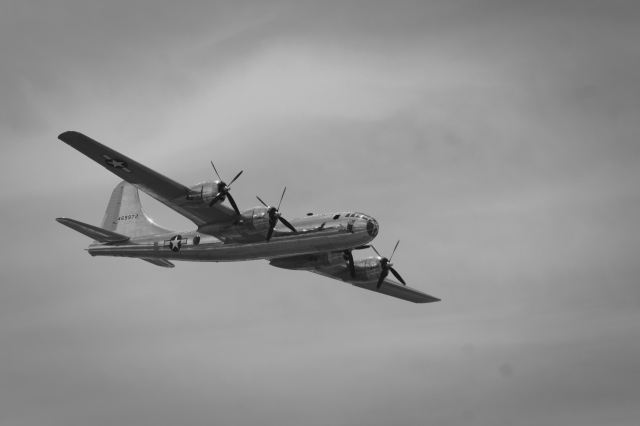
Brigadier General Charles Elwood Yeager made history on October 14, 1947, when he became the first pilot ever to exceed the speed of sound in level flight. A native of Hamlin, West Virginia, the United States Air Force officer broke the sound barrier about 40,000 feet over the Mojave Desert, flying a bright orange Bell X-1 experimental rocket engine-powered aircraft.

Here are a few lessons to learn from this flying ace:

Find Comfort in the Uncomfortable

Many times in the book, Yeager references the value of pushing past your comfort zone to achieve success. It’s something he did throughout his lifetime – as a fighter pilot in World War II, testing the experimental plane that broke the sound barrier, and as a leader of one of the most effective fighter squadrons to ever exist. He parachuted into a pine forest to escape being captured, slid down a mountain on an improvised log slide to escape a German patrol and even performed field surgery by amputating a navigator’s leg with a pen-knife. Many people recognize Yeager as one of the greatest military pilots ever, and it’s in large part due to his ability to not only step outside his comfort zone but also thrive once he got there. Albert Boyd, who was Colonel and Chief of the Flight Test Division at Wright Field during the summer of 1947, once described selecting Yeager as the primary X-1 pilot for the famous supersonic flight because of his “tremendous ability as a pilot” and “coolness under pressure.”

Lead By Example

Yeager’s leadership in combat during WWII is a textbook case of leading by example. He set high standards for the rest of the team and gave them confidence in what they could accomplish together. One example of Yeager’s extraordinary feats can be found in the way he became a fighter “ace,” which is defined as a pilot who has shot down a minimum of five enemy aircraft in aerial combat in their career. Very few wartime pilots achieve this status in their lifetime; Yeager did it in one single combat mission. On October 12, 1944, while flying Glen III, he got his squadron in chase position behind German fighters and downed five Bf 109 fighters to become an ace by the end of the day.

Persevere No Matter What

The historic flight that broke the sound barrier might not have happened without Yeager’s perseverance. Only two days before the scheduled supersonic 1947 flight, Yeager was thrown off while riding a horse at night with his wife and broke two ribs. He didn’t want to tell his superiors because he thought they might delay or choose another pilot for the upcoming flight, so he visited a civilian doctor who taped his ribs. On the day of the flight, Yeager fought through incredible pain and discomfort – he had to use a broom handle to secure the cockpit canopy – and ultimately made history. Then, on October 14, 2012, to celebrate the 65th anniversary of his record-breaking supersonic flight, Yeager returned to the Mojave Desert as a military consultant to co-pilot an F-15D fighter at supersonic speed. He was 89 years old. 

Thirst for New Knowledge

Richard H. Frost, a chief flight test engineer on the X-1 supersonic flight program described Yeager as “completely nerveless,” adding: “He’s the coolest guy I’ve ever seen, and it’s been my business to see a lot of pilots preparing for flights of doubtful outcome.” Another notable quality of Yeager’s observed by the program staff was his “unquenchable thirst for knowledge” as Frost described it. Yeager wanted to know absolutely everything he could about the airplane and its systems. He asked questions others hadn’t even thought of and grasped highly technical concepts with the understanding of an engineer. It was this depth of knowledge – and continual hunt for it – that made him not just a fantastic pilot but arguably the best pilot to ever fly.

Experience is Everything

One of the things that stood out for me the most in listening to the book was Yeager’s comment about experience. Explaining why experience is so valuable, Yeager said that he’d rather face an enemy with a superior plane and less experience than someone with more experience flying a less superior plane.

So, what’s the message? Yeager famously noted that just before the sound barrier is broken, the plane’s cockpit shakes more than at any other point in the flight. But without this risk, there is no reward. Yeager’s view? “You don’t concentrate on risks. You concentrate on results. No risk is too great to prevent the necessary job from getting done.”

Thoughts on Leadership: A Chip Off the New Block

By Gino Blefari

This week my travels find me starting Monday with my typical WIG calls. On Tuesday, I participated in an early morning Berkshire Hathaway Energy call and today I joined Intero’s Rally, where I shared “10 Things to Do Right Now to Crush it in Today’s Market” before sitting down to write this post to you.

Today I want to share an incredible story about an event that happened over the weekend. It all began when Michael Block, head club pro at Arroyo Trabuco Golf Club in Mission Viejo, California – located just a stone’s throw away from our Berkshire Hathaway HomeServices franchise headquarters where I spent time last week – played in the 2023 PGA Championship.

But this story isn’t only about a golf club pro entering the 105th PGA Championship, one of four major PGA tournaments that take place each season. After Block arrived at Oak Hill Country Club in Pittsford, New York – the host of this year’s tournament – he went on to capture the hearts of golf fans around the world with a brilliant (and unexpected) run for the title.

On Saturday at the end of play, Block was in the Top 10, something that hadn’t been achieved by a golf club pro in a PGA Major in over 30 years. And he did it with humility and charm.

On Sunday, he hit not just a hole-in-one at the par-3, 151-yard 15th hole but slam-dunked it, meaning he hit the ball off the tee and directly into the hole without disturbing even a single blade of grass.

In a post-tournament interview just after he turned in his scorecard, Block explained how it all went down. He said he didn’t see the ball go in but knew it was a good shot and knew it was at the pin, though he thought it was a little short. Professional golfer Rory Mcllory, who was paired with Block for the round, walked up to him and gave him a big hug as the crowd cheered. Block thought, “Why in the world is he giving me a hug?” Then Mcllroy said: “Blocky, it went in!”

“Are you serious?” Block asked against the roar of the crowd.

He sure was.

Later, when describing the shot, PGA sportscaster Jim Nantz called it an “all-time up and down.”

In the end, Block finished the tournament in 15th place, winning $288,333, though he’d also be offered $50,000 for his trusty 7-iron, the one he used to make the hole-in-one. Two-thousand congratulatory texts poured in for the tournament hero, including, Block said, one from Michael Jordan. And when a reporter asked him how he felt about his performance over the weekend, Block said: “It’s amazing. I’m living a dream. I’m making sure that I enjoy this moment. I’ve learned that after my 46 years of life, it’s not going to get better than this. There’s no way.”

After Block finished the tournament, he received a sponsor’s exemption to compete at the Colonial in Fort Worth, Texas this coming weekend. Cameras captured the now-famous moment when Block received the news and said: “If you could talk to my boss real quick and tell them that I won’t be at work next week …”

So, what’s the message? Michael Block’s improbable tale of an Orange County golf club pro turned PGA Championship legend can be summed up in the same two words he’s had stamped for decades on every single one of his golf balls–including the ones he used at the tournament: “Why not?”

Thoughts on Leadership: Lessons from Bruce Lee

By Gino Blefari

This week my travels find me starting Monday with my typical WIG calls, then traveling to Orange County, California. On Tuesday, I joined the early morning Berkshire Hathaway Energy call followed by the HSF Leadership Summit and the monthly HomeServices of America leadership meeting. On Wednesday, I continued the HSF Leadership Summit and filmed videos with the team for various brand projects. This morning, I participated in the HomeServices Connect Series live event before sitting down to write this post to you from the airport gate, as I wait for my flight back to Northern California.

May is Asian American and Pacific Islander Heritage Month, a time to recognize the outstanding achievements, historic contributions, and cultural influence of this community on the United States and beyond. So, in honor of AAPI Heritage Month, I’d like to dedicate this post to an AAPI leader who had a profound impact on my career and life.

One of the earliest influences on my leadership style was the films of actor Bruce Lee. Born in San Francisco in 1940 while his parents were there on tour with the Chinese Opera, Lee became an actor at a young age. He appeared in more than 20 Chinese films – the first one when he was just three months old! At age 13, Lee began studying martial arts with the legendary Yip Man. He also studied dancing and was the 1958 Crown Colony Cha Cha dancing champ of Hong Kong! (He would later credit his dancing background for the signature grace and poise of his martial arts style.)

After he turned 18, Lee moved to Seattle, Washington, where he would eventually enroll at the University of Washington to pursue a degree in philosophy. He also opened a martial arts school, the Jun Fan Gung Fu Institute (humbly launched inside a Seattle-area parking garage), then expanded by opening two more schools in Oakland and Los Angeles.

As the story goes, Lee was discovered in 1964 by celebrity hairstylist Jay Sebring, who saw him at the Long Beach Karate Championships and immediately phoned a client – producer/actor William Dozier – to tell him about this incredible martial artist he just saw named Bruce Lee. The rest, as they say, is history.

Lee’s life story is incredible. Did you know that despite how precisely he fought, he had bad eyesight? He wore glasses for most of his life and was one of the first people to ever try on newly invented contact lenses.

Credited with bringing martial arts mainstream, Lee was also an early pioneer of diversity, equity, and inclusion. Lee believed that martial arts shouldn’t be some secretive endeavor attempted by a few; martial arts should be available to everyone, no matter their race, age, or gender. In his movies “Enter the Dragon,” which eventually grossed more than $200 million, and “Fist of Fury,” he sought to shatter any prevailing stereotypes about Asian actors. Additionally, his 1972 movie “The Chinese Connection” helped shine a spotlight on Chinese music, cuisine, and language.

Beyond his blockbuster films, Bruce Lee has shared unique philosophies, many of which are written in Tao of Jeet Kune Do, a collection of thoughts from Lee’s personal notebooks that was published after his tragic death at the age of 32. He wrote: “I fear not the [person] who has practiced 10,000 kicks once, but I fear the [person] who has practiced one kick 10,000 times.”

Famously, Lee also said: “Be afraid of the calmest person in the room.”

Why? Lee believed the opponent to fear in a boardroom or on a playing field isn’t the one jumping up and down or yelling at the crowd. It’s the one who remains calm, knowing exactly what they are capable of and possessing the unrattled confidence they will achieve it.

So, what’s the message? This Bruce Lee quote perfectly encapsulates his life and legacy: “Absorb what is useful, discard what is not, add what is uniquely your own.”

Thoughts on Leadership: Lessons from the Kentucky Derby

By Gino Blefari

This week my travels find me participating in my typical WIG calls on Monday, joining an early Berkshire Hathaway Energy call on Tuesday, and on Wednesday, going to the California Theatre in San Jose, California for The Dwight Clark Legacy Series: Playmakers. The event featured round table conversations with San Francisco 49ers greats, including Fred Warner, Bryant Young, Jerry Rice and John Taylor. Today, I sat down to write this post to you.

Over the weekend I was entranced – as I am each year – by the Kentucky Derby. (Berkshire Hathaway HomeServices network members will remember 2022 when the network took over historic Churchill Downs for an incredible Sales Convention celebration.) I love the Kentucky Derby not only because it’s exciting, but also because it always provides important leadership lessons. Here are a few from the 2023 races:

Read more: Thoughts on Leadership: Lessons from the Kentucky Derby
  • You can win against all odds. Mage entered the Winner’s Circle as a new champion in the 149th year of the Kentucky Derby, racing against tremendous 15-1 odds and eventually, getting that coveted garland of roses. Before the race, Mage was far from a favorite. In fact, he only had three starts this spring. Mage’s success proves that it doesn’t matter what the odds are, what happened in the past or whether people doubt you. Only you can make the outcome yours.
  • You only fail when you fail to keep going. The jockey riding Mage, Venezuelan Hall of Famer Javier Castellano, was far from a trending name in the race. He was 0-15 before he broke his streak by this Kentucky Derby win. “I never give up,” Castellano said. “I always try hard to do the right thing. It took me a little while to get there. I finally got it.”
  • You can use your critics as motivation. As Castellano was in the jockey’s room preparing for the race, he said he looked up and saw NBC’s pre-race broadcast where the network had written: “0-15, Javier Castellano” below his name. When he saw the not-so-encouraging stat, Castellano told himself, “This is the year … I’m going to win the race.” Well, we all know what happened next.
  • You must write down your goals so they become etched into your subconscious. When asked, Mage’s assistant trainer and co-owner Gustavo Delgado Jr. said the win was a fulfillment of a dream – or we could say a Wildly Important Goal – that he had written down a year-and-a-half ago. Delgado said: “I wrote a note: ‘We’re going to win the Derby next year.’” Then, he won. Delgado’s story reminds me of my own start in real estate and a box I still have in my storage closet that has my old 3×5 index cards inside. On each card, I had written out my goals and affirmations. Re-reading those years later, it’s surreal to me that they all came true. As an example, in 1985, I set a goal of making $60,000, noting that it would be in direct proportion to the service I give. Even though it took me six months to get my first pending sale, I still hit my goal by the end of the year.
  • You can’t stop until you reach the finish line. In the backstretch of the race, Mage focused on the horse in the leading position and passed him at the eighth pole, going on to win the Kentucky Derby. Imagine if he gave up when he was behind? Instead, Mage didn’t stop until he was ahead of them all. “He’s a little horse with a big heart,” Castellano said.
  • You should always remember those who support you on your way up the ladder (or around the racetrack) of success. According to Cincinnati.com, Castellano’s win was as much about loyalty as it was about fate. For the last five years, Castellano has been sponsored by restaurateur Jeff Ruby, proudly sporting the Jeff Ruby Steakhouse brand. But in a tweet by Ruby, the restaurateur said Castellano almost didn’t wear the brand during the race. Why? Castellano was originally set to ride a horse called Raise Cain but the owners of that horse told him “at the eleventh hour” that he couldn’t wear the Jeff Ruby Steakhouse pants. Castellano said if he couldn’t support his sponsor, he simply wouldn’t race. He was going to give up a chance to be in the Kentucky Derby! Then in April, Castellano switched from Raise Cain to Mage so he could represent his sponsor. And when he triumphantly crossed the finish line with Mage, he was proudly sporting the Jeff Ruby Steakhouse pants. (Castellano also went to dinner at Ruby’s Louisville steakhouse after the win, where diners gave him a well-deserved standing ovation.)

So, what’s the message? Berkshire Hathaway HomeServices California Properties President Martha Mosier said it best when she shared her experience attending the Kentucky Derby this year. From the horses to the friendships to the leadership lessons this race contains, it is truly, as she wrote: “The experience of a lifetime.”

Thoughts on Leadership: Lessons from Shark Tank’s Daymond John

By Gino Blefari

This week my travels found me starting the work week early, with a flight to Naples, Florida on Sunday. On Monday, I participated in my typical WIG calls and then joined the start of the T3 Leadership Summit where I spoke onstage the following day. On Wednesday, I returned home to work out of my Northern California office and tomorrow, I’ll fly to Omaha for the Berkshire Hathaway Annual Shareholders Meeting.

During the T3 Leadership Summit, I had the honor of hearing Daymond John speak about disruption and entrepreneurship. John is the founder of global lifestyle brand FUBU and a regular on ABC’s “Shark Tank.” He’s also been on LinkedIn’s list of Top 20 Voices and received Ernst & Young’s New York Entrepreneur of the Year award.

Continue Reading

No more posts.